
Kitchen ventilation trends 2027 are redefining how we think about cooking spaces—not just as places to prepare meals, but as environments that must be clean, quiet, and seamlessly designed. The days of bulky, noisy range hoods dominating your kitchen are fading fast.
Today’s homeowners want ventilation that works harder while staying invisible. That means smarter systems, better air purification, and designs that blend effortlessly into cabinetry or ceilings.
In this guide, you’ll learn exactly what’s changing, why it matters, and how to choose the right ventilation setup for your kitchen—whether you’re renovating, building, or simply upgrading for better air quality.
In This Article
Why Kitchen Ventilation Is Becoming the Centerpiece of Modern Kitchens
Kitchen ventilation used to be an afterthought. Install a hood, vent it out, and move on. That approach no longer holds up in modern homes.
Open layouts, tighter insulation, and increased awareness of indoor air pollution have pushed ventilation into the spotlight. Cooking releases grease particles, smoke, and volatile organic compounds (VOCs) that linger far beyond the kitchen.
A well-designed system now does much more than remove odors. It:
- Protects indoor air quality
- Prevents grease buildup on surfaces
- Keeps open-plan spaces fresh and livable
- Enhances overall kitchen comfort
Design expectations have also shifted. Homeowners want appliances that disappear visually while delivering powerful performance. Ventilation is no longer just functional—it’s part of the kitchen’s identity.
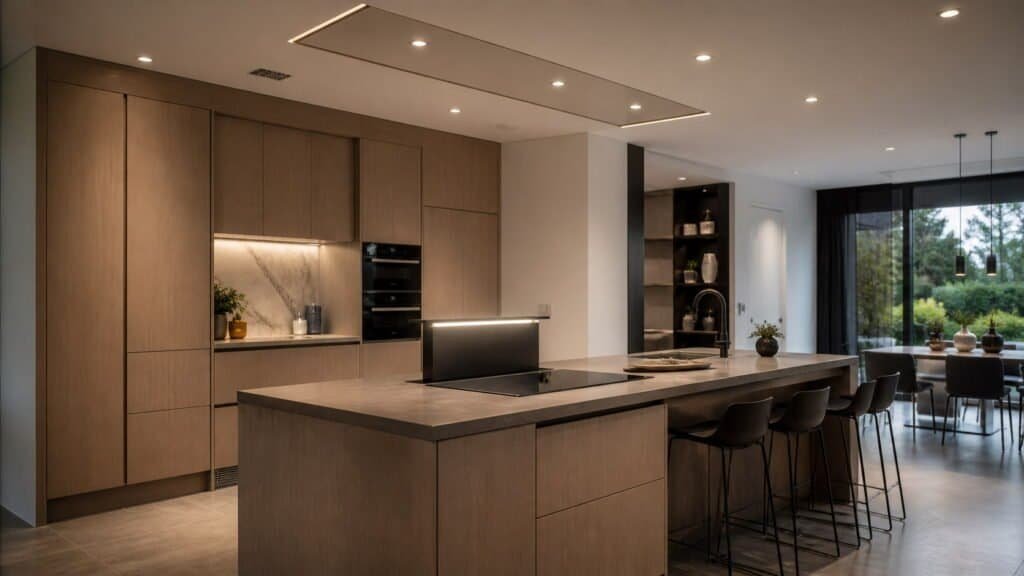
Kitchen Ventilation Trends 2027: What’s Driving the Evolution
Several forces are shaping kitchen ventilation trends 2027, and they go far beyond aesthetics.
Smart Homes Are Raising Expectations
Connected kitchens demand appliances that communicate. Ventilation systems now sync with cooktops, automatically adjusting fan speed based on heat and smoke levels.
This means:
- No manual adjustments while cooking
- More efficient energy use
- Consistent air quality without guesswork
Open-Concept Living Changes Everything
Cooking smells don’t stay contained anymore. In open spaces, poor ventilation quickly spreads odors into living and dining areas.
That’s why modern systems focus on:
- Faster air capture
- Wider coverage zones
- Strategic placement (especially over islands)
Sustainability Is No Longer Optional
Energy-efficient homes require smarter ventilation. New systems prioritize:
- Low-energy motors
- Reusable or long-life filters
- Reduced heat loss during operation
Luxury Design Is Influencing Everyday Kitchens
High-end kitchens have embraced minimalism and hidden functionality, and this approach is trickling down into mainstream design.
The result? Ventilation that blends into:
- Cabinetry
- Ceilings
- Kitchen islands
Performance remains critical—but now it’s delivered quietly and invisibly.
The Rise of Hidden Range Hoods: Seamless, Minimal, Invisible
One of the most defining kitchen ventilation trends 2027 is the move toward hidden range hoods. These systems are designed to disappear into the architecture of the kitchen.
Built-In and Cabinet-Integrated Hoods
Cabinet-integrated hoods sit flush within upper cabinets, often hidden behind custom panels. From the outside, they look like part of the cabinetry.
Benefits include:
- Clean, uninterrupted visual lines
- Perfect for minimalist or modern kitchens
- Flexibility in material matching (wood, matte finishes, etc.)
Ceiling-Mounted Extractors
Ceiling extractors are becoming a go-to for kitchen islands. Installed directly into the ceiling, they remove the need for any visible hood structure.
They work best in:
- Large, open kitchens
- High ceilings with proper airflow design
- Homes prioritizing a sleek, architectural look
Downdraft Ventilation Systems
Downdraft systems rise from the countertop or remain hidden until needed. Once activated, they pull air downward instead of upward.
They’re ideal for:
- Island cooktops
- Compact kitchens
- Spaces where overhead installation isn’t possible
Pros and Cons of Hidden Ventilation
| Feature | Hidden Systems | Traditional Hoods |
| Visual Appeal | Minimal, seamless | Bold, visible |
| Space Efficiency | High | Moderate |
| Installation Complexity | Higher | Easier |
| Performance (if well-designed) | Excellent | Excellent |
Hidden doesn’t mean compromised—but it does require careful planning. Poor placement or insufficient power can reduce effectiveness, especially in larger kitchens.
The key is balancing design and airflow performance so your kitchen looks clean and functions flawlessly.
Statement vs. Disappearing: When to Show Your Ventilation System
Not every kitchen needs hidden ventilation. In fact, one of the more interesting shifts within kitchen ventilation trends 2027 is the balance between bold statement hoods and completely invisible systems.
Choosing between the two comes down to your overall design intention.
When a Statement Hood Makes Sense
A visible hood can act as a focal point—especially in kitchens that lean toward expressive or high-end design.
Statement hoods work best when:
- The kitchen needs a visual anchor (especially in large spaces)
- You’re using rich materials like brushed metal, stone, or plaster
- The design style embraces contrast or texture
Popular styles in 2027 include:
- Sculptural plaster hoods with soft curves
- Matte black or bronze metal finishes
- Custom wood-clad designs that echo cabinetry tones
These aren’t just appliances—they’re design features.
When Hidden Ventilation Is the Better Choice
Minimalist and contemporary kitchens often benefit from keeping ventilation out of sight.
Hidden systems are ideal if you want:
- A clean, uninterrupted aesthetic
- Focus on materials like marble or wood grain
- A clutter-free, calming environment
This approach works especially well in:
- Scandinavian-inspired kitchens
- Ultra-modern homes
- Compact spaces where visual simplicity matters
Striking the Right Balance
Many homeowners are blending both ideas—using subtle, integrated hoods that are technically visible but visually quiet.
A good rule of thumb:
- Choose statement hoods when design expression is the priority
- Choose hidden systems when simplicity and flow matter more
Either way, performance should never take a back seat to appearance.
Air Quality Tech Takes Over: Smart Ventilation Systems Explained
Modern kitchen ventilation is no longer just about moving air—it’s about understanding and improving it in real time.
Smart air quality technology is one of the biggest drivers behind kitchen ventilation trends 2027, transforming passive systems into responsive, intelligent tools.
Sensors That Actually Think for You
Advanced ventilation systems now include sensors that detect:
- Smoke levels
- Heat intensity
- Grease particles
- Volatile organic compounds (VOCs)
Once detected, the system automatically adjusts fan speed—no manual input required.
This leads to:
- More efficient ventilation
- Reduced energy waste
- Consistent air quality during cooking
Auto-Adjusting Performance
Instead of running at a fixed speed, smart hoods adapt dynamically.
For example:
- Simmering → low, quiet airflow
- Frying or searing → high-power extraction
- Idle → automatic shutdown
This kind of automation not only improves performance but also extends the lifespan of the system.
Real-Time Air Quality Monitoring
Some systems now provide live feedback through apps or built-in displays, showing:
- Air quality levels
- Filter status
- System performance
This transparency helps homeowners make informed decisions—like when to increase ventilation or replace filters.
Integration with Smart Home Ecosystems
Ventilation systems are becoming part of a larger connected environment.
They can sync with:
- Smart cooktops that trigger ventilation automatically
- Home assistants for voice control
- Automation routines (e.g., turning on when cooking starts)
The result is a kitchen that feels responsive, not reactive.
Kitchen Ventilation Trends 2027: The Shift Toward Health-Focused Design
Health is no longer a secondary benefit—it’s a primary reason people upgrade their kitchen ventilation.
Cooking, especially with gas, releases pollutants that can impact indoor air quality over time. Kitchen ventilation trends 2027 reflect a growing awareness of this issue.
Capturing What You Can’t See
Modern systems are designed to capture ultrafine particles—the kind that linger in the air long after cooking ends.
These include:
- Combustion byproducts from gas stoves
- Aerosolized grease particles
- Invisible smoke and fumes
High-performance ventilation reduces exposure significantly, especially in tightly sealed homes.
Ducted vs. Recirculating: What Matters More Now
The debate between ducted and ductless systems has shifted toward performance and health.
- Ducted systems:
- Vent air outside
- Offer the best removal of pollutants
- Ideal for frequent or heavy cooking
- Recirculating systems:
- Filter and reuse indoor air
- Easier to install
- Require high-quality filters to be effective
In 2027, many homeowners are prioritizing true air removal over convenience—especially in open-plan homes.
Ventilation as a Long-Term Health Investment
Better ventilation contributes to:
- Reduced respiratory irritation
- Lower indoor pollution levels
- A cleaner, more comfortable living environment
It’s not just about cooking anymore—it’s about creating a home that actively supports well-being.
Kitchen design is evolving to reflect that shift, placing air quality on the same level as lighting, layout, and materials.
Ultra-Quiet Performance: The Silent Kitchen Revolution
Noise used to be the trade-off for powerful ventilation. That’s no longer acceptable in 2027.
Today’s systems are engineered to deliver strong airflow while maintaining a calm, conversation-friendly environment. This shift is especially important in open-concept homes where the kitchen blends into living spaces.
What Makes Modern Ventilation So Quiet?
Manufacturers are rethinking internal components to reduce noise at the source.
Key innovations include:
- Brushless DC motors that run smoother and more efficiently
- Improved airflow channels that reduce turbulence
- Advanced insulation materials that absorb sound
Instead of fighting noise after it’s created, these systems prevent it from happening in the first place.
What’s Considered “Quiet” in 2027?
Noise levels are measured in decibels (dB), and modern expectations are much lower than before.
- 30–40 dB → barely noticeable (ideal for low-speed operation)
- 40–55 dB → comfortable for everyday cooking
- 55+ dB → still acceptable at high power, but shorter use preferred
Many premium systems now maintain under 50 dB even during moderate use, making them almost unnoticeable during conversations or while watching TV nearby.
Why Quiet Matters More Than Ever
A loud hood disrupts the entire living experience. Quiet ventilation allows you to:
- Cook while entertaining guests
- Keep conversations natural and uninterrupted
- Maintain a relaxed atmosphere in open spaces
Silence is no longer a luxury—it’s becoming a standard expectation.
Energy Efficiency & Sustainability in Ventilation Systems
Energy efficiency is shaping nearly every aspect of home design, and kitchen ventilation is no exception. Kitchen ventilation trends 2027 are heavily influenced by the need to reduce energy consumption without sacrificing performance.
Low-Energy Motors and Smart Power Use
Modern systems are designed to use only the energy they need.
Features include:
- Variable speed motors that adjust automatically
- Eco modes for light cooking tasks
- Power optimization based on sensor data
This results in lower electricity usage and reduced long-term costs.
Heat Recovery and Smarter Airflow
One of the more advanced developments is the integration of heat recovery ventilation (HRV) systems.
Instead of simply expelling warm indoor air, these systems:
- Capture heat from outgoing air
- Transfer it to incoming fresh air
- Maintain indoor temperature more efficiently
This is especially valuable in energy-efficient homes where maintaining climate control is critical.
Sustainable Materials and Long-Life Filters
Sustainability isn’t just about energy—it’s also about materials and maintenance.
Trends include:
- Washable, reusable metal filters
- Long-life carbon filters for recirculating systems
- Durable construction that reduces replacement frequency
A well-designed system should perform efficiently and minimize environmental impact over time.
Compact & Multi-Functional Designs for Smaller Kitchens
Not every home has space for large, elaborate ventilation systems. That’s why kitchen ventilation trends 2027 are embracing compact, multi-functional solutions.
Slim Profiles for Urban Living
Smaller kitchens benefit from ventilation that takes up minimal space while still delivering solid performance.
Popular options include:
- Slim under-cabinet hoods
- Integrated cabinet systems
- Low-profile ceiling extractors
These designs maintain airflow efficiency without overwhelming the space visually.
Combination Appliances Are on the Rise
Multi-functional appliances are becoming more common, especially in apartments and compact homes.
Examples include:
- Cooktops with built-in downdraft extractors
- Microwave-hood combinations
- Induction systems with integrated ventilation
These solutions reduce clutter and streamline the cooking area.
Maximizing Performance in Tight Spaces
Limited space doesn’t mean compromising on air quality.
To get the best results in small kitchens:
- Choose systems with high capture efficiency
- Ensure proper placement directly over the cooking zone
- Prioritize quality filters in ductless setups
Smart design makes even the smallest kitchens feel comfortable and well-ventilated.
Design Integration: Matching Ventilation with Cabinetry & Layout
A well-designed kitchen feels cohesive—and ventilation plays a bigger role in that than most people expect.
In 2027, the goal is to make ventilation feel like a natural extension of the kitchen design, not an afterthought.
Custom Panel-Ready Ventilation
Panel-ready hoods allow you to match ventilation systems with your cabinetry.
This creates:
- A seamless, built-in look
- Consistent materials and finishes
- A more refined overall aesthetic
It’s one of the easiest ways to achieve a high-end, tailored appearance.
Island vs. Wall Kitchens: Different Needs, Different Solutions
Ventilation strategies vary depending on layout.
Island kitchens:
- Require ceiling-mounted or downdraft systems
- Need wider coverage due to open exposure
- Benefit from higher airflow capacity
Wall kitchens:
- Work well with integrated or statement hoods
- Allow for easier ducting
- Offer more flexibility in design styles
Choosing the right system means understanding how air moves within your specific layout.
Creating Visual Flow Without Sacrificing Function
The best kitchens strike a balance between beauty and performance.
To achieve this:
- Align ventilation with cabinetry lines and proportions
- Avoid oversized units that disrupt scale
- Ensure the system is powerful enough for your cooking habits
When done right, ventilation becomes almost invisible—yet its impact is felt every time you cook.
Choosing the Right Kitchen Ventilation System in 2027
With so many innovations, choosing the right system can feel overwhelming. The best approach is to focus on how you actually use your kitchen—not just how it looks.
Start with Your Cooking Style
Your ventilation needs depend heavily on what and how often you cook.
- Light cooking (boiling, reheating) → lower airflow systems may be sufficient
- Frequent frying or grilling → requires high-capacity extraction
- Gas cooking → needs stronger ventilation due to combustion pollutants
A mismatch here is one of the most common mistakes homeowners make.
Match the System to Your Kitchen Size
Airflow capacity is typically measured in CFM (cubic feet per minute). While exact needs vary, here’s a practical guideline:
| Kitchen Type | Recommended Power |
| Small kitchen | 200–400 CFM |
| Medium kitchen | 400–600 CFM |
| Large/open kitchen | 600–1200+ CFM |
Bigger isn’t always better—oversized systems can create unnecessary noise and energy use.
Ducted vs. Ductless: Making the Right Call
This decision has a major impact on performance.
- Ducted systems
- Best for removing heat, smoke, and pollutants completely
- Ideal for serious cooking setups
- Ductless (recirculating) systems
- Easier to install and more flexible
- Depend heavily on filter quality and maintenance
Whenever possible, prioritize external venting for maximum effectiveness.
Common Mistakes to Avoid
- Choosing based on looks alone
- Undersizing the system for your cooking habits
- Ignoring noise ratings
- Poor placement (too high, off-center, or undersized coverage)
A well-chosen system should feel effortless—it works in the background without constant adjustments.
Related Trend: Smart Kitchens & Connected Appliances
Kitchen ventilation doesn’t operate in isolation anymore. It’s becoming part of a broader ecosystem of smart kitchen technology.
Seamless Appliance Communication
Modern ventilation systems can sync with:
- Smart cooktops that trigger extraction automatically
- Ovens that adjust airflow during high-heat cooking
- Home systems that monitor overall air quality
This level of integration reduces manual effort and improves consistency.
Voice Control and Automation
Voice assistants and automation routines are making kitchens more intuitive.
Imagine:
- Turning on ventilation with a simple voice command
- Setting routines where lights, ventilation, and appliances activate together
- Receiving alerts when filters need cleaning
These features are no longer futuristic—they’re becoming standard in premium setups.
Toward a Fully Responsive Kitchen
The long-term vision is a kitchen that adapts in real time:
- Detects cooking intensity
- Adjusts airflow automatically
- Maintains optimal air quality without intervention
Ventilation plays a key role in making that vision a reality.
Related Design Insight: Open-Concept Kitchen Challenges
Open-concept kitchens look beautiful, but they come with ventilation challenges that can’t be ignored.
Why Ventilation Matters More in Open Spaces
Without walls to contain air movement, cooking byproducts spread quickly.
This can lead to:
- Lingering odors in living areas
- Grease settling on furniture
- Reduced overall air quality
A strong ventilation system becomes essential—not optional.
Preventing Odor Spread Effectively
To keep air clean across open spaces:
- Choose systems with high capture efficiency
- Position ventilation directly over the cooking zone
- Use higher airflow settings during intense cooking
Even the best system struggles if it’s poorly placed.
Using Airflow as a Zoning Tool
Smart ventilation can help define invisible boundaries within open layouts.
Combined with:
- Strategic ceiling extractors
- Airflow direction planning
- Supplementary air purifiers
You can maintain separation between cooking and living areas without adding walls.
Future Outlook: What Kitchen Ventilation Might Look Like Beyond 2027
Innovation isn’t slowing down. The next wave of kitchen ventilation will push even further into automation and invisibility.
AI-Driven Predictive Ventilation
Future systems may anticipate your needs by learning your cooking habits.
- Pre-activating before smoke builds
- Adjusting based on past usage patterns
- Optimizing performance automatically
Fully Invisible Systems
Design is moving toward complete integration.
Expect to see:
- Flush ceiling systems with no visible vents
- Ventilation embedded within architectural elements
- Materials that double as air intake surfaces
Advanced Air Purification Integration
Ventilation and air purification are beginning to merge.
Future systems could:
- Neutralize pollutants at a molecular level
- Combine with whole-home HVAC systems
- Deliver hospital-grade air quality in residential kitchens
The focus is clear—cleaner air with less visual impact.
Visual Inspiration: Kitchens That Master Hidden Ventilation
Sometimes the best way to understand a trend is to visualize it in action.
Minimalist Kitchens with Invisible Hoods
- Flat-panel cabinetry hiding built-in ventilation
- Neutral palettes that emphasize clean lines
- No visible mechanical elements
Luxury Spaces with Ceiling Extractors
- Large kitchen islands with unobstructed views
- Integrated ceiling systems that disappear completely
- Perfect balance between openness and performance
Compact Kitchens with Smart Downdraft Solutions
- Pop-up extractors that appear only when needed
- Multi-functional appliances maximizing space
- Clean countertops with zero visual clutter
These examples show how ventilation can enhance both form and function when done right.
Clean Air, Clean Design — The New Kitchen Standard
Kitchen ventilation trends 2027 make one thing clear: performance and design are no longer separate decisions. The best kitchens today deliver powerful air purification while maintaining a refined, uncluttered look.
Choosing the right system means thinking beyond appearance. Focus on how you cook, how your space is designed, and how important air quality is to your daily life.
For deeper insights into indoor air quality and how pollutants affect your home, you can explore guidance from the EPA here: https://www.epa.gov/indoor-air-quality-iaq
FAQ: Kitchen Ventilation Trends 2027
What is the biggest kitchen ventilation trend in 2027?
Hidden ventilation systems combined with smart air quality technology are leading the way, offering both seamless design and automated performance.
Are downdraft ventilation systems effective?
They can be effective in specific setups like island cooktops, but they generally require careful planning to match the performance of overhead systems.
Is ducted ventilation better than ductless?
Ducted systems are typically more effective because they remove air completely, while ductless systems rely on filters and recirculation.
How quiet should a modern range hood be?
Most high-quality systems aim for under 50 decibels during normal operation, making them quiet enough for open-concept living.
Do I really need smart ventilation features?
Smart features aren’t essential, but they significantly improve convenience, efficiency, and consistent air quality.
What size ventilation system do I need?
It depends on your kitchen size and cooking habits, but choosing a system that matches your usage is more important than simply going bigger.
Upgrading your kitchen ventilation isn’t just a design decision—it’s an investment in comfort, health, and everyday living. If you’re planning a renovation or refresh, now is the time to choose a system that works quietly, efficiently, and beautifully in the background.
