
Kitchen Sink Trends 2027 are reshaping how we think about one of the most used features in any home. What used to be a purely functional fixture is now a design centerpiece, productivity hub, and smart technology integration point.
This guide breaks down exactly what’s changing—from materials and colors to smart features and layout innovations—so you can make confident decisions whether you’re renovating, building, or simply upgrading your kitchen. Expect practical insights, real-world examples, and trend-forward ideas you can actually use.
In This Article
Why Kitchen Sink Trends 2027 Matter More Than Ever
The modern kitchen has evolved into a multi-functional space—part cooking zone, part social hub, part workspace. That shift has placed the sink right at the center of daily activity.
Today’s Kitchen Sink Trends 2027 reflect three major lifestyle changes:
- More home cooking and entertaining, requiring better functionality
- Open-concept kitchens, where aesthetics matter just as much as performance
- Sustainability awareness, influencing materials and water usage
A sink is no longer something you hide—it’s something you design around. A poorly chosen sink can disrupt workflow, clash with your design, or create maintenance headaches. The right one, on the other hand, can streamline your routine and elevate your entire kitchen aesthetic.
Think of it as the intersection of form and function—where design decisions truly impact daily life.
Kitchen Sink Trends 2027 at a Glance (Quick Snapshot)
If you want a quick overview before diving deeper, here are the standout Kitchen Sink Trends 2027 shaping modern homes:
- Workstation sinks with built-in accessories for multitasking
- Bold materials like quartz composite and fireclay
- Matte and earthy tones replacing traditional stainless steel finishes
- Seamless integration with countertops for a minimalist look
- Smart features including touchless controls and water monitoring
- Deeper, wider basins designed for real-life usage
- Eco-conscious designs using sustainable materials
- Statement sinks that act as visual focal points
These trends aren’t just about style—they reflect how people actually use their kitchens today.
Workstation Sinks Take Center Stage in 2027 Kitchens
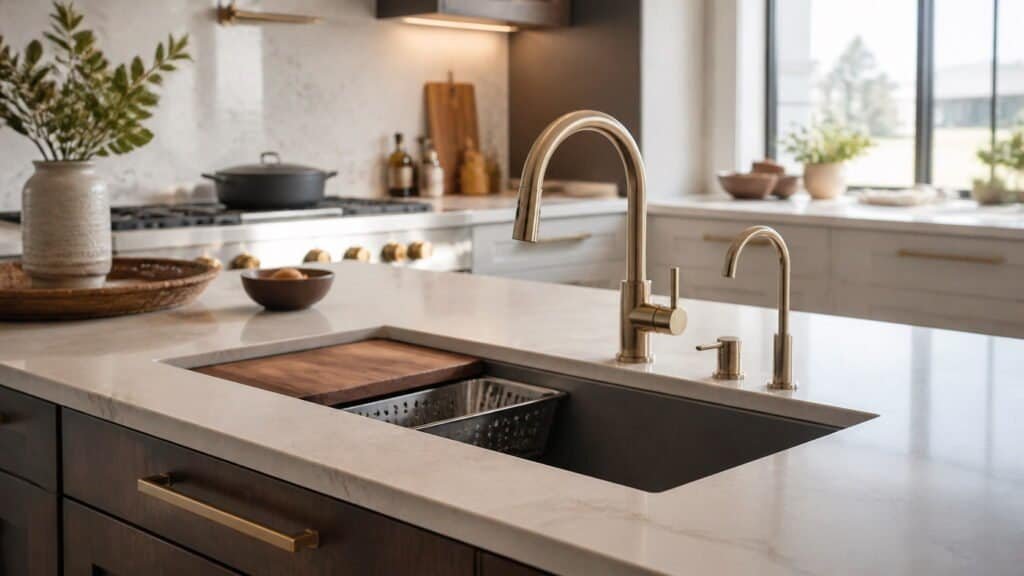
One of the most impactful Kitchen Sink Trends 2027 is the rise of workstation sinks. These aren’t just sinks—they’re compact, highly efficient work zones.
What Makes a Workstation Sink Different?
Workstation sinks come with built-in ledges that support sliding accessories, such as:
- Cutting boards
- Colanders
- Drying racks
- Prep trays
This layered setup allows you to prep, wash, and clean in one place, reducing mess and saving time.
Why Homeowners Are Switching
Traditional kitchen layouts often scatter tasks across the counter. Workstation sinks bring everything together, which is especially useful in:
- Small kitchens where space is limited
- Busy households needing efficiency
- Minimalist designs aiming to reduce clutter
Real-World Example
Imagine rinsing vegetables, chopping them, and sliding scraps directly into a compost bin—all without leaving the sink area. That’s the kind of seamless workflow driving this trend.
Is It Worth It?
For most modern households, yes. Workstation sinks offer:
| Benefit | Why It Matters |
| Space efficiency | Maximizes limited counter space |
| Better workflow | Reduces unnecessary movement |
| Cleaner kitchen | Contains mess in one zone |
| Modern appeal | Aligns with 2027 design aesthetics |
This isn’t just a trend—it’s a smarter way to use your kitchen.
Bold Materials Defining Kitchen Sink Trends 2027
Material choice is no longer just about durability—it’s about performance, texture, and visual identity. Kitchen Sink Trends 2027 are pushing beyond basic stainless steel into richer, more expressive options.
Quartz Composite: The Modern Favorite
Quartz composite sinks are dominating for good reason. They combine crushed stone with resin to create a surface that’s:
- Highly scratch and stain resistant
- Naturally sound-absorbing (quieter than metal sinks)
- Available in a wide range of modern colors
They’re ideal for homeowners who want low maintenance without sacrificing style.
Fireclay: Classic Meets Contemporary
Fireclay sinks—especially farmhouse styles—are making a comeback with updated finishes. Known for their:
- Smooth, glossy surface
- Resistance to chips and discoloration
- Timeless appeal with a modern edge
They work beautifully in both traditional and transitional kitchens.
Stainless Steel Reinvented
Stainless steel hasn’t disappeared—it’s evolved. Newer versions feature:
- Brushed or matte finishes to reduce fingerprints
- Thicker gauges for less noise and better durability
- Sleeker, more refined designs
This keeps it relevant for industrial and contemporary spaces.
Natural Stone & Eco-Composites
Sustainability is shaping material innovation. Expect to see:
- Sinks made from recycled materials
- Natural stone blends with unique textures
- Finishes that emphasize organic, imperfect beauty
These materials appeal to homeowners who value eco-conscious design without compromising aesthetics.
Quick Comparison
| Material | Best For | Key Advantage |
| Quartz Composite | Busy kitchens | Durable + low maintenance |
| Fireclay | Classic styles | Timeless look |
| Stainless Steel | Modern/industrial | Affordable + versatile |
| Natural/Eco Materials | Sustainable homes | Unique + environmentally friendly |
Choosing the right material comes down to how you use your kitchen—and how you want it to feel every day.
Color Is No Longer an Afterthought
For years, kitchen sinks were almost exclusively silver. Kitchen Sink Trends 2027 completely change that narrative. Color now plays a major role in defining the overall kitchen mood.
The Rise of Matte Finishes
Glossy finishes are stepping aside for softer, more refined surfaces. Matte sinks offer:
- A modern, understated look
- Better resistance to fingerprints and water spots
- A tactile, premium feel
Matte black remains a favorite, but it’s no longer the only bold choice.
Earthy Tones & Warm Neutrals
Expect to see colors inspired by nature, including:
- Sand, clay, and taupe
- Olive green and muted terracotta
- Soft beige and warm gray
These tones pair beautifully with wood cabinetry and stone countertops, creating a calm, grounded aesthetic.
Matching vs. Contrasting
Homeowners are taking two distinct approaches:
- Seamless matching: Sink blends with countertop for a cohesive look
- Intentional contrast: Sink stands out as a focal point
Both approaches work—the choice depends on whether you want subtle elegance or visual impact.
Design Tip
If your kitchen already has bold elements (like patterned backsplashes), a neutral sink keeps things balanced. If your space feels too plain, a darker or colored sink can add instant depth.
Color is no longer a background detail—it’s a strategic design decision.
Seamless Integration: Undermount & Integrated Sink Designs
Clean lines and clutter-free surfaces define modern kitchens, and this is where seamless sink integration shines. It’s one of the most influential Kitchen Sink Trends 2027.
Undermount Sinks: Still Going Strong
Undermount sinks remain popular because they:
- Sit beneath the countertop for a smooth, uninterrupted surface
- Make cleaning easier—just wipe debris straight into the sink
- Work well with materials like granite, quartz, and marble
They’re a go-to choice for anyone aiming for a sleek, modern look.
Integrated Sinks: The Next Level
Integrated sinks take minimalism even further. These are crafted from the same material as the countertop, creating a completely seamless appearance.
Benefits include:
- Zero visible edges or seams
- Highly cohesive design
- Easier maintenance with fewer crevices
This style is especially popular in luxury kitchens and high-end renovations.
Why This Trend Is Growing
Open-concept living means kitchens are always on display. Seamless designs help create:
- A clean, architectural aesthetic
- Less visual clutter
- A more cohesive connection between kitchen elements
Practical Considerations
- Integrated sinks often come with higher installation costs
- Repairs can be more complex depending on the material
- Professional installation is usually required
Still, for many homeowners, the payoff is worth it: a kitchen that feels effortless, modern, and visually refined.
Smart Kitchen Sink Trends 2027: Tech Meets Everyday Use
Technology is quietly transforming one of the most hands-on areas of your kitchen. Kitchen Sink Trends 2027 are embracing smart features that improve hygiene, efficiency, and water management—without making things complicated.
Touchless & Sensor-Driven Convenience
Touchless faucets have moved from luxury to mainstream. With motion sensors, you can:
- Turn water on/off without touching handles
- Reduce the spread of germs while cooking
- Keep your sink area cleaner during messy prep
This is especially useful when handling raw ingredients or multitasking.
Water Monitoring & Eco Controls
Smart sinks and faucets now include features that help you track and reduce water usage:
- Real-time water consumption data
- Auto shut-off to prevent waste
- Temperature memory for consistent use
These tools aren’t just convenient—they help lower utility bills and support eco-conscious living.
Voice Control & Smart Home Integration
Some advanced systems integrate with smart home platforms, allowing you to:
- Activate water flow with voice commands
- Set precise water quantities for recipes
- Sync with other kitchen devices
While not essential for everyone, this level of control is becoming more appealing in fully connected homes.
Is Smart Worth It?
If your priority is hygiene, convenience, or sustainability, smart features are a smart investment. For simpler kitchens, even a basic touchless faucet can deliver immediate everyday value.
The key is choosing technology that enhances your routine—not complicates it.
Deep, Wide & Ergonomic: Function-First Design Evolution
A beautiful sink means nothing if it doesn’t work well. That’s why Kitchen Sink Trends 2027 are heavily focused on ergonomics and real-life usability.
Deeper Basins for Modern Cooking
Today’s cookware is larger, and sinks are adapting. Deeper basins allow you to:
- Wash large pots and baking trays easily
- Contain splashes more effectively
- Keep countertops drier and cleaner
Depths of 9–12 inches are becoming increasingly common.
Single vs. Double Basin: The 2027 Debate
The classic double-basin sink is no longer the default. Here’s how the options compare:
| Type | Best For | Consideration |
| Single Basin | Large cookware, minimalist design | Less separation for tasks |
| Double Basin | Multitasking (wash + rinse) | Limited space for oversized items |
Many homeowners are choosing large single basins paired with accessories (like workstation inserts) for maximum flexibility.
Ergonomics That Reduce Strain
Small design details can make a big difference:
- Slightly raised sink edges to reduce bending
- Rounded corners for easier cleaning
- Optimized height alignment with countertops
These improvements help create a kitchen that feels comfortable even during long cooking sessions.
Function-first design ensures your sink works with you—not against you.
Sustainability in Kitchen Sink Trends 2027
Sustainability is no longer optional—it’s shaping nearly every design decision. Kitchen Sink Trends 2027 reflect a growing demand for eco-friendly materials and water-saving solutions.
Recycled & Low-Impact Materials
Manufacturers are introducing sinks made from:
- Recycled granite and quartz composites
- Environmentally responsible resins
- Materials with lower carbon footprints
These options deliver durability while supporting more responsible production practices.
Water Efficiency Innovations
Reducing water waste is a major focus. Modern sinks and faucets now include:
- Aerators that maintain pressure while using less water
- Smart flow restrictors
- Precision controls to avoid overuse
Even small upgrades can lead to significant long-term savings.
Designed to Last Longer
A sustainable sink isn’t just about materials—it’s about longevity. High-quality sinks:
- Resist scratches, stains, and heat damage
- Require fewer replacements over time
- Maintain their appearance for years
Choosing durability over cheap alternatives is one of the most effective eco-friendly decisions you can make.
True sustainability combines smart design, responsible materials, and long-term thinking.
Statement Sinks: Turning Utility into a Focal Point
Kitchen Sink Trends 2027 are proving that sinks don’t have to blend in. In fact, many homeowners are choosing designs that stand out and define the space.
The Evolution of Farmhouse Sinks
Apron-front sinks remain popular, but with modern updates:
- Sleeker lines and thinner profiles
- New materials like matte composites and stone blends
- Expanded color options beyond classic white
They bring both character and practicality, especially in open kitchens.
Sculptural & Custom Designs
For those looking to make a bold statement, custom sinks are gaining traction:
- Unique shapes and asymmetrical forms
- Handcrafted finishes
- Integrated drainboards or carved details
These designs blur the line between function and art.
Mixing Textures & Finishes
Contrast is a powerful design tool. Consider combining:
- Matte sinks with polished countertops
- Dark sinks with light cabinetry
- Textured materials with smooth surfaces
This layering adds depth and makes the sink feel intentionally designed—not just installed.
When to Go Bold
Statement sinks work best when:
- The rest of the kitchen is relatively minimal
- You want a focal point without adding clutter
- You’re designing a space meant to impress
In 2027, the sink isn’t just part of the kitchen—it can be the highlight.
Best Kitchen Sink Styles for Different Interior Themes
Choosing from the latest Kitchen Sink Trends 2027 becomes much easier when you match the sink style to your overall kitchen design. A well-aligned sink enhances cohesion, while a mismatch can feel visually off.
Modern Minimalist Kitchens
Clean lines and simplicity define this style. The best sink choices include:
- Integrated or undermount sinks for a seamless look
- Neutral tones like white, gray, or soft beige
- Sleek materials such as quartz composite
This approach keeps the kitchen looking calm, uncluttered, and refined.
Japandi & Nature-Inspired Spaces
This hybrid of Japanese and Scandinavian design favors warmth and natural textures.
- Earth-toned sinks (sand, clay, muted green)
- Matte finishes for a soft, organic feel
- Stone or eco-composite materials
These sinks blend effortlessly into a tranquil, nature-connected kitchen.
Industrial & Contemporary Kitchens
Bold and functional elements dominate here.
- Stainless steel or dark matte sinks
- Deep, single-basin designs
- Workstation sinks for added utility
This style benefits from sinks that feel durable, practical, and slightly edgy.
Classic & Transitional Kitchens
Timeless design with subtle modern touches calls for:
- Fireclay farmhouse sinks
- Soft white or neutral finishes
- Balanced proportions and elegant curves
These choices ensure your kitchen feels warm, inviting, and enduring.
Matching your sink to your interior theme creates a space that feels intentional from every angle.
Choosing the Right Sink: What Matters in 2027
Trends are helpful, but the best sink is the one that fits your lifestyle. Kitchen Sink Trends 2027 emphasize practical decision-making alongside aesthetics.
Key Factors to Consider
- Material: Balance durability, maintenance, and appearance
- Size & Depth: Ensure it fits your cooking habits and cabinet space
- Installation Type: Undermount, top-mount, or integrated
- Accessories: Consider workstation features if you multitask often
Budget vs. Long-Term Value
| Budget Range | What to Expect |
| Low | Basic stainless steel, fewer features |
| Mid-range | Quartz composite, better durability |
| High-end | Integrated sinks, custom designs, smart features |
Investing a bit more upfront often means fewer replacements and better daily performance.
Practical Checklist
Before buying, ask yourself:
- Do I cook frequently or occasionally?
- Do I need space for large cookware?
- Do I prefer low maintenance or premium aesthetics?
- Will this sink still fit my style in 5–10 years?
Answering these ensures your choice is future-proof, not just trend-driven.
Common Mistakes to Avoid When Following Kitchen Sink Trends 2027
Even the best trends can lead to poor decisions if applied without context. Avoid these common pitfalls:
Prioritizing Looks Over Function
A stunning sink that doesn’t meet your daily needs quickly becomes frustrating. Always consider how you actually use your kitchen.
Ignoring Workflow
Placing a sink without thinking about prep zones, dishwashers, and storage can disrupt efficiency. A well-planned layout is just as important as the sink itself.
Choosing Trendy Without Balance
Bold colors or statement designs can date quickly if overdone. Mixing trends with timeless elements keeps your kitchen relevant longer.
Underestimating Maintenance
Some materials require more care than others. Always check:
- Stain resistance
- Scratch durability
- Cleaning requirements
A smart choice balances style, usability, and long-term maintenance.
Future Outlook: What Comes After Kitchen Sink Trends 2027?
Design never stands still. Looking ahead, kitchen sinks will become even more personalized, modular, and integrated with technology.
What to Expect Next
- Modular sink systems with interchangeable components
- Increased use of AI-driven water management
- Greater customization in size, color, and configuration
- Deeper integration with fully smart kitchens
The focus will shift toward creating sinks that adapt to individual lifestyles rather than one-size-fits-all solutions.
Final Thoughts: Designing a Kitchen Sink That Lasts
Kitchen Sink Trends 2027 offer plenty of inspiration, but the real goal is creating a space that works beautifully for years to come.
A well-chosen sink should:
- Support your daily routine effortlessly
- Complement your kitchen’s overall design
- Stand up to wear without constant maintenance
For deeper insights into sustainable home design and water efficiency, you can explore this helpful resource from the U.S. Environmental Protection Agency: https://www.epa.gov/watersense
Take your time, compare options, and think beyond trends. The right kitchen sink isn’t just a purchase—it’s an upgrade to how you experience your home every day.
Ready to upgrade your kitchen? Start by identifying your top priorities—style, function, or sustainability—and choose a sink that delivers on all three.
FAQ: Kitchen Sink Trends 2027
What is the most popular kitchen sink style in 2027?
Workstation sinks are leading due to their multifunctionality, followed closely by large single-basin designs.
Are colored kitchen sinks just a trend?
Colored sinks are becoming a long-term design feature, especially in matte and earthy tones that pair well with modern interiors.
Which material is best for durability?
Quartz composite and high-quality stainless steel offer excellent durability with minimal maintenance.
Do smart sinks really save water?
Yes, especially models with sensors and flow control features that reduce unnecessary water usage.
Is a farmhouse sink still in style in 2027?
Yes, but with modern updates like slimmer profiles, new materials, and more color options.
Should I choose a single or double basin sink?
Single basins are trending for flexibility, while double basins still suit multitasking needs—your cooking habits should guide the decision.
