
Apartment design trends 2027 is no longer just about making a small space look good—it’s about creating a home that adapts to your lifestyle, supports daily routines, and feels effortlessly personal. The way we live has changed, and our apartments are evolving with it.
In this guide, you’ll explore the most important trends shaping apartment design in 2027, from flexible layouts and smart technology to materials, colors, and space-saving strategies that actually work. Whether you’re redesigning a studio or upgrading a larger unit, these ideas will help you build a space that feels modern, functional, and future-ready.
In This Article
The Big Shift: What Apartment Design Trends 2027 Is Really About
Apartment living in 2027 reflects a deeper shift in priorities. Space is no longer defined by size—it’s defined by how well it works for you.
From “Small Space Living” to “Smart, Adaptive Living”
Apartments used to focus on fitting everything into limited square meters. Today, the focus has shifted to adaptability. Furniture moves, layouts change, and rooms serve multiple purposes throughout the day.
A living room might double as a workspace in the morning and a relaxation zone at night. This kind of flexibility is no longer a bonus—it’s expected.
Why Flexibility and Personalization Matter More Than Ever
Standard layouts are becoming less relevant. People want homes that reflect their routines, habits, and preferences.
Key priorities shaping apartment design in 2027:
- Customizable layouts instead of fixed room functions
- Modular furniture that adapts to changing needs
- Personal expression through textures, colors, and decor
Design is becoming less about trends and more about fit.
Lifestyle Changes Driving Apartment Design
Several real-world shifts are influencing how apartments are designed:
- Remote and hybrid work are permanent
- Urban spaces are becoming more compact
- Wellness and mental comfort are higher priorities
- Technology is integrated into daily living
The result is a new kind of apartment—one that supports productivity, relaxation, and everything in between.
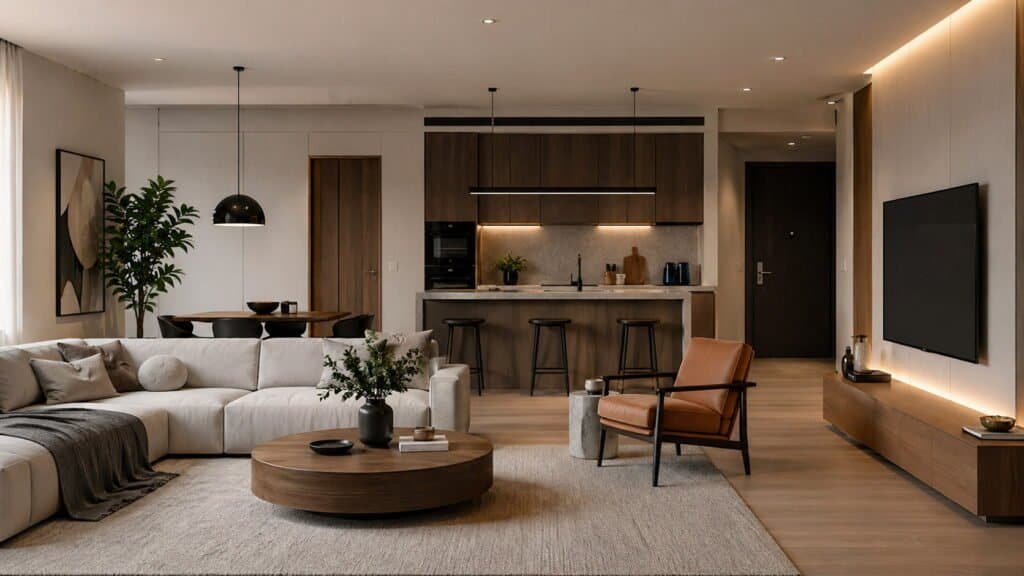
Apartment Design Trends 2027 Trends You’ll See Everywhere
Trends in 2027 aren’t about extremes. The focus is on balance—between minimalism and comfort, technology and warmth, style and practicality.
Soft Minimalism Replaces Cold Minimalism
Sharp, sterile interiors are fading. In their place, soft minimalism brings warmth and comfort into clean designs.
Expect to see:
- Rounded edges instead of sharp lines
- Layered textiles like linen, wool, and boucle
- Neutral palettes with subtle variation
The goal is simplicity that feels livable, not rigid.
Tech-Integrated but Visually Invisible Interiors
Technology hasn’t disappeared—it’s just hidden better.
Common features include:
- Built-in smart lighting systems
- Hidden speakers and wireless charging surfaces
- Seamless climate control panels
Everything works quietly in the background without disrupting the aesthetic.
Nature-Inspired Palettes and Organic Shapes
Nature continues to influence interiors, but in a more refined way.
Popular elements:
- Earth tones like clay, sand, olive, and stone
- Organic shapes in furniture and decor
- Natural materials paired with modern finishes
This creates a calming, grounded environment—especially important in urban apartments.
Multi-Functional Everything
In apartment design trends 2027, almost every element serves more than one purpose.
Examples include:
- Sofas that convert into beds
- Coffee tables with hidden storage
- Foldable dining setups
- Wall systems that integrate desks and shelving
Every piece earns its place.
Layout Evolution: How Apartment Floor Plans Are Changing
Layouts are evolving to reflect how people actually live, not how spaces were traditionally defined.
Open-Plan Living—But Smarter
Open layouts remain popular, but now they’re more structured. Instead of one large undefined space, designers use subtle zoning techniques.
Common zoning methods:
- Rugs to define areas
- Lighting variations for different functions
- Furniture placement to create natural boundaries
This keeps the openness while adding clarity.
Sliding, Folding, and Modular Partitions
Walls are no longer fixed. Flexible partitions allow you to reshape your apartment throughout the day.
Options gaining popularity:
- Sliding glass panels
- Folding wooden dividers
- Curtain-based partitions for softer separation
These solutions make it easy to switch between privacy and openness.
Micro-Rooms vs. Hybrid Spaces
Two design approaches are emerging:
| Approach | Description | Best For |
| Micro-rooms | Small, clearly defined spaces | Those who prefer structure and privacy |
| Hybrid spaces | Multi-use open areas | Flexible, dynamic lifestyles |
Many modern apartments combine both—small private zones with adaptable shared spaces.
Designing for Work-From-Home Permanence
Work-from-home setups are no longer temporary. Apartments now include dedicated work zones, even in compact layouts.
Practical ideas:
- Built-in desks within shelving units
- Fold-out workstations
- Acoustic panels for noise control
- Strategic lighting for video calls
A well-designed workspace improves both productivity and comfort without taking over your home.
Smart Living: Technology That Blends Into Apartment Design Trends 2027
Technology is no longer something you add to a home—it’s something you design around. In apartment design trends 2027, the best tech feels invisible but makes daily life noticeably easier.
Hidden Smart Systems That Do the Work for You
Forget bulky devices and visible wires. Modern apartments integrate smart systems directly into the structure.
What this looks like in practice:
- Recessed lighting systems controlled via app or voice
- Built-in climate control with automatic adjustments
- Discreet security features like sensor-based locks and cameras
- Smart mirrors displaying weather, schedules, or lighting modes
Everything is embedded, seamless, and intuitive.
Voice + AI-Assisted Living Environments
Apartments are becoming more responsive to your habits. AI doesn’t just respond—it anticipates.
Examples of smart automation:
- Lights dimming automatically in the evening
- Temperature adjusting based on your sleep patterns
- Curtains opening with natural daylight cycles
- Personalized routines activated with a single command
This creates a space that feels alive, not static.
Furniture with Built-In Intelligence
Furniture is evolving beyond form and comfort. It now supports your tech-driven lifestyle.
Look for:
- Sofas with wireless charging pads
- Desks with cable management and smart ports
- Beds with integrated lighting and storage sensors
- Coffee tables with hidden tech compartments
The goal is reducing clutter while increasing functionality.
The Rise of “Invisible Tech” Aesthetics
The most important shift isn’t the technology itself—it’s how it disappears.
Design principles include:
- Concealing devices within walls or furniture
- Using neutral finishes to hide interfaces
- Minimizing visible screens and controls
The result is a calm, distraction-free environment where tech enhances the experience without dominating it.
Small Space, Big Impact: Maximizing Every Square Meter
Space is one of the biggest constraints in apartment living. The difference in 2027 is how cleverly that space is used.
Vertical Design Strategies That Unlock Hidden Space
Most apartments underuse vertical areas. Smart design turns walls and ceilings into functional assets.
High-impact ideas:
- Floor-to-ceiling storage units
- Hanging systems for kitchen tools or decor
- Elevated sleeping areas in micro-apartments
- Ceiling-mounted racks for seasonal items
Vertical thinking instantly expands usable space.
Transformable Furniture That Adapts Instantly
Furniture now works harder than ever. Pieces are designed to change form depending on your needs.
Popular solutions:
- Murphy beds that fold into walls
- Expandable dining tables
- Modular seating that rearranges easily
- Fold-down desks for compact workspaces
This flexibility is essential for smaller apartments.
Optical Tricks That Make Spaces Feel Bigger
Visual perception plays a huge role in how spacious an apartment feels.
Effective techniques:
- Mirrors to reflect light and depth
- Light, layered color palettes
- Continuous flooring to avoid visual breaks
- Strategic lighting to eliminate shadows
Small adjustments can dramatically change how a room is experienced.
Storage That Disappears Into Design
Clutter is the fastest way to make a space feel cramped. Hidden storage keeps everything clean and intentional.
Smart storage ideas:
- Built-in cabinets that blend with walls
- Under-bed and under-sofa compartments
- Staircase storage in duplex units
- Multi-purpose furniture with concealed space
When storage is integrated, the entire apartment feels calmer and more spacious.
Materials & Finishes Defining Apartment Design Trends 2027
Materials are no longer just about durability or looks—they shape how a space feels, both physically and emotionally.
Sustainable Materials Leading the Way
Eco-conscious design is now standard, not optional. Apartment design 2027 prioritizes materials that are both beautiful and responsible.
Common choices include:
- Bamboo for flooring and furniture
- Recycled wood and composite panels
- Cork for walls and acoustic insulation
- Low-VOC paints for healthier indoor air
Sustainability and style now go hand in hand.
Textured Surfaces Replace Flat Finishes
Flat, uniform surfaces are being replaced with depth and tactility.
Trending finishes:
- Textured plaster walls
- Fluted wood panels
- Stone-inspired laminates
- Fabric-wrapped elements
These details add warmth and character without overwhelming the space.
Matte, Tactile, and Anti-Gloss Trends
High-gloss finishes are losing popularity. Matte surfaces offer a softer, more refined look.
Benefits of matte finishes:
- Less reflection and visual noise
- Easier maintenance (fewer visible fingerprints)
- A more natural, grounded aesthetic
This aligns with the overall shift toward calm, comfortable interiors.
Mixing Natural and Futuristic Materials
One of the most interesting directions in apartment design trends 2027 is the contrast between organic and modern.
Examples:
- Wood paired with brushed metal
- Stone surfaces combined with glass or acrylic
- Soft textiles alongside sleek, engineered materials
This mix creates a balanced aesthetic—warm but forward-looking, simple but visually rich.
Color Stories: Palettes That Will Dominate Apartment Interiors
Color in apartment design trends 2027 goes beyond aesthetics—it shapes mood, defines zones, and influences how a space feels throughout the day.
Earth Tones with Unexpected Accents
Warm, grounded colors remain the foundation, but they’re no longer used alone.
Popular combinations:
- Clay, terracotta, and sand paired with muted blue or sage
- Warm beige layered with soft charcoal accents
- Olive green balanced with brushed metallic tones
This mix keeps spaces calm while adding subtle personality.
Warm Neutrals vs. Cool Futuristic Shades
Two palette directions are emerging, often blended within the same apartment.
| Palette Type | Key Colors | Feel |
| Warm neutrals | Cream, taupe, caramel | Cozy, inviting |
| Cool futuristic | Soft gray, mist blue, pale silver | Clean, modern |
Balancing both creates a space that feels current but not cold.
Monochrome Layering Techniques
Monochrome design is evolving. Instead of flat, single-tone rooms, 2027 focuses on layering variations of the same color.
How to do it effectively:
- Combine different textures (fabric, wood, matte paint)
- Use slightly varied shades within one palette
- Add depth through lighting rather than contrast
This creates visual richness without clutter.
Mood-Based Color Zoning Per Room
Apartments are being designed around emotional function.
Examples:
- Soft, warm tones in living areas for relaxation
- Neutral, low-contrast palettes in workspaces for focus
- Deeper, cocoon-like colors in bedrooms for rest
Color becomes a tool—not just decoration.
Furniture Trends for Apartment Design Trends 2027
Furniture is becoming more adaptable, expressive, and space-conscious. Every piece must justify its presence.
Modular Sofas and Reconfigurable Seating
Living areas are no longer fixed. Modular seating allows you to reshape the space instantly.
Benefits include:
- Easy rearrangement for guests or daily use
- Flexibility for different room layouts
- Long-term adaptability as needs change
A single sofa can serve multiple configurations.
Low-Profile, Grounded Furniture Shapes
Furniture is getting lower and more connected to the floor, creating a sense of openness.
Why it works:
- Makes ceilings feel higher
- Reduces visual bulk
- Enhances a calm, relaxed atmosphere
This trend pairs especially well with minimalist and Japandi-inspired interiors.
Statement Pieces with Sculptural Form
Even in minimalist apartments, there’s room for bold design.
Common statement elements:
- Curved accent chairs
- Artistic coffee tables
- Unique lighting fixtures
These pieces act as focal points without overwhelming the space.
Lightweight, Movable Designs for Flexibility
Heavy, fixed furniture is fading out. In 2027, mobility matters.
Look for:
- Stackable or foldable chairs
- Lightweight tables
- Furniture on hidden casters
This makes it easier to adapt your apartment for different activities.
Lighting as Design: More Than Just Illumination
Lighting is one of the most powerful tools in apartment design trends 2027. It defines space, enhances mood, and improves functionality.
Layered Lighting That Transforms a Room
A single overhead light is no longer enough. Modern apartments use multiple layers of light.
The three essential layers:
- Ambient lighting for overall brightness
- Task lighting for specific activities
- Accent lighting to highlight features
Combining these layers creates depth and flexibility.
LED Integration in Walls, Floors, and Furniture
Lighting is becoming part of the architecture itself.
Innovative uses include:
- LED strips embedded in shelving or ceilings
- Under-cabinet kitchen lighting
- Floor-level lighting for nighttime navigation
These subtle details elevate the entire design.
Mood-Responsive Lighting Systems
Lighting now adapts to your lifestyle.
Examples:
- Warm tones in the evening to promote relaxation
- Bright, cool light for productivity during the day
- Custom scenes for different activities (reading, dining, entertaining)
This enhances both comfort and functionality.
Maximizing Natural Light in Compact Apartments
Natural light remains one of the most valuable design elements.
Ways to optimize it:
- Sheer curtains instead of heavy drapes
- Reflective surfaces to distribute light
- Minimal window obstructions
- Strategic mirror placement
Even small apartments can feel open and airy with the right approach.
Style Directions: Popular Apartment Design Aesthetics for 2027
Style in 2027 is less about strict rules and more about blending influences in a cohesive way. Still, a few key directions are shaping apartment interiors.
Japandi Evolution: Softer, Warmer, More Layered
Japandi continues to evolve, moving away from stark minimalism toward a more inviting feel.
Key characteristics:
- Warmer wood tones
- Soft textiles and layered decor
- Balanced simplicity with comfort
This style remains a favorite for modern apartments.
Neo-Minimalism with Personality
Minimalism is no longer about removing everything—it’s about keeping what matters.
What defines this style:
- Clean layouts with intentional decor
- Subtle pops of color or texture
- Personal items integrated into the design
It feels curated rather than empty.
Urban Biophilic Design: Nature Meets City Living
Bringing nature indoors is becoming essential, especially in dense urban areas.
Core elements:
- Indoor plants and vertical gardens
- Natural materials like wood and stone
- Earth-inspired color palettes
This approach improves both aesthetics and well-being.
Soft Futuristic Interiors
Futuristic design is becoming more approachable.
Instead of harsh, sci-fi looks, expect:
- Smooth, curved forms
- Muted, tech-inspired colors
- Seamless integration of materials and lighting
The result is modern but still comfortable.
Sustainable Apartment Design Trends 2027: Living Smarter, Not Bigger
Sustainability in apartment design trends 2027 is no longer a trend—it’s a baseline expectation. The focus has shifted from simply using eco-friendly materials to designing spaces that consume less, last longer, and adapt over time.
Energy-Efficient Layouts and Appliances
Efficiency starts with how a space is planned. Smart layouts reduce the need for excessive lighting, cooling, and heating.
Practical upgrades:
- Energy-efficient LED lighting throughout
- Appliances with high energy ratings
- Cross-ventilation layouts to reduce AC usage
- Smart thermostats that optimize energy use
Small design decisions can lead to significant long-term savings.
Water-Saving Design Strategies
Water efficiency is becoming a priority, especially in urban apartments.
Key features:
- Low-flow faucets and showerheads
- Dual-flush toilet systems
- Compact dishwashers with eco modes
- Smart leak detection systems
These upgrades reduce waste without sacrificing comfort.
Upcycled and Circular Design Principles
Furniture and materials are increasingly chosen with their lifecycle in mind.
Examples:
- Reclaimed wood furniture
- Decor made from recycled materials
- Modular furniture that can be reconfigured instead of replaced
- Choosing quality pieces designed to last years, not seasons
This approach reduces both cost and environmental impact over time.
Designing for Longevity Instead of Trends
Fast-changing trends lead to frequent redesigns. Apartment design 2027 emphasizes timeless foundations.
Focus on:
- Neutral base palettes
- Durable materials
- Flexible layouts that evolve with your needs
A well-designed apartment shouldn’t need a complete overhaul every few years.
Budget-Friendly Ways to Achieve a 2027 Apartment Look
Creating a modern apartment doesn’t require a massive budget. Strategic decisions can deliver a high-end feel without overspending.
Where to Invest vs. Where to Save
Knowing where to allocate your budget makes all the difference.
| Invest In | Save On |
| Sofa and mattress | Trend-based decor |
| Lighting fixtures | Temporary accessories |
| Built-in storage | Replaceable small furniture |
| Flooring (if possible) | Wall art and accents |
Invest in items you use daily. Save on elements that change often.
Affordable Material Alternatives
High-end looks can be achieved with budget-friendly substitutes.
Examples:
- Laminate that mimics natural wood
- Engineered stone instead of marble
- Peel-and-stick backsplash tiles
- Vinyl flooring with realistic textures
The key is choosing finishes that look authentic, not cheap.
DIY Upgrades with High Visual Impact
Simple upgrades can dramatically transform a space.
Ideas to try:
- Repainting walls in modern neutral tones
- Updating cabinet handles and fixtures
- Adding LED strip lighting under shelves
- Installing open shelving for both storage and display
These changes are cost-effective but visually powerful.
Renting-Friendly Design Hacks
Not owning your apartment doesn’t limit your design potential.
Smart renter solutions:
- Removable wallpaper for accent walls
- Stick-on tiles for kitchens or bathrooms
- Freestanding storage units
- Portable lighting solutions
Everything can be stylish and reversible.
Common Mistakes to Avoid in Apartment Design Trends 2027
Even the best trends can fail if applied incorrectly. Avoiding these mistakes will save time, money, and frustration.
Overloading Small Spaces with Trends
Trying to include every trend leads to clutter.
Better approach:
- Choose 2–3 core design directions
- Keep the rest neutral and supportive
Consistency always beats excess.
Ignoring Functionality for Aesthetics
A beautiful space that doesn’t work quickly becomes frustrating.
Watch out for:
- Furniture that looks good but isn’t comfortable
- Poorly placed lighting
- Lack of practical storage
Design should always support daily life.
Poor Lighting Planning
Lighting is often treated as an afterthought, which can ruin even well-designed spaces.
Common issues:
- Relying on a single light source
- Ignoring task lighting
- Using the wrong color temperature
Layered lighting is essential for both function and atmosphere.
Lack of Cohesion in Multi-Use Spaces
Open and flexible layouts can feel chaotic without a clear visual connection.
Fix this by:
- Using consistent color palettes
- Repeating materials across zones
- Maintaining a unified design language
A cohesive apartment feels intentional and calm.
Bringing It All Together: Designing an Apartment That Evolves With You
A successful apartment in 2027 isn’t just stylish—it’s adaptable, efficient, and deeply personal.
Focus on building a space that:
- Adjusts to different activities throughout the day
- Supports both productivity and relaxation
- Balances technology with comfort
- Reflects your lifestyle, not just current trends
Perfection isn’t the goal. Flexibility is.
When your apartment can evolve with your needs, it stays relevant for years without constant redesign.
FAQ: Apartment Design Trends 2027
What are apartment design trends 2027 all about?
It focuses on flexibility, smart technology, sustainability, and personalized living. Spaces are designed to adapt to changing lifestyles rather than stay fixed.
How can I make a small apartment look modern in 2027?
Use multifunctional furniture, neutral layered colors, smart lighting, and hidden storage. Keep the layout flexible and avoid clutter.
Is smart home technology necessary for apartment design trends 2027?
Not mandatory, but highly recommended. Even basic smart lighting or climate control can significantly improve comfort and efficiency.
What colors are trending for apartment interiors in 2027?
Earth tones, warm neutrals, and soft futuristic shades are dominant. Layering similar tones adds depth without overwhelming the space.
How do I design a renter-friendly modern apartment?
Use removable wallpaper, portable furniture, stick-on tiles, and lighting upgrades. Focus on changes that are easy to reverse.
What is the biggest mistake to avoid in apartment design?
Prioritizing aesthetics over functionality. A well-designed apartment must support your daily routines comfortably.
For deeper insights into how living environments affect communication, mood, and daily interaction, this guide from the American Psychological Association is worth exploring:
https://www.apa.org/monitor/julaug03/physical
Your apartment doesn’t need to be bigger to feel better—it just needs to work smarter. Start with one or two upgrades, experiment with flexible layouts, and gradually shape a space that truly supports how you live today and tomorrow.
