
Pendant lights are no longer just functional fixtures—they’ve become one of the most defining elements of modern interiors. Trends for pendant lights in 2027 are pushing boundaries with sculptural design, smarter technology, and materials that feel both natural and refined.
This guide breaks down exactly what’s changing, what’s worth investing in, and how to use these trends in real spaces. Expect practical tips, design insights, and clear examples you can apply whether you’re renovating a home or simply upgrading your lighting.
In This Article
Why Pendant Lights Are Defining Interior Design in 2027
Pendant lighting has evolved into a design centerpiece, not just a source of illumination. In 2027, interiors are increasingly built around lighting choices rather than treating them as an afterthought.
Open-plan living plays a big role here. Without walls to define zones, pendant lights help create visual structure—guiding the eye and anchoring spaces like kitchen islands, dining tables, and entryways.
Lighting as a focal point, not a finishing touch
Designers now start with lighting early in the planning phase. A well-chosen pendant can:
- Set the tone of the entire room
- Introduce texture and contrast
- Act as a functional art piece
A sculptural pendant over a dining table, for example, often replaces the need for additional decorative elements.
The rise of layered lighting
Single overhead lights feel flat and outdated. Instead, 2027 interiors embrace layered lighting, combining:
- Ambient lighting (overall brightness)
- Task lighting (focused areas like countertops)
- Accent lighting (decorative highlights)
Pendant lights sit at the intersection of all three, making them incredibly versatile.
What’s changing from previous years
Earlier trends leaned heavily on industrial styles and exposed bulbs. That aesthetic is fading. In its place:
- Softer, more organic shapes are gaining popularity
- Materials feel warmer and more tactile
- Technology is becoming invisible but powerful
Pendant lighting is no longer about showing the bulb—it’s about shaping the experience of light.
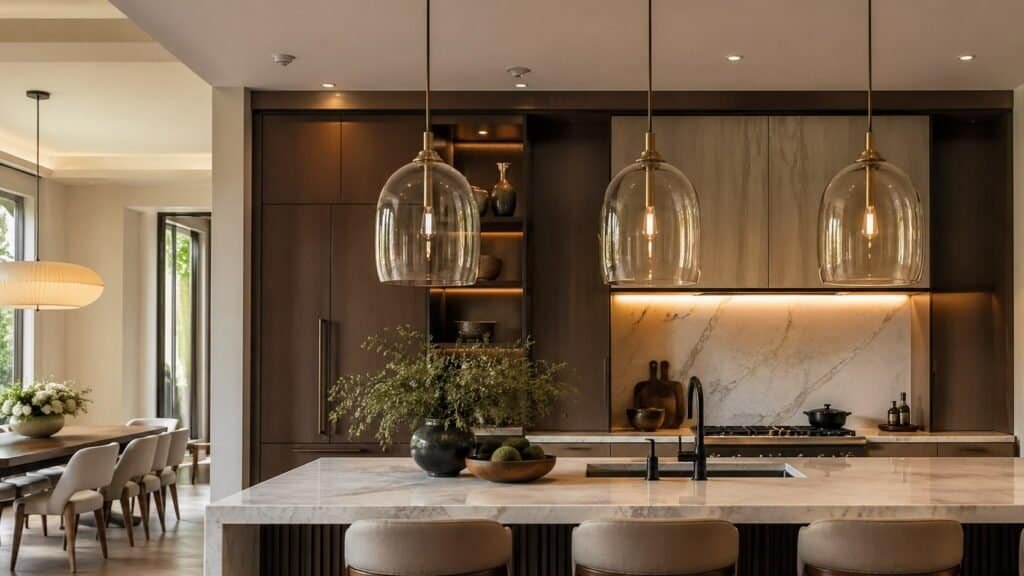
2027 Pendant Lighting Trends at a Glance
If you want a quick snapshot of where things are headed, these are the dominant pendant light trends for 2027:
- Sculptural silhouettes that double as art pieces
- Natural materials like rattan, clay, and stone with refined finishes
- Clustered installations instead of single fixtures
- Smart lighting integration with app and voice control
- Warm metallic finishes replacing stark chrome
- Oversized pendants for bold visual impact
- Soft minimalism with rounded edges and diffused light
- Tinted and textured glass for mood-driven lighting
What ties these trends together
A clear theme runs through all of them: balance between aesthetics and comfort. Harsh, overly industrial designs are fading in favor of lighting that feels inviting, tactile, and human-centered.
Quick comparison: Then vs Now
| Element | Previous Trends | 2027 Direction |
| Shapes | Linear, rigid | Organic, sculptural |
| Materials | Metal-heavy | Mixed, natural + refined |
| Lighting style | Bright, exposed bulbs | Soft, diffused glow |
| Technology | Visible features | Seamless integration |
| Scale | Small to medium fixtures | Oversized or clustered designs |
This shift reflects a broader move toward interiors that prioritize comfort, personality, and subtle luxury.
Sculptural Forms Take Center Stage in Pendant Lights 2027
Minimalism isn’t disappearing—it’s evolving. One of the most striking pendant lights 2027 trends is the move toward sculptural, artistic forms that blur the line between lighting and decor.
From simple fixtures to statement pieces
Basic dome pendants are being replaced by designs that feel custom-made. Think:
- Fluid, wave-like silhouettes
- Asymmetrical shapes that catch the eye
- Layered forms that create depth
These pieces often look like they belong in a gallery, yet they’re fully functional.
Organic vs geometric: choosing your direction
Two distinct styles are emerging:
Organic forms
- Inspired by nature (clouds, stones, water flow)
- Soft edges and irregular shapes
- Ideal for relaxed, warm interiors
Geometric forms
- Structured but still bold
- Reimagined spheres, cubes, and arcs
- Work well in modern or contemporary spaces
Mixing both styles in one home creates a curated, designer feel without being predictable.
Why this trend works in real homes
Sculptural pendant lights solve a common problem: how to make a space feel unique without cluttering it.
Instead of adding more decor, one standout fixture can:
- Anchor the room visually
- Add personality instantly
- Reduce the need for extra styling
Placement matters just as much as design. Over a dining table, a sculptural pendant becomes a conversation piece. In an entryway, it sets expectations before anyone steps further inside.
Natural Materials Are Getting a Luxe Upgrade
Raw, earthy materials aren’t new—but in 2027, they’re being refined in ways that feel elevated rather than rustic. One of the most noticeable trends for pendant lights in 2027 is how natural textures are paired with polished finishes to create a more sophisticated look.
From handmade to high-end
Materials like rattan, bamboo, and clay are no longer limited to bohemian or coastal interiors. Designers are reworking them with:
- Smoother finishes and tighter weaves
- Mixed materials like metal accents or glass layering
- Cleaner silhouettes that suit modern spaces
A woven pendant, for instance, might now feature a brushed brass frame or a softly diffused inner globe to enhance both durability and light quality.
Stone and glass step into the spotlight
Expect to see more premium materials making their way into everyday homes:
- Alabaster for its soft, glowing translucency
- Travertine and marble for subtle texture and weight
- Textured or etched glass for diffused, ambient lighting
These materials don’t just look good—they change how light behaves in a room, creating a warmer, more inviting atmosphere.
Sustainability without the “rough” aesthetic
Eco-conscious design continues to influence lighting, but the approach has matured. Instead of visibly recycled or unfinished looks, 2027 trends focus on:
- Sustainably sourced materials with refined craftsmanship
- Longevity over fast design trends
- Neutral tones that age well over time
The result is lighting that feels timeless, tactile, and intentional, rather than trend-driven.
Clustered Pendant Lights: The Statement Ceiling Trend of 2027
Single pendant lights are no longer the default. One of the boldest pendant lights 2027 trends is the rise of clustered installations—multiple pendants grouped together to create a dramatic ceiling feature.
Why clusters are taking over
Clustered lighting adds depth and movement in a way a single fixture can’t. It works especially well in spaces that need visual interest without adding furniture or decor.
Key benefits include:
- Stronger visual impact without overwhelming the room
- Flexibility in arrangement and scale
- Ability to highlight specific zones in open layouts
Popular cluster styles in 2027
Designers are experimenting with different compositions, including:
- Symmetrical clusters
Even spacing and matching fixtures for a clean, modern look - Organic groupings
Varied heights and shapes for a more relaxed, artistic feel - Mixed-material clusters
Combining glass, metal, and natural textures in one installation
The goal isn’t perfection—it’s creating a composition that feels curated and intentional.
Where clustered pendant lights work best
Placement can make or break this trend. Ideal locations include:
- Over kitchen islands for layered task lighting
- In stairwells or entryways to emphasize vertical space
- Above dining tables for a dramatic focal point
Ceiling height matters. Taller spaces allow for more dramatic drops and varied arrangements, while lower ceilings benefit from tighter, more controlled clusters.
Smart Pendant Lighting: Where Design Meets Technology
Technology is becoming a core part of lighting design, but in 2027, it’s almost invisible. The newest trends for pendant lights in 2027 integrate smart features seamlessly—without compromising aesthetics.
Smarter control, better ambiance
Modern pendant lights now offer:
- Adjustable color temperature (warm to cool lighting)
- Dimmable brightness levels for different moods
- Scheduling and automation through apps
This level of control allows one fixture to serve multiple purposes throughout the day—from bright task lighting in the morning to a soft, ambient glow in the evening.
Voice and app integration
Smart pendant lights can connect with systems like:
- Voice assistants for hands-free control
- Mobile apps for remote adjustments
- Smart home ecosystems for synchronized lighting scenes
The key difference in 2027 is subtlety. Controls are integrated smoothly, with no bulky switches or visible tech disrupting the design.
Designing with smart lighting in mind
Choosing smart pendant lighting isn’t just about features—it’s about planning how the space will be used.
Consider:
- Layering smart pendants with other smart lighting sources
- Creating preset “scenes” for different activities
- Ensuring compatibility with your existing system
When done right, smart pendant lighting enhances both functionality and atmosphere, making your home feel more responsive and personalized without adding complexity.
Color Trends in Pendant Lights for 2027
Color is doing more work in lighting than ever before. Instead of playing it safe with black, white, or chrome, pendant lights in 2027 are embracing tones that add warmth, depth, and personality.
Warm metallics replace cold finishes
High-gloss chrome and stark silver are fading out. In their place:
- Champagne gold for a softer, elegant glow
- Brushed brass for warmth without excess shine
- Antique bronze for subtle character
These finishes pair beautifully with both modern and classic interiors, making them a safer long-term investment.
Earth-inspired palettes take over
Nature continues to influence interior design, and lighting is no exception. Expect to see:
- Terracotta and clay tones for grounded warmth
- Olive and moss greens for a calming effect
- Sand and beige hues for versatility
These colors help pendant lights blend into a space while still adding visual interest.
Glass finishes that shape the mood
Glass isn’t just clear anymore. The latest pendant lights 2027 trends include:
- Smoky gray glass for a moody, modern feel
- Amber-tinted glass for warm, cozy lighting
- Frosted or etched finishes to soften brightness
Choosing the right glass finish can completely change how a room feels at night—often more than the bulb itself.
Minimalism, But Warmer: The “Soft Modern” Pendant Trend
Minimalism isn’t disappearing—it’s becoming more livable. One of the most important trends for pendant lights in 2027 is the shift toward soft modern design, where simplicity meets comfort.
What defines soft modern lighting
This updated approach to minimalism focuses on:
- Rounded edges instead of sharp lines
- Diffused light instead of harsh brightness
- Subtle textures instead of flat surfaces
The result feels calm, inviting, and easy to live with.
Influences behind the trend
Two major design styles are shaping this movement:
- Scandinavian design
Known for simplicity, functionality, and light tones - Japandi style
A blend of Japanese minimalism and Scandinavian warmth
Both emphasize balance, natural materials, and thoughtful design—qualities that translate perfectly into pendant lighting.
Why homeowners are choosing this style
Cold, industrial interiors can feel unwelcoming over time. Soft modern pendant lights solve that by:
- Creating a more relaxed atmosphere
- Working across multiple interior styles
- Aging better than trend-heavy designs
This makes them ideal for anyone looking to invest in lighting that won’t feel outdated in a few years.
Oversized Pendant Lights: Bold Scale, Bigger Impact
Bigger is back—but with intention. Oversized fixtures are one of the most eye-catching pendant lights 2027 trends, especially in open and spacious homes.
When one pendant is enough
Instead of installing multiple small fixtures, many designers are opting for:
- One large statement pendant over a dining table
- A bold centerpiece above a kitchen island
- A dramatic fixture in an entryway
This approach simplifies the design while maximizing visual impact.
Getting the scale right
Oversized doesn’t mean overwhelming. The key is proportion.
Use this quick guide:
| Space Type | Recommended Pendant Size |
| Dining table | ½ to ⅔ the width of the table |
| Kitchen island | ⅓ the width (if using one large unit) |
| Entryway | Depends on ceiling height (larger = taller space) |
Balance comes from matching the fixture size to the room’s dimensions, not just following trends.
Materials that work best at large scale
Not all materials suit oversized designs. The most effective options include:
- Lightweight materials like woven fibers
- Translucent materials like glass or acrylic
- Slim metal frames that don’t feel bulky
These keep the fixture visually light, even when physically large.
Pendant Lights 2027 for Different Rooms (Practical Guide)
Choosing the right pendant light depends heavily on where it will be used. The best trends for pendant lights in 2027 aren’t just about style—they’re about fit and function.
Kitchen islands: precision matters
Pendant lighting over a kitchen island needs to be both practical and stylish.
Key guidelines:
- Hang pendants 70–85 cm above the countertop
- Space multiple fixtures evenly (usually 2–3 lights)
- Choose focused lighting for better task visibility
Clustered or linear arrangements work particularly well here.
Dining rooms: creating a focal point
Dining areas benefit from more expressive lighting.
Best practices:
- Center the pendant directly above the table
- Use dimmable lighting for flexibility
- Consider sculptural or oversized designs
This is one of the easiest places to make a bold statement.
Bedrooms: a modern alternative to table lamps
Pendant lights are increasingly replacing bedside lamps.
Why it works:
- Frees up space on nightstands
- Adds a clean, modern look
- Provides soft, ambient lighting
Look for adjustable or dimmable options for comfort.
Bathrooms: an emerging design move
Pendant lighting in bathrooms is growing in popularity, especially in luxury-inspired spaces.
Use them:
- On either side of a mirror for balanced lighting
- As a statement piece above a bathtub
- In powder rooms for added character
Moisture-resistant fixtures are essential here for safety and durability.
How to Choose the Right Pendant Light for Your Space
Trends can inspire, but the right pendant light depends on how it works in your space. Choosing wisely ensures your lighting looks good and performs well every day.
Start with ceiling height and proportions
Scale is everything. A pendant that looks stunning online can feel awkward if it’s too large or too small for your room.
Use these general rules:
- Standard ceilings (2.4–2.7 m): choose compact or medium-sized pendants
- High ceilings (above 2.7 m): go larger or consider layered/clustered designs
- Keep at least 2.1 m clearance from floor to bottom of the fixture in open areas
Match the style—don’t copy it blindly
Consistency matters more than trendiness. A sculptural pendant works best when it complements your existing design.
Quick matching tips:
- Natural interiors → woven, stone, or soft glass pendants
- Modern spaces → clean shapes with subtle detailing
- Classic homes → warm metallic finishes with timeless forms
Blending styles can work, but there should always be one unifying element like color, material, or shape.
Balance light output and ambiance
Looks matter, but lighting performance matters more.
Ask yourself:
- Is this for task lighting or mood lighting?
- Does the fixture diffuse light or direct it downward?
- Will it create glare or soft illumination?
A beautiful pendant that doesn’t provide usable light quickly becomes frustrating.
Common mistakes to avoid
Even great designs can fail with poor placement or sizing.
Watch out for:
- Hanging pendants too high or too low
- Choosing style over function
- Ignoring bulb type and brightness
- Overcrowding the ceiling with too many fixtures
A simple setup done well often looks more expensive than an overdesigned one.
Mixing Pendant Light Styles Without Clashing
Mixing styles is one of the easiest ways to create a designer look—but it can also go wrong fast. The key is intentional contrast, not randomness.
Anchor your design with one dominant style
Start by choosing a primary direction:
- Modern
- Natural
- Industrial (softened for 2027 trends)
Then layer in secondary styles carefully, rather than mixing everything at once.
Use cohesion rules designers rely on
To make mixed pendant lights feel curated:
- Keep a consistent color palette
- Repeat at least one material (e.g., brass, glass, wood)
- Maintain similar proportions or visual weight
This creates harmony even when the shapes differ.
Where mixing works best
Some areas naturally support variety:
- Open-plan kitchens (island vs dining pendants)
- Multi-level homes (staircase vs hallway lighting)
- Living spaces with multiple zones
Mixing styles adds depth and personality, especially when done subtly.
Budget vs Designer Pendant Lights: What’s Worth It in 2027?
Not every pendant light needs a designer price tag—but some are worth the investment. Understanding where to spend and where to save makes a big difference.
When it’s worth investing more
Higher-end pendant lights typically offer:
- Better material quality (real stone, solid metals)
- Unique or handcrafted designs
- Longer lifespan and better finishes
Invest in statement pieces that act as focal points—like dining room or entryway lighting.
Where you can save without regret
Budget-friendly options work well when:
- The fixture is purely functional (hallways, secondary rooms)
- The design is simple and widely available
- You plan to update it in a few years
Mid-range brands often hit the sweet spot between quality and affordability.
Quick comparison: budget vs designer
| Feature | Budget Lighting | Designer Lighting |
| Materials | Basic or synthetic | Premium, natural materials |
| Design uniqueness | Mass-produced | Distinct or custom |
| Longevity | Moderate | Long-lasting |
| Price | Affordable | Higher investment |
A balanced approach—splurging in key areas and saving elsewhere—usually delivers the best overall result.
Future Outlook: What Comes After 2027 Pendant Lighting Trends?
Looking beyond current trends for pendant lights in 2027, early signals suggest lighting will become even more personalized and adaptive.
Lighting that responds to you
Emerging innovations include:
- Sensors that adjust brightness based on time of day
- Adaptive color temperature linked to your routine
- Integration with wellness-focused design
Lighting will shift from static to responsive, quietly improving daily comfort.
Sustainability becomes non-negotiable
Eco-friendly design is no longer optional. Future pendant lights will focus on:
- Energy-efficient LED technology
- Recyclable or responsibly sourced materials
- Longer product lifecycles
Expect brands to prioritize transparency around materials and manufacturing.
The rise of invisible technology
Tech won’t disappear—it will just become less visible.
Future designs will hide:
- Wiring and hardware
- Smart features and controls
- Bulb components within integrated designs
The result is cleaner, more seamless lighting that feels effortless.
Final Thoughts: Designing with Pendant Lights That Last Beyond Trends
Trends come and go, but great lighting decisions last for years. The smartest way to approach pendant lights in 2027 is to blend what’s current with what feels timeless to you.
Focus on:
- Quality materials that age well
- Shapes that won’t feel outdated quickly
- Lighting that enhances how you actually live
If you want deeper insight into how lighting affects mood and human interaction, this guide from the International Association of Lighting Designers offers valuable perspective: https://www.iald.org
Make your next lighting upgrade count
Take a moment to evaluate your space. Look at what feels flat, underlit, or outdated—then use these 2027 trends as a guide, not a rulebook.
The right pendant light doesn’t just brighten a room. It transforms how the space feels every single day.
