
Kitchen design in 2027 is becoming warmer, more personal, and more thoughtfully connected to everyday living. The biggest 2027 kitchen trends move beyond purely minimalist interiors, bringing together natural materials, expressive colors, smarter storage, and comfortable layouts that make kitchens feel as inviting as the rest of the home.
Homeowners are increasingly looking for kitchens that balance beautiful design with practical functionality. Natural wood cabinets, earthy color palettes, statement countertops, multifunctional islands, and layered lighting are helping shape this new direction. Technology and sustainable materials are also becoming important, but the overall goal remains simple: create a kitchen that looks beautiful, works efficiently, and feels comfortable to use every day.
Whether you are planning a complete renovation or looking for affordable ways to refresh an existing space, understanding the latest kitchen design trends can help you make better decisions. This guide covers the colors, cabinetry, materials, layouts, and decorating ideas worth considering in 2027, along with practical ways to incorporate them without making your kitchen feel overly trendy.
In This Article
2027 Kitchen Trends: Warmer, Smarter, and More Personal
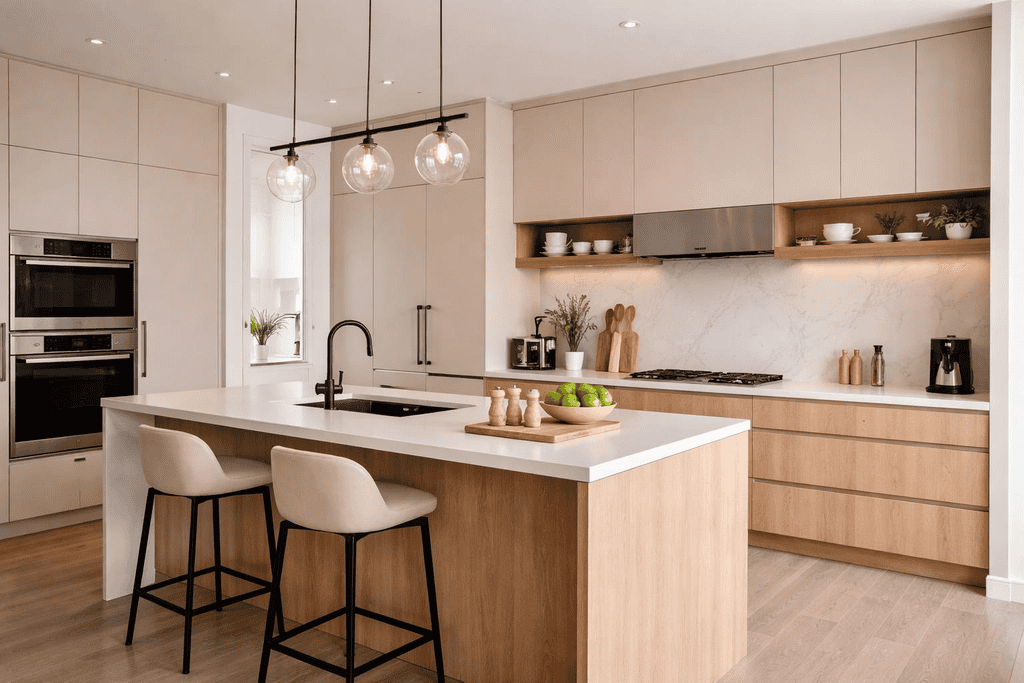
The modern kitchen is no longer designed simply as a place to prepare meals. It has become a central living space where families gather, conversations happen, children do homework, and guests naturally spend time together. This change is influencing almost every aspect of kitchen design in 2027, from the materials used on cabinets to the way appliances and storage are arranged.
One of the most noticeable shifts is the move toward warmth, natural character, and individuality. Perfectly uniform kitchens with cold gray finishes and completely white surfaces are making room for more expressive interiors. Homeowners are showing greater interest in materials with visible texture, colors inspired by nature, and decorative details that make a kitchen feel less like a showroom.
Warm Minimalism Is Replacing Cold, Sterile Kitchen Designs
Minimalism remains popular, but its appearance is changing. Instead of relying on stark white surfaces, glossy finishes, and sharp contrasts, modern kitchens are embracing a softer interpretation known as warm minimalism.
This approach keeps the simplicity of minimalist design while introducing natural textures and warmer finishes. The result is a kitchen that feels clean and uncluttered without appearing empty or uncomfortable.
Some popular elements include:
- Creamy white and warm beige cabinetry instead of cool white.
- Natural oak, walnut, and other wood finishes.
- Matte surfaces that create a softer appearance.
- Simple cabinet designs with subtle detailing.
- Stone countertops with gentle patterns and natural variation.
- Warm metal accents in brass, bronze, or brushed nickel.
For example, a kitchen with warm white cabinets, light oak lower cupboards, a beige stone countertop, and understated brass handles can look contemporary without feeling overly polished.
The key is to keep the design simple while allowing materials and textures to create visual interest. You do not need elaborate decorations or expensive finishes to achieve this look.
Natural Materials Are Bringing More Character Into Modern Kitchens
Another important direction in 2027 kitchen trends is the growing appreciation for materials that look and feel natural. Wood, stone, handmade tiles, and textured finishes help create spaces with more depth and personality.
Natural wood is particularly appealing because it works with many different interior styles. Light oak creates a relaxed Scandinavian-inspired atmosphere, while walnut introduces richness and a more sophisticated appearance.
Stone is also becoming an important design feature. Rather than choosing countertops that look completely uniform, many homeowners prefer surfaces with distinctive veining, subtle color variations, and organic patterns.
Consider combining:
- Oak cabinetry with a creamy stone countertop.
- Walnut cabinets with a light-colored backsplash.
- Natural stone surfaces with matte black fixtures.
- Handmade ceramic tiles with warm wood shelving.
- Textured plaster walls with simple contemporary cabinets.
These combinations create contrast without making the kitchen feel visually busy.
Natural materials also work particularly well in open-plan homes because they help connect the kitchen with nearby living and dining areas. Repeating wood tones or similar textures across these spaces creates a more cohesive interior.
Personalization Is Becoming More Important Than Following Every Trend
Modern kitchens are becoming less predictable. Instead of copying an entire design from a showroom or social media post, homeowners are choosing individual features that reflect their tastes and daily routines.
One person might prefer a dark green kitchen with walnut cabinetry, while another may feel more comfortable with creamy neutrals and natural oak. Both approaches can look current when the materials, proportions, and finishes work together.
Personal touches can include:
- Vintage-inspired cabinet handles.
- Decorative ceramic pieces displayed on open shelves.
- A distinctive pendant light above the island.
- A colorful backsplash that contrasts with neutral cabinetry.
- Family-friendly seating integrated into the kitchen island.
- Artwork or small decorative objects that complement the room.
This shift toward personalization is especially useful for homeowners working with existing kitchens. You do not have to replace every cabinet or countertop to create a more contemporary appearance.
The most successful 2027 kitchen designs combine timeless foundations with a few distinctive details. This makes the space feel current while reducing the risk of an expensive renovation becoming outdated too quickly.
Kitchen Colors 2027: Beyond Plain White and Gray
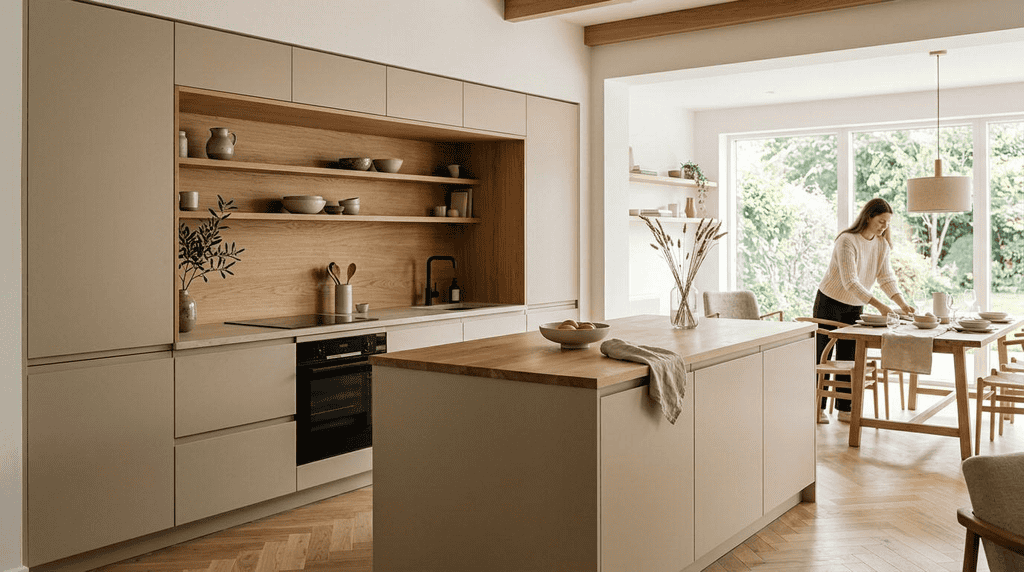
Color has a major influence on how a kitchen looks and feels. While white and gray kitchens remain practical choices, the latest kitchen color trends for 2027 are moving toward warmer neutrals, earthy shades, muted greens, and deeper natural tones.
These colors create a more welcoming atmosphere and work beautifully with popular materials such as wood, stone, ceramic tile, and brushed metal.
The best part is that many of these shades are versatile enough to suit both large kitchens and smaller spaces. The secret is understanding how to combine them and where to use stronger colors.
Earthy Neutrals Are Creating Softer, More Welcoming Kitchens
Warm neutral colors are among the most adaptable choices for modern kitchens in 2027. Shades such as mushroom, taupe, sand, oatmeal, and creamy off-white offer a softer alternative to traditional bright white.
Unlike cool gray, these colors introduce warmth without making the room feel dark. They also pair naturally with wood finishes and stone surfaces.
Some attractive combinations include:
| Kitchen color | Best complementary materials | Overall atmosphere |
| Warm beige | Light oak and cream stone | Relaxed and inviting |
| Mushroom | Walnut and brushed brass | Sophisticated and cozy |
| Creamy white | Natural wood and limestone | Bright and timeless |
| Soft taupe | Marble-look surfaces and bronze | Elegant and understated |
| Sand | Rattan, oak, and ceramic | Organic and relaxed |
Warm neutrals are particularly useful in kitchens that receive limited natural light. They can create a softer appearance than stark white while still keeping the space visually bright.
For a simple update, consider repainting existing cabinets in a warm neutral shade and replacing outdated handles with brushed brass or brushed nickel hardware.
Green Kitchen Cabinets Are Bringing Nature Indoors
Green continues to be an attractive color choice for homeowners who want something more expressive than neutral cabinetry. Its connection with nature makes it feel comfortable and relatively easy to combine with natural materials.
Different shades create different effects:
- Sage green: Soft, muted, and ideal for relaxed contemporary kitchens.
- Olive green: Earthy and slightly warmer, especially when paired with wood.
- Forest green: Rich and dramatic, suitable for larger kitchens or statement cabinetry.
- Muted eucalyptus: Subtle and refreshing, offering a gentle alternative to traditional gray-green.
A particularly effective combination is sage green lower cabinets with warm white upper cabinets and a light stone countertop. This arrangement introduces color without overwhelming the room.
For a bolder appearance, forest green cabinets can be paired with walnut shelving, brass hardware, and cream-colored backsplash tiles.
Smaller kitchens can also benefit from green accents. Consider using the color on a kitchen island, pantry doors, or a single section of cabinetry rather than covering every surface.
Muted Blues and Deeper Shades Add Personality
Blue offers another interesting direction for 2027 kitchen color schemes. Softer shades such as dusty blue, slate blue, and muted blue-gray create a calm atmosphere, while deeper navy tones provide more visual contrast.
Unlike brighter blues, muted shades are relatively easy to live with because they do not dominate the entire interior.
Try these combinations:
- Dusty blue cabinets with creamy white countertops.
- Slate blue cabinetry with natural oak flooring.
- Navy blue kitchen islands with warm neutral cabinets.
- Blue-gray cabinets with brushed nickel hardware.
- Deep blue lower cabinets with pale stone backsplashes.
One practical approach is to introduce blue through the lower cabinets while keeping upper cabinets lighter. This grounds the design and helps the kitchen maintain an open appearance.
Two-Tone Kitchen Colors Create Depth Without Overcomplicating the Design
Two-tone cabinetry remains a useful way to introduce more personality into a kitchen. Rather than selecting one color for every cabinet, homeowners can combine complementary shades to create contrast and visual balance.
The most successful combinations usually involve one dominant color and one supporting finish.
Some combinations worth considering include:
| Lower cabinets | Upper cabinets | Design effect |
| Sage green | Warm white | Fresh and balanced |
| Walnut | Cream | Warm and sophisticated |
| Navy blue | Soft beige | Rich but approachable |
| Olive green | Light oak | Natural and organic |
| Charcoal | Pale gray | Contemporary and dramatic |
For smaller kitchens, lighter upper cabinets can help the walls feel less crowded. Darker lower cabinets provide contrast while keeping the overall room visually balanced.
How to Choose a Kitchen Color That Will Still Look Good Years Later
Following kitchen color trends does not mean selecting the most fashionable shade available. Cabinetry and countertops are significant investments, so it is worth considering how a color will look beyond the current design season.
Before committing to a palette, consider these factors:
- Natural lighting: Rooms with limited daylight often benefit from warm, lighter shades.
- Kitchen size: Dark colors can create beautiful contrast but may feel overwhelming when used excessively in compact spaces.
- Existing finishes: Consider your flooring, wall color, appliances, and nearby furniture.
- Maintenance: Very dark and glossy surfaces may reveal fingerprints, dust, and watermarks more easily.
- Long-term appeal: Use timeless colors for permanent features and stronger trend-driven shades for elements that are easier to change.
A useful strategy is to keep major surfaces relatively timeless and introduce fashionable colors through cabinet paint, accessories, bar stools, or decorative lighting.
This gives you the freedom to refresh your kitchen later without committing to another expensive renovation.
Cabinet Designs in 2027 Kitchen Trends
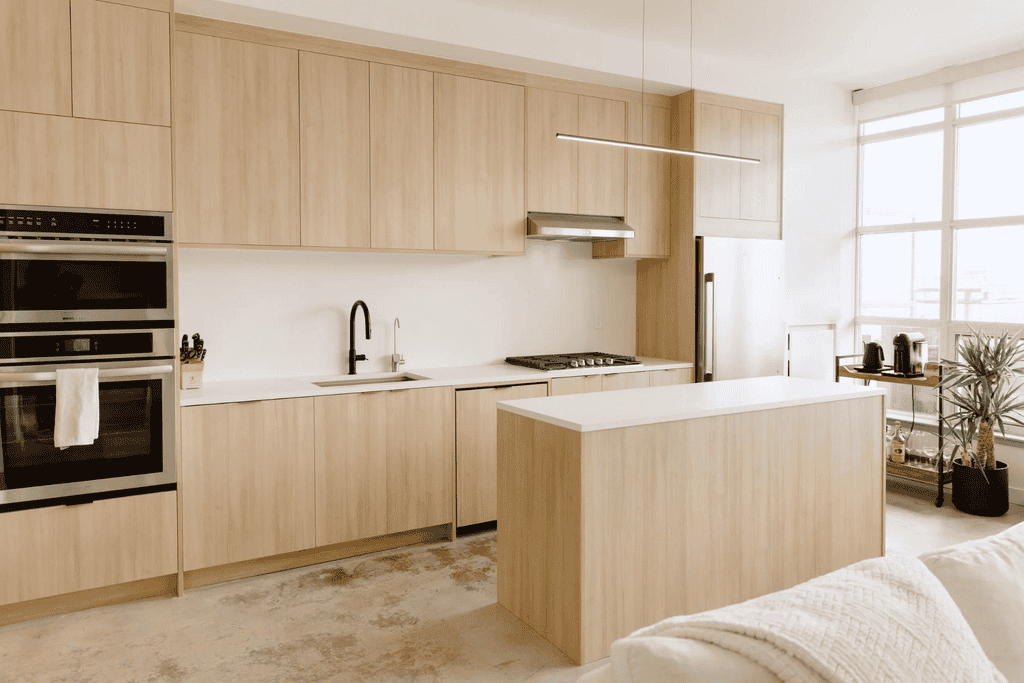
Cabinetry has a significant influence on the overall appearance of a kitchen. It occupies a large amount of visual space, provides essential storage, and helps establish the room’s design style.
The latest 2027 kitchen cabinet trends focus on natural finishes, thoughtful detailing, concealed storage, and a mixture of traditional and contemporary influences.
Rather than choosing cabinets based only on appearance, homeowners are paying closer attention to how they function. Easy-to-access storage, durable finishes, and layouts that reduce countertop clutter are becoming just as important as color and style.
Natural Wood Cabinets Are Making Kitchens Feel More Organic
Natural wood cabinets are an excellent choice for creating a kitchen with warmth and character. Their visible grain patterns provide texture that painted cabinetry cannot always reproduce.
Light oak remains a versatile option, particularly in Scandinavian-inspired and contemporary kitchens. It helps maintain a bright appearance and pairs well with white, beige, green, and muted blue finishes.
Walnut offers a richer alternative. Its deeper brown tones can make a kitchen feel more sophisticated, especially when combined with pale stone countertops and understated metal hardware.
Other wood finishes worth considering include:
- White oak: Light, subtle, and suitable for modern natural interiors.
- Natural ash: Pale and understated, with a clean grain pattern.
- Walnut: Rich, warm, and visually distinctive.
- Smoked oak: Deeper and more dramatic for contemporary spaces.
- Medium-toned wood: A balanced option for homeowners who want warmth without very dark cabinetry.
Wood cabinetry does not need to cover the entire kitchen. Using natural wood on lower cabinets or a central island can create an attractive contrast with painted upper cabinets.
For practical use, choose a finish suitable for kitchen conditions and follow the manufacturer’s cleaning and moisture-care recommendations.
Flat-Panel Cabinets and Detailed Traditional Doors Offer Different Looks
Cabinet door styles are becoming more varied, giving homeowners greater flexibility when choosing the overall character of their kitchen.
Flat-panel cabinets remain popular because of their simple appearance. Their smooth surfaces create a streamlined look that works especially well in contemporary, minimalist, and Scandinavian-inspired interiors.
They are also relatively easy to combine with other materials. A flat-panel oak cabinet, for example, can look equally attractive beside a stone backsplash or a simple painted wall.
Traditional-style cabinet doors offer a different approach. Shaker cabinets, with their recessed center panels and clean frames, bring a sense of craftsmanship without looking overly decorative.
For a more distinctive kitchen, consider:
- Flat-panel oak cabinets for a clean natural appearance.
- Shaker-style cabinets in warm white or sage green.
- Inset cabinet doors for a carefully detailed finish.
- Slim-frame doors for a lighter interpretation of traditional cabinetry.
The right option depends on the style of your home. Flat-panel doors generally suit modern interiors, while shaker designs can bridge traditional and contemporary styles.
Handleless Cabinets and Integrated Pulls Create a Cleaner Appearance
Visible cabinet hardware is becoming less dominant in many modern kitchen designs. Handleless cabinetry and integrated pulls offer a more seamless appearance by reducing the number of decorative elements across cabinet fronts.
This approach is particularly effective in kitchens where simplicity and visual continuity are important.
There are several ways to achieve the look:
- J-pull handles: A recessed profile built into the cabinet door or drawer.
- Integrated edge pulls: A subtle grip along the cabinet edge.
- Push-to-open mechanisms: A system that allows doors to open with a gentle push.
- Recessed finger pulls: Small grooves that provide access without adding external hardware.
Although handleless cabinets look attractive, they are not always the most practical option for every household. Push-to-open systems may require more frequent cleaning, while recessed profiles can collect dust or cooking residue.
If ease of use is a priority, integrated pulls often provide a good balance between appearance and everyday functionality.
Floor-to-Ceiling Cabinets Make Better Use of Vertical Space
Storage is one of the most important considerations in kitchen planning. Floor-to-ceiling cabinets offer an effective way to use vertical wall space while creating a more continuous appearance.
Instead of leaving a large gap above standard wall cabinets, taller units extend closer to the ceiling. This creates additional storage for cookware, small appliances, serving dishes, and items that are not used every day.
The design can also help reduce visual clutter by concealing appliances and miscellaneous kitchen equipment.
Useful features include:
- Tall pantry cabinets with adjustable shelves.
- Pull-out storage for dry ingredients.
- Integrated refrigerator and freezer units.
- Deep drawers for pots, pans, and larger cookware.
- Separate compartments for small appliances.
- Upper cabinets for seasonal or occasional-use items.
For smaller kitchens, tall cabinets can be particularly valuable because they increase storage capacity without taking up additional floor space.
However, avoid making every cabinet feel visually heavy. Combining tall cabinetry with open shelving, glass-front doors, or lighter finishes can help maintain a balanced appearance.
Glass-Front Cabinets and Open Shelving Add a Decorative Touch
Completely closed cabinetry provides excellent storage, but introducing a few open or glass-front sections can make a kitchen feel more personal.
Glass-front cabinets allow selected items to become part of the interior design. Beautiful glassware, ceramic bowls, and neatly arranged dishes can add visual interest without requiring additional decorations.
Fluted or reeded glass is particularly appealing because it softens the appearance of stored items while adding texture to the cabinet fronts.
Open shelving offers another option. Natural wood shelves can break up a long run of cabinets and create space for displaying everyday objects.
To keep these features practical:
- Use glass-front cabinets for items you genuinely want to display.
- Reserve open shelves for frequently used dishes or attractive accessories.
- Avoid overcrowding shelves with too many decorative objects.
- Keep open shelving away from areas where cooking grease accumulates.
- Consider integrated lighting to highlight selected displays.
A good balance is to use mostly closed cabinetry for everyday storage, then introduce one or two decorative sections for personality.
Mixing Cabinet Finishes Creates a More Individual Kitchen
One of the most interesting kitchen cabinet ideas for 2027 is combining different finishes rather than choosing identical cabinetry throughout the room.
This approach allows homeowners to introduce contrast while maintaining a cohesive overall design.
For example, a kitchen could feature warm white upper cabinets, walnut lower cabinets, and a matching walnut island. The repeated wood finish connects the different elements, while the lighter upper section keeps the space feeling open.
Other combinations include:
- Sage green island cabinets with natural oak perimeter cabinets.
- Cream shaker cabinets with a dark walnut pantry.
- Matte beige cabinetry with a contrasting wood breakfast bar.
- Deep green lower cabinets with pale neutral upper units.
The trick is to avoid introducing too many unrelated finishes. Two main cabinet finishes, supported by a consistent countertop and hardware selection, are usually enough to create visual interest.
A well-designed kitchen does not need every cabinet to match. It needs the different elements to work together.
For homeowners considering a renovation, prioritize cabinet quality, storage configuration, and durable finishes before choosing decorative details. Attractive cabinetry should make everyday kitchen activities easier, not simply look good in photographs.
2027 Kitchen Countertops, Kitchen Backsplashes, and Materials
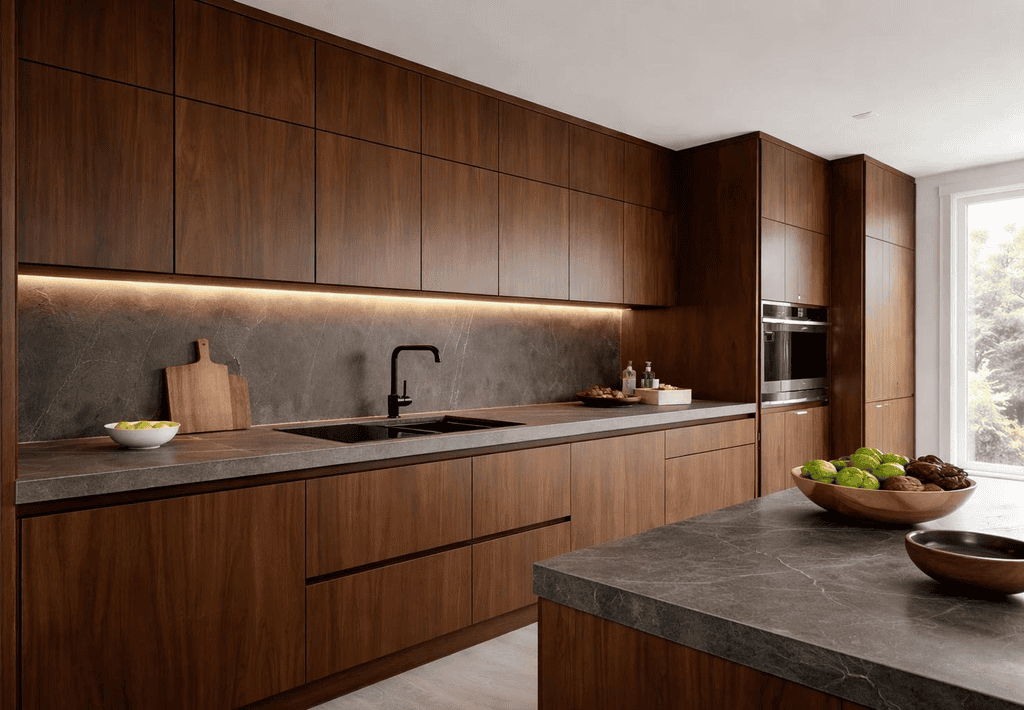
Countertops and backsplashes have become important design features rather than purely functional surfaces. Among the most noticeable 2027 kitchen trends is the use of expressive materials, natural-looking textures, and coordinated surfaces that create a more cohesive interior.
Instead of relying on plain, uniform finishes, homeowners are choosing materials with distinctive patterns, subtle imperfections, and visual depth. Natural stone, quartz, handmade tiles, and combinations of wood and metal are helping kitchens feel more individual.
The goal is to create a balance between appearance and practicality. A beautiful countertop should also withstand everyday cooking, spills, cleaning, and regular use.
Natural Stone Countertops Bring Organic Beauty Into the Kitchen
Natural stone remains an attractive choice for homeowners who want a countertop with distinctive character. Each slab has its own patterns, veins, and subtle color variations, making it difficult to reproduce the same appearance with manufactured materials.
Marble is particularly popular for its elegant veining. White marble with gray or beige patterns works beautifully with warm neutral cabinetry, while darker varieties create a more dramatic atmosphere.
Other natural stone options worth considering include:
- Quartzite: A natural stone known for its distinctive patterns and generally good hardness.
- Granite: A practical option available in a wide range of colors and patterns.
- Travertine: Offers a warm, earthy appearance with natural surface variation.
- Marble: Creates an elegant finish with expressive veining and a timeless character.
Natural stone does require some consideration before installation. Marble and travertine can be more vulnerable to staining and etching, depending on their finish and maintenance. Sealing may also be necessary for certain materials.
For busy family kitchens, choosing a countertop based on durability and maintenance requirements is just as important as selecting its color.
Quartz and Practical Alternatives Offer Style With Less Maintenance
Natural stone is beautiful, but it is not the only option for a contemporary kitchen. Engineered quartz remains a popular alternative because it offers consistent patterns, a wide range of colors, and relatively straightforward maintenance.
Quartz surfaces can imitate the appearance of marble, limestone, or other natural stones while providing a more uniform finish.
Other countertop materials include:
| Material | Main advantage | Consideration |
| Engineered quartz | Consistent appearance and easy everyday cleaning | Heat protection is important |
| Granite | Natural patterns and good durability | Some varieties require sealing |
| Quartzite | Natural appearance and hardness | Usually requires a higher budget |
| Porcelain | Wide design options and good heat resistance | Edges can be vulnerable to chipping |
| Solid surface | Seamless appearance and repairability | Can scratch more easily than stone |
When comparing countertop options, consider how you actually use your kitchen.
Someone who cooks frequently may prioritize stain resistance, easy cleaning, and durability. A homeowner who uses the kitchen mainly for occasional cooking and entertaining may place greater importance on the visual appearance of the surface.
The best countertop is not necessarily the most expensive one. It is the material that fits your cooking habits, maintenance expectations, and overall design.
Full-Height Backsplashes Create a Seamless, Sophisticated Look
Traditional kitchen backsplashes often cover only the area between the countertop and upper cabinets. A growing design preference is to extend the material higher, sometimes all the way to the ceiling.
This creates a more continuous appearance and allows the backsplash to become a major visual feature.
A full-height stone backsplash can look particularly striking when it uses the same material as the countertop. Matching the two surfaces creates a smooth transition and reduces the number of competing patterns.
This approach works especially well with:
- Marble-look quartz surfaces.
- Natural stone with subtle veining.
- Large-format porcelain panels.
- Warm beige or cream-colored surfaces.
- Textured stone finishes.
Full-height backsplashes can also make smaller kitchens feel more visually connected because fewer material changes interrupt the wall.
If natural stone is outside your budget, large-format porcelain or ceramic panels can offer a similar appearance at different price points.
Handmade Tiles and Textured Finishes Add Personality
Perfectly uniform surfaces are giving way to finishes that show more texture and craftsmanship. Handmade-inspired tiles are an attractive way to introduce this character without changing the entire kitchen.
Zellige-style tiles, irregular ceramic squares, and subtly textured surfaces create visual movement through small variations in color and finish.
These tiles are particularly effective in kitchens with simple cabinetry. A neutral kitchen can feel much more interesting when the backsplash introduces a handmade surface.
Popular choices include:
- Cream ceramic tiles with slightly uneven edges.
- Glossy handmade-look tiles in soft green.
- Textured beige tiles with natural variations.
- Small square tiles in muted blue.
- Warm white tiles with contrasting grout.
The grout color can also change the final appearance. Matching grout creates a softer, more continuous surface, while contrasting grout highlights the individual tile shapes.
For a timeless result, choose a tile color that complements the cabinetry rather than competing with it.
Mixing Wood, Stone, and Metal Creates a Richer Material Palette
Another direction shaping modern kitchen design is the combination of several natural and manufactured materials.
Rather than using one finish throughout the room, designers are creating contrast through carefully selected combinations. This makes the kitchen feel more layered and visually interesting.
Some combinations that work particularly well include:
- Natural oak with creamy marble-look countertops and brass hardware.
- Walnut cabinetry with light limestone-inspired surfaces and black fixtures.
- Sage green cabinets with handmade ceramic tiles and brushed nickel.
- Beige cabinetry with dark stone countertops and warm wood shelving.
The most important consideration is balance. If the cabinetry has a strong wood grain, a quieter countertop may work better. When the cabinets are simple and understated, a more expressive stone or backsplash can become the focal point.
A practical way to approach material selection is to choose one dominant finish, one supporting material, and one accent finish.
This prevents the kitchen from looking too busy while allowing each material to contribute something distinctive.
Waterfall Islands Make Kitchen Countertops More Architectural
Waterfall countertops continue to appeal to homeowners who want their kitchen island to look like a sculptural design feature.
Instead of stopping at the edge of the island, the countertop material continues down the sides to the floor. This creates a continuous surface that gives the island a more substantial and polished appearance.
The effect is especially attractive when the material has visible veining or a distinctive pattern.
Waterfall edges work well with:
- Large kitchen islands.
- Marble-look quartz surfaces.
- Natural stone with dramatic patterns.
- Minimalist cabinetry.
- Open-plan kitchens where the island is visible from the living area.
However, this design can increase material and installation costs. It also requires careful planning around seating, electrical outlets, and cabinet access.
For smaller budgets, a standard countertop with a decorative side panel can provide a similar visual effect without extending the countertop material all the way to the floor.
2027 Kitchen Islands and Layout Ideas That Make Everyday Living Easier
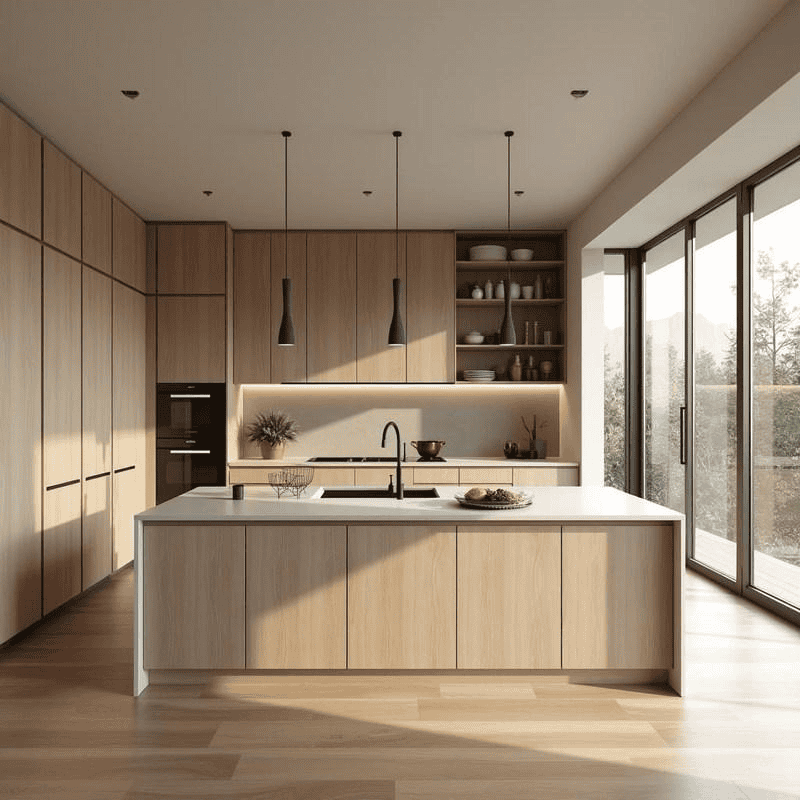
Kitchen islands have become much more than additional countertop space. In modern homes, they often function as cooking stations, casual dining areas, storage centers, and social gathering points.
The latest 2027 kitchen island trends focus on multifunctionality, comfortable proportions, softer shapes, and better integration with the surrounding layout.
A well-designed island should make everyday activities easier rather than simply occupy valuable floor space. Its size, position, and features should reflect how the household actually uses the kitchen.
Multifunctional Kitchen Islands Combine Cooking, Dining, and Entertaining
One of the most practical kitchen design ideas for 2027 is creating an island that serves several purposes.
Instead of using the island only for food preparation, homeowners are incorporating seating, additional storage, appliances, and even dedicated dining spaces.
A multifunctional island may include:
- A preparation area with a durable countertop.
- Deep drawers for cookware and kitchen utensils.
- Comfortable seating for breakfast or casual meals.
- An integrated sink for food preparation and cleaning.
- A built-in dishwasher positioned near the sink.
- Electrical outlets for small appliances.
- Storage shelves for frequently used kitchen items.
The layout should reflect your priorities. Someone who enjoys entertaining may prefer a large seating area, while a household that cooks frequently may benefit more from additional preparation space.
One important consideration is the distance between the island and surrounding cabinets. Leave enough room for drawers, cabinet doors, and appliances to open comfortably.
An island that looks impressive but restricts movement can quickly become frustrating.
Curved Kitchen Islands Are Softening Modern Interior Designs
Straight lines and rectangular islands have dominated kitchen layouts for many years. Softer architectural shapes are now offering an alternative for homeowners who want a more relaxed and distinctive appearance.
Curved kitchen islands introduce rounded edges, oval forms, or gently softened corners. These shapes can make the kitchen feel less rigid and help connect it visually with nearby living spaces.
The style works particularly well with organic modern interiors featuring natural wood, stone, textured walls, and warm neutral colors.
Some design options include:
- Rounded countertop corners on a rectangular island.
- Oval islands with integrated storage.
- Curved breakfast bars with comfortable seating.
- Islands with one rounded end and one straight end.
- Sculptural stone islands with smooth, flowing edges.
Beyond appearance, rounded corners can be useful in busy family kitchens because they reduce sharp edges in high-traffic areas.
However, curved designs may require custom cabinetry and specialized countertop fabrication. If you are working with a limited renovation budget, simply rounding the countertop corners can introduce a similar effect.
Small Kitchen Islands and Alternatives for Compact Spaces
Not every home has enough space for a large kitchen island. Fortunately, modern kitchen planning offers several alternatives that provide extra functionality without overcrowding the room.
A compact island can work well when there is sufficient clearance around it. Even a modest unit can provide useful preparation space and additional storage.
Other options include:
A narrow island: A slim rectangular unit can provide a work surface while preserving movement through the kitchen.
A kitchen peninsula: Connected to one side of the cabinetry, a peninsula offers many of the benefits of an island while using less floor space.
A mobile island: A movable unit provides flexibility and can be repositioned when additional floor space is needed.
A breakfast bar: A simple countertop extension can create a casual dining area without requiring a separate island.
For smaller kitchens, vertical storage and carefully planned work surfaces are often more valuable than installing an island simply because it is fashionable.
Before choosing an island, measure the available space and consider how people will move between the refrigerator, sink, cooking area, and dining space.
Open-Plan Kitchens Are Becoming More Defined and Functional
Open-plan kitchens remain attractive because they connect cooking, dining, and living areas. They allow people to interact more easily and make many homes feel larger and more welcoming.
However, an entirely open layout can sometimes create practical problems. Cooking smells, noise, clutter, and the lack of visual separation may affect the comfort of nearby living areas.
Modern open-plan designs are addressing these issues by creating subtle distinctions between different zones.
Useful design solutions include:
- Kitchen islands that separate cooking and seating areas.
- Pendant lighting that visually identifies the dining zone.
- Different flooring materials to define individual spaces.
- Open shelving or partial partitions between areas.
- Consistent cabinetry and furniture finishes for visual continuity.
- Concealed appliance storage to reduce visible clutter.
For example, a kitchen island with bar seating can establish a natural boundary between the cooking area and living room without making the space feel closed off.
The key is to maintain an open atmosphere while ensuring that each area has a clear purpose.
Hidden Storage and Integrated Appliances Keep Worktops Clutter-Free
A visually attractive kitchen is easier to maintain when everyday equipment has a designated place.
This is why concealed storage and integrated appliances are important features in modern kitchen planning. They help create a cleaner appearance while improving the way the space functions.
Consider incorporating:
- Appliance garages for toasters, coffee machines, and blenders.
- Pull-out pantry shelves for dry ingredients.
- Deep drawers for pots and pans.
- Integrated refrigerators and dishwashers.
- Hidden waste and recycling compartments.
- Vertical dividers for baking trays and cutting boards.
- Drawer organizers for utensils and kitchen tools.
An appliance garage is particularly useful for homeowners who want to keep their countertops clear without constantly moving appliances in and out of cupboards.
Integrated appliances can also create a more continuous cabinet appearance. However, they may cost more than standard freestanding alternatives, so consider the budget and replacement requirements before making a decision.
Better Kitchen Workflows Make Beautiful Layouts More Practical
Good kitchen design is not only about selecting attractive finishes. The arrangement of essential work areas has a major influence on how comfortable the room feels during everyday cooking.
A useful planning concept is the kitchen work triangle, which considers the relationship between the sink, refrigerator, and cooking area.
These three points should be positioned to allow convenient movement without unnecessary obstacles.
Modern kitchens may also benefit from separate preparation, cooking, cleaning, and serving zones, particularly when several people use the space.
For example:
| Kitchen zone | Useful features |
| Preparation | Clear countertop, chopping boards, accessible utensils |
| Cooking | Cooktop, oven, cookware storage, ventilation |
| Cleaning | Sink, dishwasher, waste and recycling storage |
| Food storage | Refrigerator, pantry, pull-out shelves |
| Serving | Island countertop, breakfast bar, dining connection |
A well-planned layout reduces unnecessary movement and makes the kitchen more enjoyable to use.
A beautiful kitchen should work just as well during a busy weekday morning as it does when entertaining guests.
Kitchen Lighting, Smart Technology, and Sustainable Features Changing Modern Kitchens 2027
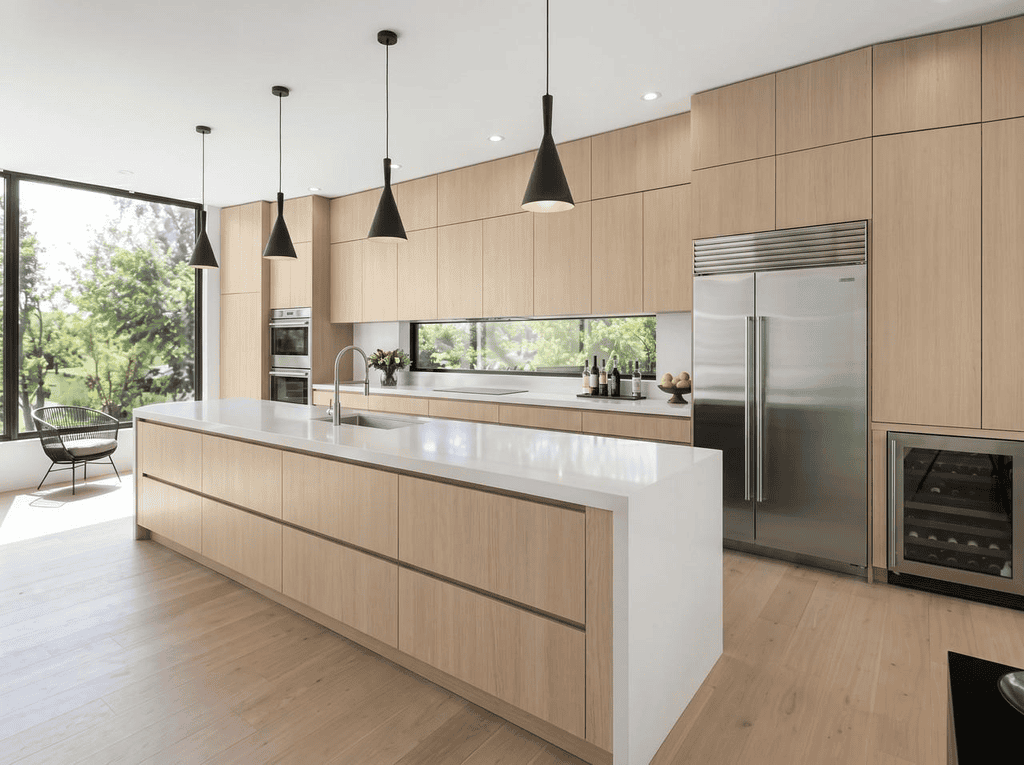
Lighting and technology have become essential parts of contemporary kitchen design. They influence how comfortable the room feels, how efficiently everyday tasks can be completed, and how much energy the household uses.
The most interesting modern kitchen trends for 2027 combine practical innovations with attractive design details. Layered lighting, integrated appliances, smart controls, and energy-efficient features are helping kitchens become more comfortable and functional.
Layered Kitchen Lighting Creates a More Comfortable Atmosphere
A single ceiling light is rarely enough to illuminate an entire kitchen effectively. Different activities require different types of lighting, which is why layered lighting is an important part of modern kitchen planning.
A well-designed lighting scheme generally combines three main types.
Ambient lighting
Ambient lighting provides the overall illumination for the room. Recessed ceiling lights, surface-mounted fixtures, and suitable ceiling lights can help create an even distribution of light.
Task lighting
Task lighting focuses on specific working areas, such as countertops, sinks, and cooking surfaces.
Under-cabinet LED strips are particularly useful because they illuminate preparation areas without creating excessive shadows.
Accent lighting
Accent lighting adds atmosphere and highlights selected design features. It can be used inside glass-front cabinets, beneath floating shelves, or around architectural details.
Combining these three types creates a kitchen that is practical during food preparation and comfortable during evening meals.
Warm-white lighting is often a good choice for creating a welcoming atmosphere, while brighter task lighting can improve visibility in working areas.
Statement Pendant Lights Turn Kitchen Islands Into Focal Points
Kitchen island lighting is becoming more decorative, with pendant fixtures playing a bigger role in the overall design.
Rather than selecting lights only for illumination, homeowners are using them as visual features that complement the cabinetry, countertop, and surrounding furniture.
Popular styles include:
- Sculptural pendants with organic shapes.
- Oversized glass fixtures with soft diffused light.
- Minimalist metal pendants in brass or black.
- Natural woven shades for relaxed interiors.
- Simple ceramic fixtures with textured surfaces.
- Linear pendant lights above long kitchen islands.
The scale of the fixture matters. A pendant that is too small can disappear visually, while an oversized design may overwhelm a compact kitchen.
For longer islands, a balanced arrangement of two or three fixtures may provide better coverage than a single central pendant.
Consider the height of the ceiling, the island dimensions, and the location of seating before selecting the final fixtures.
Integrated LED Lighting Adds Both Style and Function
LED lighting is a practical way to improve kitchen visibility while highlighting architectural details.
Because LED strips are compact, they can be installed in places where traditional light fixtures would be difficult to accommodate.
Common applications include:
- Under-cabinet lighting for food preparation.
- Lighting inside pantry cabinets.
- Illuminated glass-front display cabinets.
- LED strips beneath floating shelves.
- Low-level lighting beneath kitchen islands.
- Toe-kick lighting near the floor.
These features can make a kitchen feel more refined, particularly during the evening when overhead lighting is reduced.
For the best result, choose lighting with suitable color temperature and brightness for each application. Dimmable systems are especially useful because they allow the same kitchen to function as a bright working environment during the day and a softer social space at night.
Smart Kitchen Technology Makes Everyday Tasks Easier
Smart technology is gradually changing how homeowners interact with kitchen appliances.
Rather than making every appliance connected simply for novelty, the most useful innovations focus on convenience, efficiency, and easier everyday control.
Examples include:
- Smart ovens with programmable cooking settings.
- Induction cooktops with precise temperature controls.
- Refrigerators with temperature management features.
- Dishwashers with energy-efficient operating programs.
- Smart faucets with touch or sensor activation.
- Connected appliances that provide maintenance notifications.
Smart ovens can be particularly helpful for people who want more control over cooking times and temperatures. Depending on the model, some allow users to monitor cooking progress through a mobile application.
Induction cooking is another technology worth considering. It heats compatible cookware through electromagnetic energy rather than directly heating a conventional cooking element.
This can offer precise temperature control and improved cooking efficiency, although suitable cookware and an appropriate electrical supply are required.
Before purchasing connected appliances, consider whether the features genuinely solve a problem in your household. A reliable, easy-to-use appliance is often more valuable than one with numerous features that rarely get used.
Sustainable Materials and Energy-Efficient Appliances Are Becoming More Important
Sustainability is becoming an important consideration in kitchen renovation and design. Homeowners are paying more attention to material durability, energy consumption, waste reduction, and the long-term environmental impact of their choices.
One of the simplest ways to create a more sustainable kitchen is to choose materials that can last for many years.
Consider these options:
Responsibly sourced wood
Wood cabinetry from responsibly managed sources can be an attractive alternative to materials with less transparent supply chains.
Reclaimed materials
Reclaimed timber can introduce character while giving existing materials another useful purpose.
Durable countertops
Choosing a surface that can withstand regular use may reduce the need for premature replacement.
Energy-efficient appliances
Modern refrigerators, dishwashers, and cooking appliances can help reduce household energy consumption when selected and used appropriately.
Water-saving fixtures
Efficient faucets and water-saving fittings can reduce unnecessary water use without compromising everyday convenience.
Sustainability also involves avoiding unnecessary renovation. If your existing kitchen cabinets are structurally sound, repainting them or replacing only the doors may be more practical than removing everything.
A kitchen does not need to be completely rebuilt to become more environmentally conscious.
How to Combine Lighting, Technology, and Sustainability Without Overcomplicating the Kitchen
The most successful kitchens use technology and lighting to support the overall design rather than dominate it.
For example, a warm minimalist kitchen could feature natural oak cabinetry, energy-efficient appliances, under-cabinet LED lighting, and a simple induction cooktop.
Another option is a contemporary green kitchen with integrated appliances, smart lighting controls, and water-efficient fixtures.
The important thing is to choose features that fit your lifestyle.
Before investing in new technology, ask yourself:
- Will this feature make everyday cooking easier?
- Is it simple to operate and maintain?
- Does it provide meaningful energy or water savings?
- Will it work with the existing electrical and plumbing systems?
- Is the initial cost reasonable compared with its long-term benefits?
Thoughtful choices usually create a better kitchen than installing every available innovation.
How to Bring 2027 Kitchen Trends Into Your Home Without a Full Renovation
Following the latest kitchen design trends does not necessarily require replacing cabinets, installing new countertops, or changing the entire layout.
Many of the most noticeable improvements can be achieved through smaller updates. A new cabinet color, updated hardware, better lighting, or a carefully selected backsplash can completely change how an existing kitchen looks.
The smartest approach is to identify which parts of the kitchen feel outdated and prioritize improvements that offer the greatest visual and practical benefit.
Refresh Existing Cabinets Instead of Replacing Everything
Cabinet replacement is often one of the more expensive parts of a kitchen renovation. If your existing cabinets are structurally sound, updating their appearance can be a much more affordable solution.
Painting is one of the simplest ways to introduce current kitchen colors without purchasing an entirely new cabinet system.
Consider these shades:
- Warm white for a bright, timeless appearance.
- Mushroom beige for a softer contemporary look.
- Sage green for a natural and relaxed atmosphere.
- Muted blue for a subtle statement.
- Deep olive for a richer, more dramatic kitchen.
Before painting, make sure the cabinet surfaces are properly cleaned, prepared, and suitable for the chosen coating.
Replacing cabinet handles can also make a surprisingly noticeable difference. Brushed brass, matte black, and brushed nickel hardware can give older cabinetry a more contemporary appearance.
If the cabinet doors are damaged or difficult to update, replacing just the doors while keeping the existing cabinet boxes may be another option.
Update the Backsplash for an Immediate Visual Change
A backsplash is a relatively small surface compared with the entire kitchen, but it can have a significant impact on the overall design.
Changing an outdated backsplash can make existing countertops and cabinets look more current.
Some affordable directions include:
- Simple square ceramic tiles in warm white.
- Handmade-look tiles in cream or beige.
- Muted green tiles for a natural accent.
- Subway tiles with a more contemporary finish.
- Patterned tiles used in a small, carefully selected area.
If removing existing tiles would be expensive, certain suitable surfaces may be updated with tile refinishing products or installed-over solutions. Always check compatibility with the existing substrate and ensure the finished surface is appropriate for areas exposed to moisture and heat.
Choose a backsplash that complements the cabinets rather than introducing too many competing colors.
Improve Kitchen Lighting Without Changing the Entire Layout
Lighting upgrades can transform the atmosphere of a kitchen without requiring major structural work.
If your kitchen currently relies on a single ceiling fixture, introducing additional lighting can make the room feel more thoughtfully designed.
Practical updates include:
- Installing LED strips beneath wall cabinets.
- Replacing outdated ceiling fixtures with contemporary designs.
- Adding pendant lights above a breakfast bar.
- Improving task lighting around the sink.
- Installing dimmable lighting where compatible.
A small lighting upgrade can also help highlight existing materials, making countertops, cabinet finishes, and backsplash details more noticeable.
Electrical work should be completed by a qualified professional, particularly when adding new wiring or changing fixture locations.
Introduce Natural Materials Through Smaller Decorative Details
Natural materials do not have to be introduced through expensive cabinetry or stone surfaces.
Small decorative additions can help create the warm, organic appearance associated with many 2027 kitchen trends.
Consider adding:
- Wooden cutting boards displayed against the backsplash.
- Ceramic bowls in earthy colors.
- Linen kitchen towels in neutral shades.
- Woven baskets for everyday storage.
- Natural wood stools around a breakfast counter.
- Simple glass containers for pantry ingredients.
- A small indoor herb garden near a bright window.
The secret is to avoid overcrowding the countertops. A few carefully chosen objects usually look better than filling every available surface with decorations.
These details work especially well in kitchens with simple white, beige, or gray cabinetry because they introduce texture without requiring major changes.
Which 2027 Kitchen Trends Are Worth Investing In?
Not every trend deserves the same renovation budget. Some features are relatively easy to update, while others involve significant installation costs and long-term commitments.
Prioritizing practical improvements can help you create a modern kitchen without spending unnecessarily.
| Kitchen trend | Investment level | Long-term value |
| Natural wood cabinetry | Medium to high | High when well maintained |
| Warm neutral cabinet colors | Low to medium | High |
| Stone countertops | Medium to high | Depends on material and care |
| Multifunctional kitchen islands | Medium to high | High when space allows |
| Statement pendant lighting | Low to medium | High visual impact |
| Smart appliances | Medium to high | Depends on useful features |
| Handmade-look backsplashes | Low to medium | High with timeless color choices |
| Integrated storage | Medium to high | High for everyday functionality |
These are relative investment levels rather than fixed prices. Actual costs depend on location, material availability, kitchen dimensions, labor, and installation requirements.
For most homeowners, it makes sense to invest first in durable cabinetry, practical storage, good lighting, and reliable appliances.
Decorative elements can be updated more easily as preferences change.
How to Adapt Modern Kitchen Trends to Small Spaces
Small kitchens can benefit from many of the same design ideas as larger spaces, but careful planning becomes even more important.
The priority should be maximizing storage and maintaining comfortable movement rather than trying to include every fashionable feature.
Useful strategies include:
- Choose light or warm neutral cabinet colors to create an open appearance.
- Use floor-to-ceiling cabinets to increase vertical storage.
- Install under-cabinet lighting to brighten work surfaces.
- Choose integrated appliances where they suit the available layout.
- Use reflective or light-colored backsplash materials to distribute light.
- Consider a peninsula instead of a large kitchen island.
- Keep countertops clear by introducing concealed storage.
- Use open shelving selectively to prevent the room from feeling too enclosed.
A small kitchen can also look more distinctive through one carefully chosen feature, such as a colorful backsplash, a natural wood countertop, or attractive pendant lighting.
Avoid using too many different materials or decorative elements in a compact space. A consistent color palette usually creates a more spacious and organized appearance.
Combine Trending Details With Timeless Design Choices
The best way to approach kitchen trends is to distinguish between elements that are expensive to replace and those that can be changed easily.
Cabinet construction, plumbing arrangements, electrical systems, and major countertop installations are long-term decisions. Cabinet hardware, paint colors, pendant lights, and accessories are generally easier to update.
A practical design strategy is to use timeless materials for permanent features and introduce current trends through more flexible details.
For example, a kitchen could have:
- Simple oak or cream cabinetry.
- A durable neutral countertop.
- A timeless ceramic backsplash.
- Contemporary brass hardware.
- Sculptural pendant lighting.
- Green accessories or decorative accents.
This combination creates a modern appearance without relying on a design that may feel outdated after a few years.
You can also look beyond current fashion when making major renovation decisions. The National Kitchen & Bath Association (NKBA) provides professional kitchen and bathroom design resources that can help homeowners think about functionality, planning, and long-term usability.
Ultimately, the best kitchen is one that reflects your personal style while making everyday life more comfortable. Trends should provide inspiration, not dictate every design decision.
Frequently Asked Questions About 2027 Kitchen Trends
What are the biggest kitchen trends for 2027?
Some of the most noticeable 2027 kitchen trends include warm neutral color palettes, natural wood cabinetry, earthy green and muted blue finishes, statement stone countertops, multifunctional kitchen islands, integrated storage, and layered lighting. There is also growing interest in sustainable materials and practical smart appliances.
What kitchen cabinet colors are trending in 2027?
Warm beige, mushroom, creamy white, sage green, olive green, muted blue, and deep forest green are attractive choices for 2027. Natural wood finishes, particularly oak and walnut, are also popular options for creating a warm and timeless kitchen.
Are white kitchens still in style in 2027?
Yes. White kitchens remain a versatile design choice, but warmer variations such as ivory, cream, and soft off-white are becoming more appealing. Pairing white cabinetry with natural wood, textured backsplashes, and warm metal hardware can prevent the space from feeling too sterile.
What kitchen countertop materials are popular in 2027?
Natural stone, quartz, quartzite, porcelain, and solid-surface materials are all worth considering. Homeowners are showing interest in countertops with natural-looking patterns, subtle veining, and textured finishes. The best option depends on budget, durability requirements, and maintenance preferences.
Are wood kitchen cabinets coming back in 2027?
Natural wood cabinets are an important part of contemporary kitchen design. Light oak creates a bright and relaxed appearance, while walnut introduces richer tones and sophistication. Wood cabinetry can be used throughout the kitchen or combined with painted cabinets for additional contrast.
What is the best kitchen layout for a small home in 2027?
A practical small kitchen layout prioritizes efficient movement, vertical storage, and accessible work surfaces. Galley kitchens, L-shaped layouts, and compact peninsula designs can all work well. Floor-to-ceiling cabinets, integrated appliances, and good task lighting help make limited space more functional.
Are kitchen islands still popular in 2027?
Yes. Kitchen islands remain popular because they provide additional preparation space, storage, and seating. The latest designs focus on multifunctionality, softer curved shapes, integrated appliances, and better connections with dining and living areas. Compact peninsulas are useful alternatives when there is not enough room for a full island.
What lighting is best for a modern kitchen in 2027?
Layered lighting is one of the most effective approaches. Combine ambient ceiling lights, task lighting beneath cabinets, and decorative pendant lights above islands or dining counters. Warm-white lighting can create a welcoming atmosphere, while brighter task lighting helps with cooking and food preparation.
How can I update my kitchen for 2027 without a complete renovation?
You can refresh an existing kitchen by repainting cabinets, replacing outdated handles, updating the backsplash, improving lighting, and introducing natural decorative accessories. These smaller changes can create a more contemporary appearance without the expense of replacing the entire kitchen.
What kitchen trends are worth investing in for the long term?
Durable cabinetry, efficient storage, quality countertops, practical lighting, and reliable appliances are generally worthwhile investments. These features improve everyday functionality and can remain useful even when decorative preferences change.
Are sustainable kitchens becoming more popular in 2027?
Sustainable kitchen design is gaining attention through energy-efficient appliances, water-saving fixtures, responsibly sourced wood, reclaimed materials, and durable surfaces. Keeping existing cabinets when possible and choosing long-lasting materials are also practical ways to reduce renovation waste.
Create a Kitchen That Feels Beautiful Today and Works for Years to Come
The most appealing 2027 kitchen trends share one important idea: a kitchen should be more than an attractive room. It should support everyday routines, provide comfortable spaces for gathering, and reflect the personality of the people who use it.
Warm neutral colors, natural wood cabinets, expressive stone surfaces, multifunctional islands, and thoughtful lighting offer plenty of inspiration for creating a modern kitchen. Smart technology and sustainable materials add another layer of practicality, helping homeowners make more considered design decisions.
You do not need to adopt every trend to achieve a beautiful result. Start with the features that matter most to your household, whether that means improving storage, introducing warmer colors, upgrading lighting, or choosing more durable materials.
Ready to refresh your kitchen? Choose one or two ideas from these 2027 kitchen trends, adapt them to your available space and budget, and start creating a kitchen that feels personal, functional, and timeless.

1 thought on “2027 Kitchen Trends: 7 Popular Design Ideas for Modern Kitchens”