
Modern fence design trends 2027 are all about combining clean architectural lines, natural materials, privacy, and practical outdoor living. Today’s fences do much more than mark property boundaries. They help define a home’s exterior style, create comfortable outdoor spaces, improve security, and add curb appeal without overwhelming the landscape.
From warm wooden slats and minimalist metal panels to mixed-material boundaries and contemporary privacy screens, the latest design directions offer options for almost every home. The key is choosing a fence that looks beautiful while meeting your everyday needs, whether you have a compact urban garden, a spacious backyard, or a modern home with a striking front entrance.
This guide explores the most appealing modern fence designs for 2027, including the styles worth considering, the materials that offer lasting value, and the details that can transform an ordinary boundary into a thoughtful part of your home’s exterior.
In This Article
Modern Fence Design Trends 2027: The Styles Defining Contemporary Homes
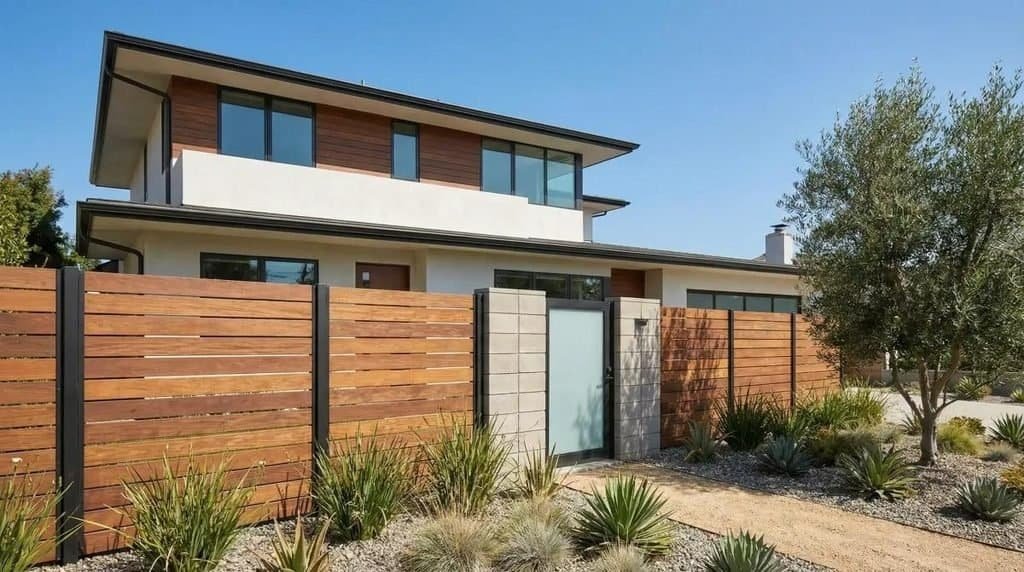
Modern fencing in 2027 is moving toward designs that feel intentional rather than purely functional. Homeowners are increasingly interested in fences that complement the architecture, blend with landscaping, and provide the right balance between openness and privacy.
Clean lines remain central to contemporary fence design, but the look is becoming warmer and more personal. Natural wood, textured finishes, subtle colors, and carefully combined materials help prevent modern boundaries from feeling too stark or industrial.
Clean Lines and Simple Geometric Shapes
Minimalist fencing continues to appeal to homeowners who prefer an uncluttered exterior. Straight horizontal boards, slim vertical battens, square metal frames, and simple panel layouts create a polished appearance without unnecessary decoration.
The beauty of this approach lies in its proportions. A fence with evenly spaced slats, consistent post heights, and a restrained finish can make an ordinary property look more architecturally cohesive.
Consider these design ideas:
- Horizontal slats: Create a streamlined appearance that works particularly well with contemporary homes.
- Vertical battens: Add height and structure while introducing a slightly more traditional rhythm.
- Frameless-looking panels: Minimize visible hardware for a clean, uninterrupted surface.
- Simple metal railings: Provide definition around front yards without completely blocking the view.
- Flush gate designs: Make entrances feel integrated with the surrounding fence rather than added as an afterthought.
Minimalist fences are especially effective when the house already has strong architectural features, such as large windows, flat rooflines, or contrasting exterior finishes.
Natural Materials Are Softening Modern Architecture
One of the most appealing directions in modern fence design is the combination of contemporary shapes with natural textures. Timber, stone, and textured composite panels introduce warmth that balances concrete, glass, and dark metal.
A charcoal metal frame paired with honey-brown timber slats, for example, can look sophisticated without feeling cold. Similarly, a simple wooden fence against a white exterior creates contrast while keeping the overall appearance relaxed.
Natural materials work particularly well in gardens where greenery plays an important role. The grain of the wood, the texture of stone, and the changing colors of plants create visual interest without requiring elaborate fence detailing.
Indoor-Outdoor Living Is Influencing Fence Design
Fences are increasingly being treated as part of the outdoor living environment. Rather than separating the house from the garden, they help establish comfortable spaces for dining, relaxing, entertaining, and spending time with family.
This approach may include privacy panels beside a patio, a wooden screen behind an outdoor seating area, or a coordinated fence and gate that visually connect the front entrance to the garden.
The most successful designs consider the view from inside the home as well. A thoughtfully positioned fence can provide privacy around a dining area while preserving daylight through nearby windows.
How to Choose a Modern Fence Style for Your Home
The best style depends on the property’s architecture, the amount of privacy required, and the surrounding landscape.
| Home style | Fence design to consider | Why it works |
| Modern minimalist | Horizontal timber or metal slats | Reinforces clean architectural lines |
| Contemporary farmhouse | Natural wood with dark metal accents | Balances warmth and contrast |
| Urban townhouse | Slim vertical battens or privacy panels | Creates separation without excessive decoration |
| Modern luxury home | Mixed wood, stone, and metal | Adds texture and a premium architectural feel |
| Small contemporary home | Open metal fencing or narrow slats | Helps maintain a lighter visual appearance |
Design tip: Choose a fence that complements at least one existing exterior feature, such as your window frames, front door, roof trim, or patio materials. This simple connection can make the entire property feel more coordinated.
Horizontal Slat Fences: The Timeless Modern Look Getting Smarter
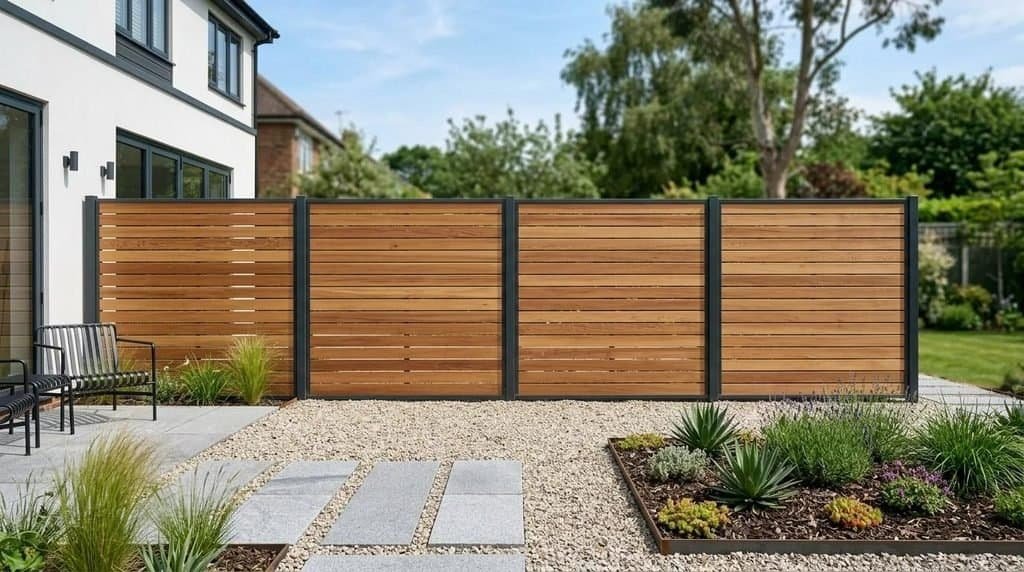
Horizontal slat fencing remains one of the most recognizable modern fence design trends for 2027. Its long, continuous lines make gardens appear organized, while the spacing between boards allows homeowners to customize privacy, airflow, and light.
The style is versatile enough for backyard boundaries, front gardens, side yards, and outdoor entertainment areas. Depending on the materials and proportions, horizontal slats can look understated, rustic, luxurious, or distinctly architectural.
Narrow Slats or Wide Boards: Which Looks Better?
The width of the boards has a noticeable effect on the finished design.
Narrow horizontal slats create a detailed, contemporary appearance. They work well on smaller properties because the repeated lines add visual rhythm without introducing bulky decorative features.
Wide horizontal boards produce a bolder, more substantial look. They are often a good match for larger modern homes, spacious gardens, and outdoor areas where a strong privacy boundary is needed.
A mixed-width arrangement offers another option. Alternating board sizes can introduce a little personality while preserving the overall simplicity of the design.
Before choosing a layout, consider the scale of the property. Very narrow slats across an enormous boundary can appear overly busy, while extra-wide boards may feel heavy in a small courtyard.
How Slat Spacing Changes Privacy and Appearance
The gaps between the boards are just as important as their width.
- Tight spacing: Creates a more private boundary and a nearly solid visual surface.
- Moderate spacing: Allows some airflow and filtered light while maintaining a contemporary appearance.
- Wide spacing: Produces a lighter, more open design but offers less visual privacy.
Remember that spacing does not affect privacy in a simple, uniform way. The viewing angle, fence height, and position of neighboring windows all influence how much of the garden remains visible.
For a patio or outdoor dining area, tighter spacing may be preferable near seating while more open sections can be used along less sensitive boundaries.
Horizontal Wood Slats With Black Metal Frames
One of the most versatile combinations is warm timber set within a slim black or charcoal metal frame. The metal provides structure, while the wood softens the overall appearance.
This combination works especially well alongside black-framed windows, dark outdoor lighting, concrete paving, and contemporary garden furniture.
For a more natural effect, choose timber with visible grain and a medium-brown stain. For a sharper architectural look, use darker wood tones with narrow, evenly spaced boards.
The frame and posts should be designed to suit the length and weight of each fence section. Proper support is essential because long horizontal boards can place significant demands on the structure, especially in exposed locations.
Can Horizontal Slat Fences Work in Small Gardens?
Yes. Horizontal lines can help a compact garden feel more organized and visually connected. A fence with slim boards and a consistent finish often looks less imposing than a heavily decorated boundary.
Try these approaches in a smaller outdoor space:
- Choose a medium or light timber tone to keep the garden feeling warm and open.
- Use consistent slat spacing rather than several competing patterns.
- Coordinate the fence with deck boards or patio finishes to create continuity.
- Add a few tall plants in front of selected sections instead of covering the entire boundary with dense greenery.
- Consider a partially open design where overlooking is not a concern.
Practical consideration: Horizontal boards need appropriate support, durable fixings, and suitable spacing for the chosen material. Timber can expand, contract, or warp with changing moisture levels, so follow the manufacturer’s installation guidance and allow for drainage and ventilation.
Natural Wood Fences Are Getting Warmer, Softer, and More Architectural
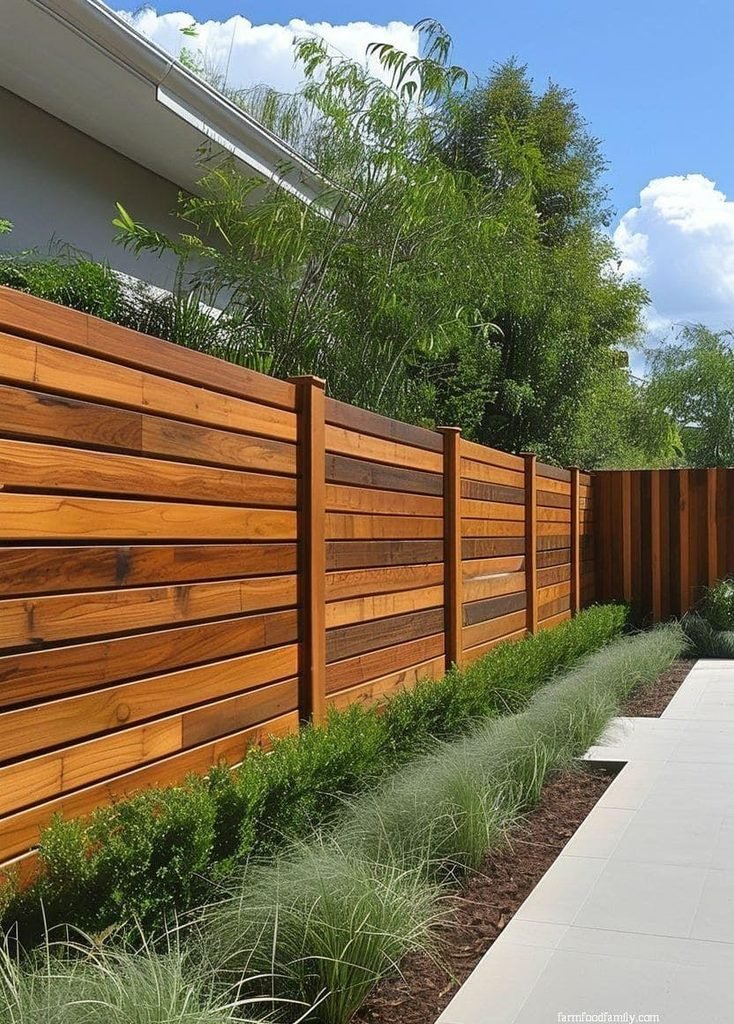
Natural wood continues to be an appealing choice for modern fence designs because it brings warmth, texture, and a sense of connection to the landscape. In 2027, one direction worth exploring is timber fencing with visible grain, understated finishes, and architectural simplicity rather than heavy ornamentation.
Wood works across a wide range of home styles. It can soften a minimalist exterior, complement a contemporary farmhouse, or bring a more relaxed character to a modern garden.
The important decision is not simply whether to use wood, but which species, finish, and construction method will perform well in your setting.
Warm Timber Tones Bring Depth to Exterior Spaces
Natural-looking finishes offer a flexible alternative to stark white or uniformly dark fencing. Honey brown, cedar, muted caramel, and medium oak-inspired shades can make an outdoor space feel welcoming while maintaining a contemporary appearance.
These tones work particularly well with:
- Cream, white, and warm-gray exterior walls.
- Black or bronze window frames.
- Pale stone paving and concrete paths.
- Green ornamental grasses and evergreen shrubs.
- Outdoor furniture in natural wood, woven materials, or neutral fabrics.
For a cohesive result, avoid trying to match every wooden surface exactly. A fence, deck, and outdoor table can use slightly different shades while still looking coordinated if they share a similar undertone.
Which Wood Is Best for a Modern Fence?
Different timber species offer different levels of durability, appearance, and maintenance requirements. Availability and suitability vary by climate, so choose materials that are appropriate for local conditions.
| Wood type | Appearance | Main consideration |
| Cedar | Warm reddish or golden tones with visible grain | Naturally durable options are available, but grade and exposure matter |
| Redwood | Rich reddish-brown color | Can be attractive for premium projects; availability and cost vary |
| Pressure-treated pine | Often pale or yellow-brown, depending on treatment | Budget-friendly, but appearance and performance depend on treatment and installation |
| Thermally modified wood | Often a rich, even brown tone | Modified for improved dimensional stability, but installation and weathering still matter |
| Durable tropical hardwoods | Dense grain and deeper natural colors | Can be long-lasting, but sourcing, cost, weight, and installation require careful consideration |
No single wood is automatically best for every property. Compare the expected service life, local availability, treatment requirements, and environmental credentials before making a decision.
For a balanced combination of appearance and practicality, cedar or a suitable modified timber can be worth considering. Pressure-treated pine may be a more economical option when the budget is tight, provided the product is suitable for the intended outdoor application.
Natural Finish or Painted Wood: Which Should You Choose?
Natural finishes emphasize the character of the timber, while paint creates a more uniform and customizable appearance.
A clear or lightly tinted exterior finish is a good choice when you want the grain to remain visible. A penetrating stain can add color while allowing the texture of the wood to show through. Paint offers a broader range of shades, including muted olive, warm gray, soft black, and cream.
Each option has trade-offs.
- Natural or clear finishes: Preserve the wood’s appearance but may require regular maintenance to protect against weathering.
- Penetrating stains: Add color while retaining visible grain, with upkeep depending on the product and exposure.
- Solid-color stains: Provide more uniform coverage without necessarily hiding all the texture.
- Exterior paint: Creates a more consistent color but may peel or require scraping and recoating as the finish ages.
Sun exposure, rainfall, humidity, and the direction the fence faces can all influence how quickly a finish deteriorates. A fence exposed to intense sun or persistent moisture may need more frequent attention than one in a sheltered position.
How to Keep a Wood Fence Looking Beautiful for Longer
Even a well-chosen timber fence needs suitable installation and maintenance. Small preventive steps can help reduce avoidable damage and keep the design looking intentional.
Start with proper drainage. Fence boards and posts should not remain in constant contact with standing water or persistently damp soil. Use appropriate post foundations and installation methods for the site.
Protect the timber where necessary. Apply an exterior-rated stain, sealer, or protective coating according to the product instructions and the timber manufacturer’s recommendations. Not every wood species requires the same treatment.
Inspect the structure regularly. Look for loose fixings, damaged boards, corrosion around metal hardware, and early signs of rot or insect damage.
Clean gently. Remove dirt, leaves, and organic buildup with a method suitable for the timber and finish. Aggressive pressure washing can damage the surface and raise the grain.
Expect natural weathering. Untreated or lightly treated wood may gradually turn silver-gray when exposed to sunlight and rain. This can be an attractive look if it is planned for, but it is different from maintaining the original warm-brown color.
Styling Natural Wood Fences With Plants and Lighting
Wooden fencing becomes even more effective when it is integrated into the garden design. Ornamental grasses can soften the base of the fence, while evergreen shrubs provide structure throughout the year.
Climbing plants may also work well, although their weight, moisture retention, and growth habits should be considered before allowing them to cover a timber structure.
Lighting adds another layer of interest. Discreet fixtures can highlight the wood grain after dark, while low garden lights create a gentle transition between the fence, planting beds, and pathways.
The result is a boundary that feels like part of the outdoor living space rather than a separate functional element.
The best modern wood fence is one that suits your home’s architecture, works with your local climate, and ages in a way you genuinely like. Choose your timber and finish with those three priorities in mind, and the design will be far more satisfying than a style selected on appearance alone.
Mixed-Material Fence Designs That Create a High-End Exterior
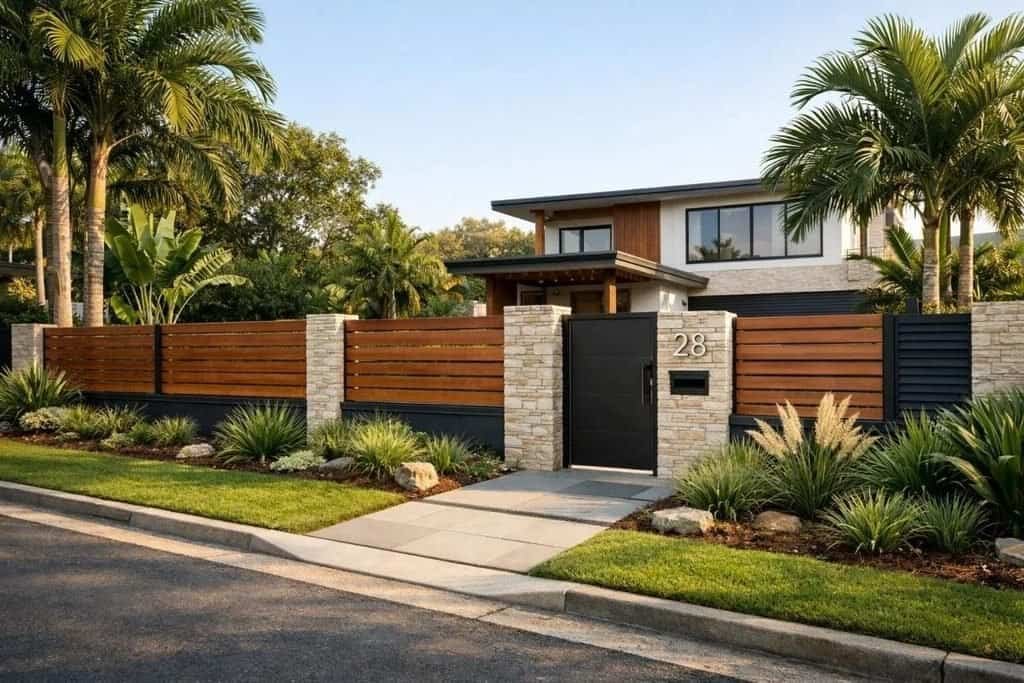
One of the most appealing modern fence design trends for 2027 is the use of mixed materials to create contrast, texture, and architectural interest. Instead of relying on a single material across the entire boundary, homeowners are combining wood, metal, stone, and composite panels to achieve a more distinctive exterior.
The secret is choosing materials that complement one another rather than compete for attention. A combination of two main materials often looks more sophisticated than a design that introduces too many colors, textures, and finishes.
Wood and Metal: A Modern Combination That Always Feels Fresh
Wood and metal remain a versatile pairing for contemporary fencing. Timber introduces warmth, while metal adds structure and a crisp architectural edge.
A popular approach is to install horizontal wooden boards within a black steel or aluminum frame. The dark frame defines the fence’s shape, allowing the wood grain to become the main visual feature.
This combination works especially well with modern homes featuring black window frames, flat rooflines, concrete pathways, or minimalist landscaping.
Consider these variations:
- Warm cedar with matte black metal: Creates a bold contrast that suits contemporary and industrial-inspired homes.
- Dark-stained wood with charcoal framing: Produces a dramatic, refined appearance for larger properties.
- Light natural timber with bronze metal: Offers a softer, warmer alternative to black.
- Vertical wooden battens with slim metal posts: Creates a contemporary screen with strong vertical lines.
- Wooden privacy panels with metal gates: Combines a welcoming natural appearance with a durable entrance structure.
When choosing the metal components, consider the local climate. Aluminum can be a practical option where low weight and corrosion resistance are priorities, while steel can offer substantial strength when appropriately protected against corrosion.
Stone and Wood Fences for a More Luxurious Look
Stone adds visual weight and permanence, making it an effective partner for natural timber. This combination is particularly suitable for larger contemporary homes, landscaped front yards, and properties where the fence forms an important part of the entrance.
Rather than constructing the entire boundary from stone, consider using masonry pillars between timber panels. The stone creates a strong architectural rhythm, while the wooden sections prevent the overall design from feeling too heavy.
Another option is a low stone wall topped with horizontal wooden slats. This arrangement can help define the boundary while maintaining a contemporary appearance.
Suitable combinations include:
- Warm timber with pale limestone or stone-look masonry.
- Dark wood with textured gray stone.
- Natural cedar with light concrete walls.
- Muted brown composite panels with understated masonry pillars.
Design tip: Repeat the stone or masonry finish elsewhere on the property, perhaps around the entrance, garden steps, or front pathway. Repeating a material in two or three places helps the exterior feel coordinated without making every feature identical.
Composite and Metal for a Lower-Maintenance Boundary
Composite fencing offers another way to create a contemporary mixed-material design. Depending on the product, composite boards can provide the appearance of timber with different maintenance requirements.
Pairing composite panels with a metal frame creates a clean, structured finish that works well in modern backyards and busy outdoor spaces.
Composite is worth considering if you prefer consistent color and want to reduce the need for routine staining. However, products differ considerably in their resistance to fading, moisture, impact, and temperature changes.
Before buying, check the manufacturer’s specifications, warranty, expansion requirements, and installation instructions. Some composite materials can become hot in direct sunlight or change dimension as temperatures fluctuate.
How to Mix Fence Materials Without Making the Design Look Busy
The most successful mixed-material fences have a clear visual hierarchy. One material usually provides the main surface, while the second adds contrast or structure.
Use these principles to keep the design balanced:
- Choose a dominant material. Let timber, metal, stone, or composite form the majority of the fence.
- Limit the color palette. Two main finishes plus a complementary accent are often sufficient.
- Match undertones. Warm wood generally works well with warm stone and bronze details, while cooler gray materials often suit charcoal metal.
- Repeat existing finishes. Coordinate the fence with the house’s window frames, exterior cladding, driveway, or gate.
- Consider the full length of the boundary. A combination that looks beautiful in a small sample may feel too busy when repeated over a long distance.
Mixed-material fencing can cost more than a straightforward timber or metal installation because it may require different foundations, fixings, and specialist labor. For a more budget-conscious approach, use one primary fence material and introduce the contrasting finish only at the entrance or at selected structural posts.
The goal is not to use the most expensive materials available. It is to create a fence that looks thoughtfully designed and belongs naturally with the home.
Minimalist Metal Fences: Sleek Lines Without the Visual Clutter
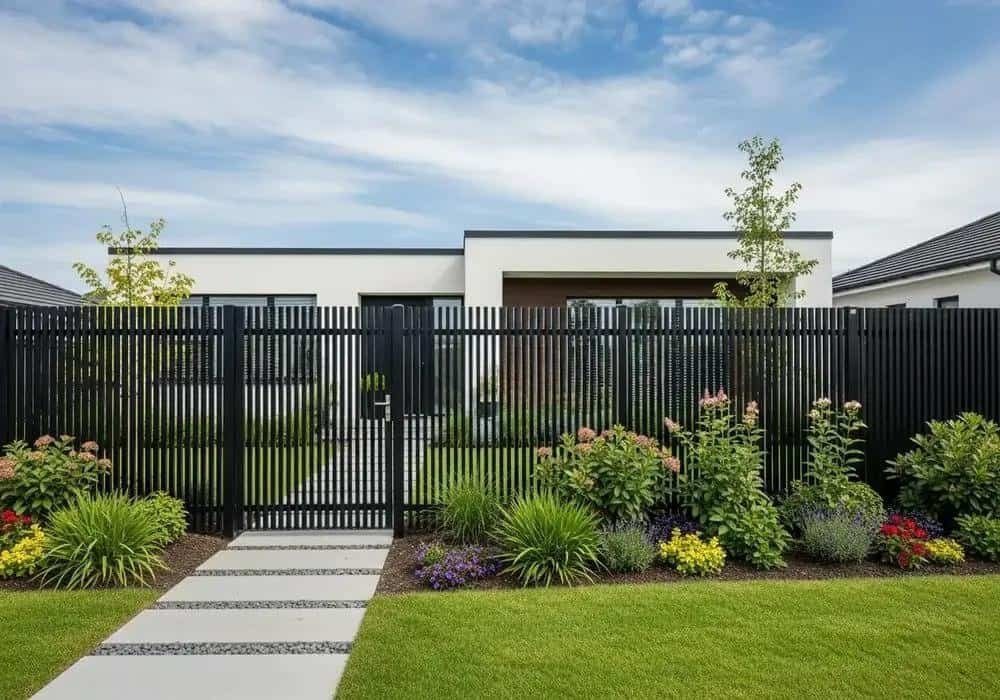
Metal fencing is a strong choice for homeowners who want a clean, durable-looking boundary without the visual weight of a solid wall. In 2027, modern metal fence designs are well suited to minimalist houses, contemporary townhouses, and landscaped front gardens where structure and simplicity matter.
The appeal lies in the material’s versatility. Metal can create a nearly invisible boundary with slim vertical bars, a more private screen with solid panels, or a bold architectural feature when combined with wood and masonry.
Choosing the right style depends on whether you want to preserve views, increase privacy, or create a more substantial visual boundary.
Slim Vertical Bars for a Light, Contemporary Appearance
Vertical metal bars offer a clean alternative to traditional ornamental iron fencing. Their simple geometry creates definition without blocking the entire view of the garden.
This style works particularly well in front yards where maintaining visibility is important. It can also help a compact property feel less enclosed than it might with a solid fence.
For a contemporary finish, look for evenly spaced bars, restrained hardware, and a simple frame. Matte black is a classic option, while charcoal, bronze, and muted metallic finishes can create a softer effect.
Vertical metal fencing can be especially attractive when paired with:
- Low hedges and structured planting.
- Pale concrete or stone pathways.
- Modern exterior lighting.
- Minimalist gates with matching frames.
- Contemporary homes with large windows and simple facades.
Spacing deserves careful attention. Very wide gaps may not be suitable for households with small children or pets, while narrow gaps may be necessary to meet particular safety requirements. Check the applicable local standards before installation.
Solid Metal Panels for Privacy and Architectural Impact
Solid or nearly solid metal panels create a different look. They establish a strong visual boundary, reduce direct views into the property, and can provide a striking backdrop for landscaping.
These fences are particularly useful around patios, outdoor kitchens, side yards, and areas where privacy is more important than visibility.
A dark metal panel can look especially effective against light-colored walls, pale paving, and lush green plants. Lighter finishes, meanwhile, can soften the overall effect and reduce the visual dominance of a long fence.
Perforated metal panels offer an alternative for homeowners who want something more decorative without returning to conventional ornamental patterns. Carefully selected geometric openings can introduce subtle texture and filtered light.
Bear in mind that solid panels catch more wind than open railings. Properly designed posts, foundations, fixings, and panel supports are essential, especially in exposed locations.
Aluminum vs. Steel: Which Is Better for Modern Fencing?
Aluminum and steel are both used in contemporary fence systems, but they offer different advantages.
| Feature | Aluminum fencing | Steel fencing |
| Weight | Generally lighter | Generally heavier |
| Corrosion resistance | Naturally resistant to rust, although finishes can still deteriorate | Depends on the steel type and protective coating |
| Strength | Suitable for many residential fence systems | Often preferred where greater structural strength is required |
| Design options | Available in bars, framed panels, and privacy systems | Available in bars, solid panels, and substantial architectural designs |
| Maintenance | Usually relatively low with a suitable finish | Requires attention to damaged coatings and signs of corrosion |
| Cost | Varies by grade, finish, and design | Varies by grade, fabrication, coating, and installation |
Neither material is automatically the better choice for every property. The quality of the fabrication, coating system, hardware, and installation has a major influence on long-term performance.
For coastal locations or areas exposed to heavy rainfall, pay particular attention to corrosion protection and compatibility between different metals. A well-designed system should account for the local environment rather than relying on appearance alone.
Modern Metal Fence Colors That Work With Contemporary Homes
Color can dramatically change how a metal fence looks.
Matte black creates a defined architectural edge and works well with white walls, natural timber, and green landscaping.
Charcoal gray offers a slightly softer alternative to black while maintaining a contemporary appearance.
Bronze and dark brown can complement warm wood, stone, and earthy exterior palettes.
Muted olive or other subdued colors can help the fence blend into a garden rather than dominate it, provided the chosen coating is suitable for outdoor use.
Before selecting a finish, compare samples with the house exterior in both direct sunlight and shade. A dark fence may appear almost black in one lighting condition and reveal a brown or gray undertone in another.
How to Make Metal Fencing Feel Warmer
Metal fencing can sometimes look stark when used across an entire property without any contrasting materials. A few carefully chosen additions can make the result feel more welcoming.
Try pairing metal panels with timber gates, planting ornamental grasses along the boundary, or using raised beds to soften the transition between the fence and the garden.
Warm outdoor lighting can also help. Rather than flooding the entire boundary with bright fixtures, use discreet lights to highlight planting, pathways, or the entrance.
The best minimalist metal fence is one that provides the openness or privacy you need while allowing the architecture and landscaping to remain the main attraction.
Privacy Fence Ideas for 2027: How to Create Seclusion Without Closing In
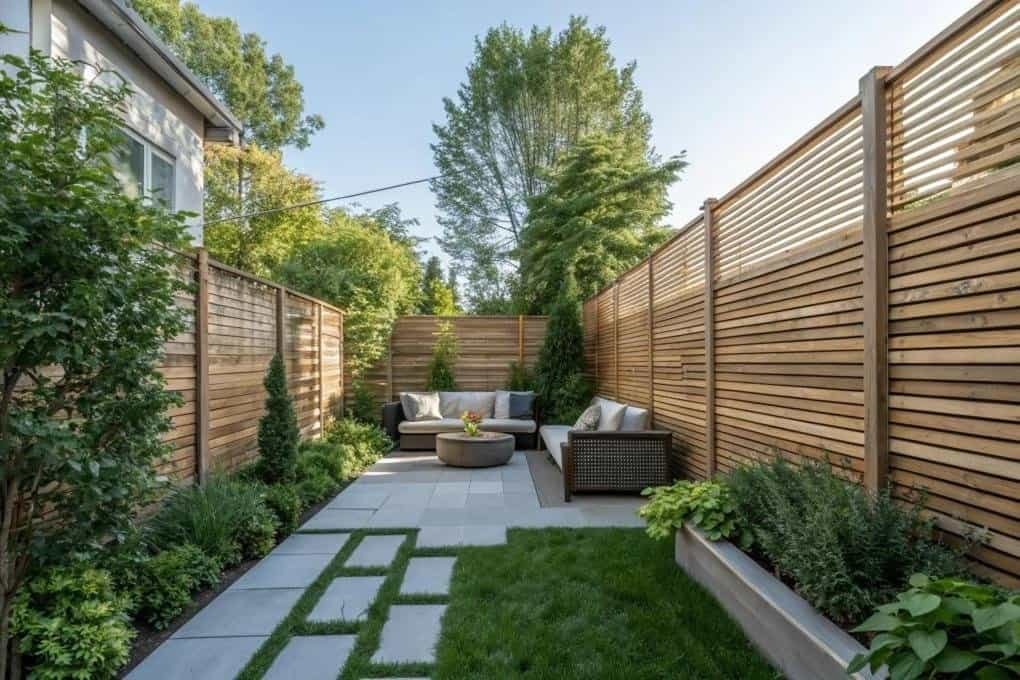
Privacy is one of the most important reasons homeowners install a fence, but a completely solid boundary is not always the most attractive solution. The latest modern privacy fence ideas focus on creating seclusion where it matters while preserving natural light, airflow, and a sense of openness.
This approach is particularly useful for urban homes, small gardens, overlooked patios, and properties where neighboring windows face the outdoor living area.
The key is to identify exactly where privacy is needed before deciding on the fence’s height, layout, and materials.
Full-Height Privacy Fences for Backyards and Patios
A full-height fence can make a backyard feel like a private outdoor room. It provides a consistent backdrop for seating areas, planting beds, and dining spaces while reducing direct views from neighboring properties.
Horizontal timber slats, composite panels, and simple vertical boards are all suitable options, depending on the desired appearance and maintenance requirements.
For a contemporary finish, keep the surface relatively simple. A consistent board width, restrained color palette, and well-aligned posts can make a tall fence feel more architectural.
A solid fence is particularly useful around a patio where people sit close to the boundary. In these areas, small gaps can make a noticeable difference to privacy, especially when neighboring properties are at a higher elevation.
Practical tip: Avoid automatically making every section of the fence as tall as possible. A full-height screen may be necessary beside a seating area, while a lower or more open fence can work perfectly well along another part of the property. Always check local height limits and boundary regulations.
Partial Privacy Screens That Preserve Light and Airflow
Partial screening provides a middle ground between an open fence and a completely enclosed yard.
These screens can be installed beside outdoor dining areas, around a hot tub, near a garden seating nook, or along a boundary that requires limited visual separation.
Popular options include:
- Open horizontal slats: Reduce direct views while allowing some airflow.
- Vertical battens: Create a structured screen with a lighter visual appearance.
- Angled or louvered panels: Help control sightlines from particular directions.
- Freestanding garden screens: Provide targeted privacy without replacing the entire fence.
- Mixed solid and open sections: Concentrate screening around sensitive areas while keeping the rest of the garden visually open.
Louvered designs can be especially useful when the direction of the view matters. However, their effectiveness depends on the angle of the slats and the viewer’s position, so they should be planned around the actual sightlines.
If privacy is essential, inspect the design from standing and seated positions before committing to it.
Privacy Fences for Small Gardens
Small gardens benefit from thoughtful screening because every design decision affects how spacious the area feels.
A tall, dark, solid fence surrounding a tiny patio can make the space feel enclosed. A carefully designed boundary, on the other hand, can create privacy without overwhelming the garden.
Consider the following ideas:
Choose a consistent finish. Matching the fence to the decking, garden furniture, or exterior palette can reduce visual fragmentation.
Use selective screening. Place a privacy panel where it blocks the most intrusive view instead of enclosing every side with a heavy structure.
Keep planting simple. A narrow planting bed with a few well-chosen species can soften the fence without taking up too much floor space.
Use vertical greenery carefully. Climbing plants can draw the eye upward, but choose suitable species and provide an appropriate support system. Dense growth can retain moisture against the fence.
Preserve daylight where possible. An open upper section or a carefully positioned screen may provide sufficient privacy without blocking as much light.
For a narrow courtyard, a warm timber screen with a few slim planters can create a welcoming backdrop. A more urban setting may benefit from charcoal metal framing and restrained greenery.
Can Plants Replace a Privacy Fence?
Plants can provide valuable screening, but they are not always a complete replacement for a fence.
Evergreen hedges can create a natural boundary, while climbing plants can soften timber or metal panels. Tall ornamental grasses can also provide seasonal screening around patios and seating areas.
The advantages include a softer appearance, habitat for wildlife, and a more integrated relationship between the fence and garden.
However, living screens take time to grow and may require pruning, watering, and ongoing space. Deciduous plants may lose much of their privacy value during winter, while some species can spread beyond their intended area.
A combined approach is often more practical: install a suitable fence for immediate privacy, then use planting to soften the boundary over time.
Layered Fencing: Combining Panels, Greenery, and Lighting
Layered screening is an effective way to make a privacy fence feel less like a wall. Instead of treating the fence as the only design feature, combine it with planting, subtle lighting, and a few carefully positioned outdoor elements.
For example, a horizontal timber fence could form the main boundary, with ornamental grasses planted along selected sections. Low-level lighting can highlight the plants after dark, while a small tree or sculptural shrub creates a focal point near a seating area.
For a more minimalist garden, use fewer elements and give each one enough room to stand out. A simple fence, a single planting bed, and restrained lighting can create a more sophisticated result than filling every available space with decoration.
Privacy, Security, and Local Regulations: What to Check Before Installing
A beautiful fence still needs to perform properly. Before purchasing materials or arranging installation, check the practical requirements that may affect your design.
- Permitted height: Local rules may distinguish between front and rear boundaries or impose different limits near roads.
- Property boundaries: Confirm the boundary location and clarify ownership responsibilities before construction.
- Visibility and access: Fences near driveways, footpaths, or road junctions may be subject to sightline requirements.
- Wind exposure: Tall or solid panels may require stronger posts and appropriately designed foundations.
- Drainage: Avoid creating conditions that direct water toward neighboring properties or cause water to collect around posts.
- Security needs: Consider gate locks, latch placement, visibility, and whether the design is suitable for children or pets.
These details are especially important when replacing an existing fence with a taller or more solid design. Local requirements can vary, so confirm them before finalizing the plans.
A successful privacy fence should make your outdoor space more comfortable without making it feel boxed in. Focus on the views you need to block, choose materials that suit the garden, and combine solid screening with lighter design elements wherever practical.
Modern Fence Colors for 2027: From Warm Neutrals to Deep Charcoal
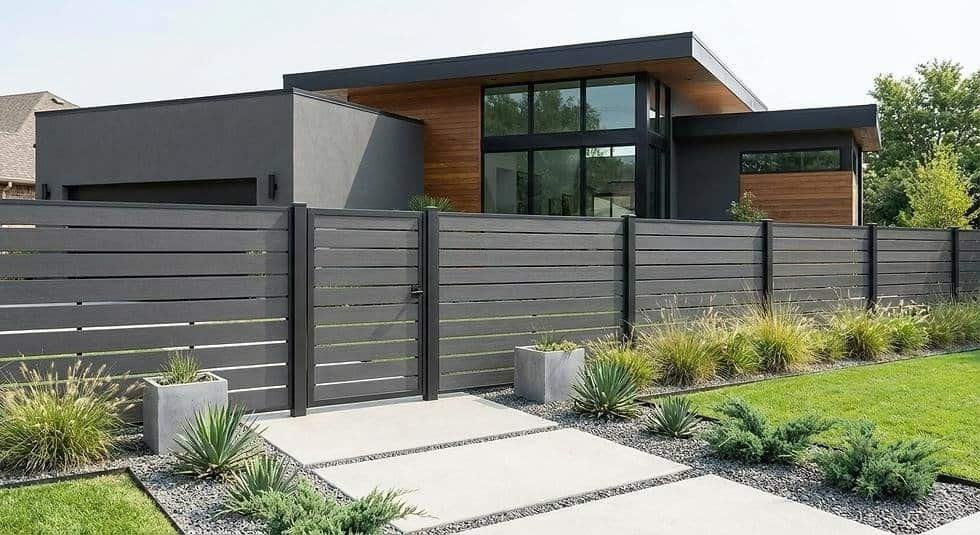
Color is one of the simplest ways to transform a fence without changing its overall structure. Among the modern fence design trends for 2027, warm neutrals, earthy shades, natural timber finishes, and deep architectural colors offer plenty of inspiration for creating a coordinated exterior.
The right fence color can make a garden feel more spacious, emphasize the home’s architectural details, or help the boundary blend naturally into the landscape. Rather than choosing a shade simply because it is fashionable, consider how it will look beside your exterior walls, windows, paving, and plants.
Warm Neutrals for a Softer Contemporary Look
Warm neutrals are worth considering if you want a modern fence that feels welcoming rather than stark. Shades such as warm gray, greige, sand, taupe, and muted beige complement a wide range of exterior materials.
These colors work particularly well with contemporary homes featuring cream render, pale stone, natural timber, or warm white walls. They also create a subtle backdrop for greenery without competing with the garden.
Consider these combinations:
- Warm greige with white walls: Creates a soft, understated contrast that suits minimalist homes.
- Sand-colored fencing with natural stone: Produces a relaxed, organic appearance.
- Taupe panels with dark window frames: Balances warmth with a more architectural finish.
- Cream fencing with green landscaping: Creates a light, welcoming boundary for smaller gardens.
Warm neutrals can be especially effective when a property already contains several exterior materials. Their understated appearance helps tie different finishes together without introducing another strong visual feature.
Natural Brown and Honey Wood Tones
Natural wood colors remain an appealing direction for homeowners who prefer a fence with visible grain and texture. Honey brown, cedar, caramel, and medium oak-inspired shades can make an outdoor space feel warmer while preserving a clean, contemporary look.
A natural timber fence is particularly attractive alongside stone paving, outdoor furniture, ornamental grasses, and neutral-colored exterior walls.
For a more modern result, choose a finish that allows the grain to remain visible instead of using a heavily opaque coating. Consistent board widths and simple hardware can reinforce the architectural appearance.
If the fence is made from composite material, look for realistic wood-inspired textures and colors that coordinate with the house. Compare samples outdoors before making a final choice because direct sunlight can make warm tones appear lighter or more golden.
Remember that natural wood will change over time unless maintained to preserve its original color. Decide whether you prefer the timber to retain a warm finish or gradually develop a weathered, silvery appearance.
Charcoal and Black for Strong Architectural Contrast
Black and charcoal remain versatile choices for modern metal fencing, gates, and framed timber designs. Their appeal comes from the way they define the boundary while allowing other exterior features to stand out.
A charcoal fence can complement a white or pale-gray house, while black framing creates a strong outline around warm wooden panels.
Dark fencing can also work beautifully in gardens with lush greenery. The darker background often makes foliage, flowers, and ornamental grasses more visually prominent.
However, dark colors are not automatically the best choice for every property. On a small patio with limited daylight, a long, solid black fence may feel visually heavy. Consider using charcoal only for the frame, combining it with lighter timber, or choosing a softer gray.
Dark surfaces may also become hot in direct sunlight, particularly when made from metal or composite materials. This is worth considering in sunny climates and around frequently used outdoor seating areas.
Muted Green and Earthy Colors for Garden-Focused Homes
For homeowners who want the fence to feel connected to the landscape, muted olive, moss-inspired green, and subdued earthy shades offer an alternative to conventional black or brown.
These colors can help a fence recede visually behind plants, making the garden feel more integrated with its surroundings.
A muted green fence can work particularly well with natural stone paths, timber decking, evergreen shrubs, and contemporary homes with neutral exterior finishes.
Earthy colors are also useful when a property has a natural or minimalist landscape design. Rather than creating a strong contrast, the fence becomes a quiet background for the plants and outdoor features.
Choose an exterior-rated coating designed for the intended material, and test the color against the actual planting before committing to a full installation.
How to Choose the Right Fence Color for Your Exterior
The easiest way to select a suitable fence color is to begin with the materials already present on your property.
| Existing exterior feature | Fence color to consider | Overall effect |
| White or cream walls | Charcoal, warm brown, or greige | Adds definition without overwhelming the facade |
| Gray concrete or stone | Natural timber, charcoal, or muted olive | Balances cool materials with warmth or greenery |
| Red or brown brick | Deep brown, bronze, or warm gray | Complements traditional materials with a modern finish |
| Black window frames | Black, charcoal, or warm timber | Creates a coordinated architectural appearance |
| Lush garden landscaping | Natural wood, muted green, or dark gray | Keeps the focus on foliage and outdoor features |
| Light-colored contemporary facade | Sand, taupe, or medium brown | Creates a softer, welcoming contrast |
Before painting or ordering fence panels, test a sample in the actual outdoor setting. Look at it in morning light, direct afternoon sun, and shade if possible.
A useful rule is to coordinate the fence with one or two existing exterior finishes rather than trying to match everything. A fence that complements the windows and paving, for example, can look cohesive even if it differs slightly from the front door or exterior walls.
Sustainable and Low-Maintenance Fencing: Which Materials Make Sense?
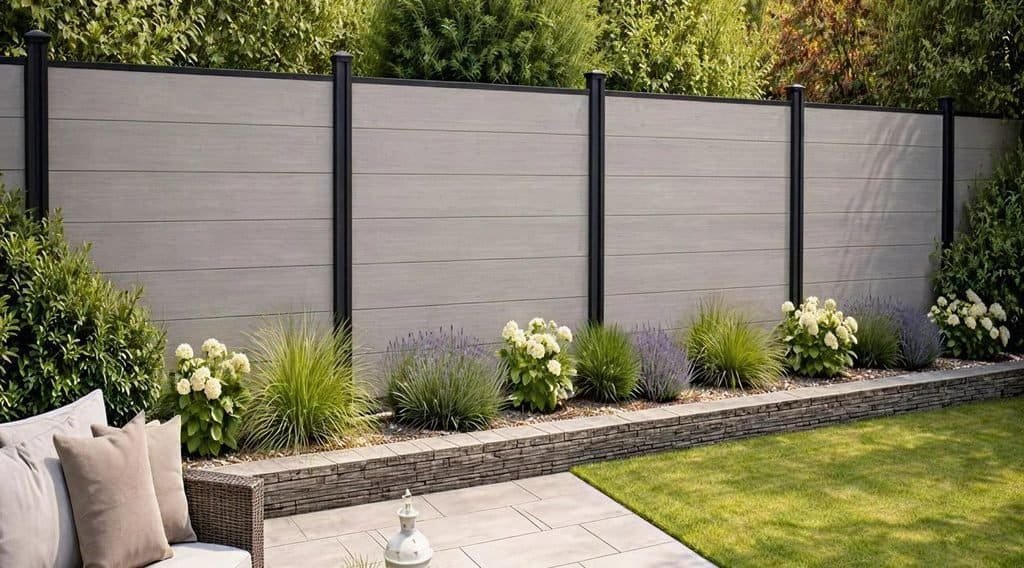
Modern fencing is not just about appearance. Homeowners are also considering how much maintenance a fence requires, how long it is likely to last, and whether its materials are responsibly sourced.
The best low-maintenance fence is not necessarily the cheapest option or the product advertised as completely maintenance-free. Long-term value depends on the material, local climate, installation quality, and the amount of upkeep you are prepared to handle.
Understanding the differences between timber, composite, metal, and masonry can help you choose a fence that suits both your design preferences and your budget.
Composite Fencing for a Consistent, Modern Finish
Composite fencing is made from combinations of materials, commonly including wood fibers and plastic, although product formulations vary. It is available in a range of colors and finishes, including designs that imitate natural timber.
One of its main attractions is the reduced need for routine staining or painting compared with many traditional timber fences.
Composite panels can work particularly well in contemporary gardens where homeowners want a consistent finish across a large boundary. Paired with black metal posts or simple gate hardware, they can create a polished appearance without elaborate detailing.
Potential advantages include:
- A range of consistent colors and wood-inspired textures.
- Reduced need for regular staining or repainting, depending on the product.
- Resistance to some forms of moisture-related damage.
- Coordinated panel and gate systems for a streamlined design.
- Options containing recycled materials, depending on the manufacturer.
There are also limitations to consider. Some composite products can fade, scratch, expand with temperature changes, or become hot in direct sunlight. Quality, composition, and performance differ between manufacturers.
Before buying, check the warranty, recommended post spacing, temperature limits, cleaning requirements, and availability of replacement panels. Ask whether the product can be repaired easily if one section becomes damaged.
Responsibly Sourced Timber for a Natural Boundary
Wood remains an attractive option for homeowners who value natural materials and a fence that can be repaired or refinished over time.
For a more responsible choice, look for timber from well-managed sources and check whether the supplier provides credible certification or traceability information. Certification can help inform a purchasing decision, although it does not automatically guarantee that a product is suitable for every project.
Timber also has practical advantages. Individual boards can often be replaced without removing an entire fence section, and the finish can be changed if you want to refresh the appearance of the garden.
The trade-off is maintenance. Depending on the species, treatment, and exposure, a wooden fence may need periodic cleaning, staining, sealing, or repainting.
To make timber fencing more practical over the long term:
- Choose a species and grade suited to the local climate.
- Use appropriate treatment for the intended outdoor application.
- Prevent water from collecting around posts and the base of the fence.
- Select durable, compatible fixings.
- Maintain protective coatings according to the manufacturer’s recommendations.
A responsibly sourced wooden fence can be a good option when natural appearance, repairability, and design flexibility are priorities.
Recycled and Recyclable Metal Fencing
Metal fencing can offer a long service life when the material, protective coating, and installation are appropriate for the environment.
Aluminum is naturally resistant to rust, while steel offers strength and can be protected using suitable coatings or galvanizing systems. Both are available in contemporary styles, from slim vertical bars to solid framed panels.
Some metal products incorporate recycled content. If sustainability is important to you, ask the manufacturer for information about recycled material, expected service life, maintenance requirements, and end-of-life recycling options.
Durability matters because replacing a fence prematurely consumes additional materials and creates more waste.
Look after the finish by cleaning away accumulated dirt and checking for scratches, damaged coatings, or corrosion. In coastal environments, pay particular attention to salt exposure and the manufacturer’s guidance for cleaning and protective maintenance.
Is Masonry Fencing a Sustainable Long-Term Investment?
Stone, brick, and concrete fencing can provide a durable, substantial boundary with relatively limited routine maintenance. These materials are particularly suitable for properties where a strong architectural presence or increased privacy is important.
A masonry fence may require less frequent surface maintenance than some timber systems, although joints, drainage, cracks, and weather-related damage still need attention.
The environmental impact depends on factors such as the material source, manufacturing process, transport distance, quantity used, and expected service life. A large concrete wall is not automatically more sustainable than a well-maintained timber fence simply because it lasts a long time.
For a balanced design, consider using masonry only where it offers a clear benefit, such as entrance pillars or a low boundary wall, and pairing it with a lighter material for the remaining sections.
Comparing Fence Materials by Cost and Maintenance
The initial purchase price is only one part of the decision. Installation, protective finishes, repairs, and future replacement can all affect the total cost of ownership.
| Material | Initial cost tendency | Maintenance needs | Best suited to |
| Pressure-treated timber | Low to moderate | Periodic inspection and possible refinishing | Budget-conscious projects |
| Cedar and other durable timber | Moderate to high | Depends on finish and exposure | Warm, natural contemporary designs |
| Composite panels | Moderate to high | Usually cleaning and periodic inspection | Consistent appearance with reduced routine refinishing |
| Aluminum | Moderate to high | Generally limited, with finish checks | Lightweight modern metal designs |
| Steel | Moderate to high | Depends on corrosion protection and environment | Strong frames, gates, and architectural panels |
| Brick, stone, or concrete | Often high when professionally installed | Usually limited, but structural checks are important | Substantial boundaries and premium entrance features |
These cost levels are general comparisons rather than fixed prices. Local labor rates, fence height, ground conditions, design complexity, and material availability can significantly change the final quote.
How to Calculate the Real Value of a Low-Maintenance Fence
A fence with a higher upfront price may be worthwhile if it reduces recurring maintenance or lasts longer under local conditions. However, paying more does not guarantee better performance.
Compare quotes by looking at the complete installation, not just the cost per panel. Check whether the price includes posts, foundations, gates, hardware, removal of the old fence, surface treatments, and cleanup.
It is also useful to ask installers about the most common repairs for the proposed material and whether replacement parts are readily available.
The smartest investment is a fence that suits your climate, matches your maintenance preferences, and can be repaired without replacing the entire structure. Prioritize verified product specifications and installation quality over broad claims such as maintenance-free or environmentally friendly.
Fence Gates and Entryways That Make the Whole Design Feel Complete
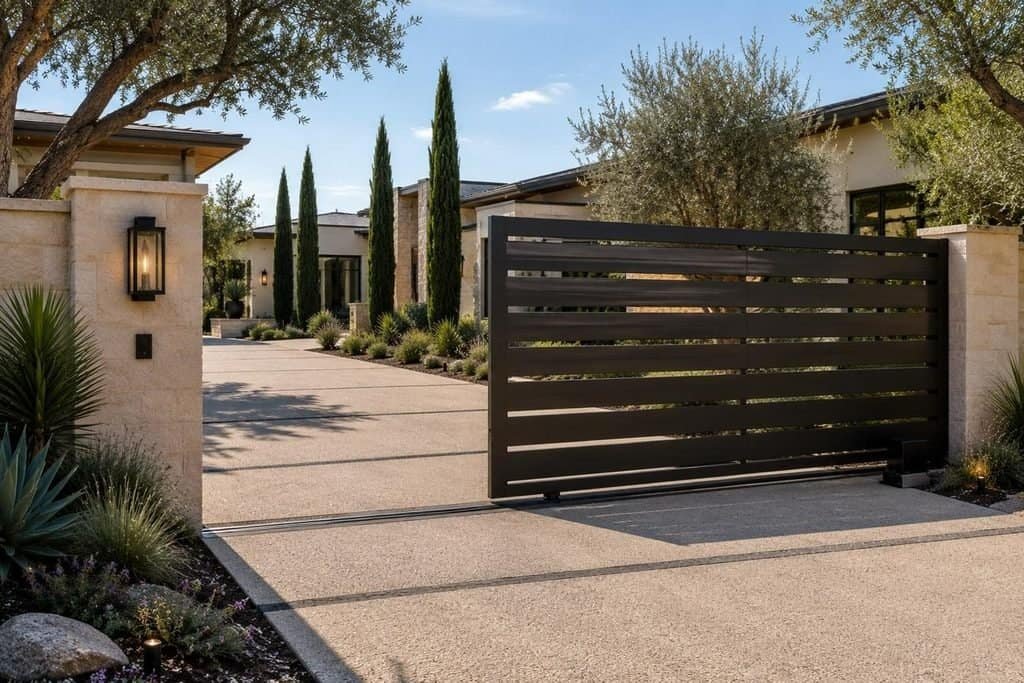
A fence can look beautifully designed, but an outdated or mismatched gate can make the entire boundary feel unfinished. In modern fence design for 2027, gates are increasingly treated as part of the overall architectural composition rather than as separate functional components.
A coordinated gate can strengthen the entrance, improve access, and connect the fence visually to the house. Whether you need a small pedestrian gate or a wide driveway entrance, consistency in materials, proportions, and hardware makes a noticeable difference.
Matching Gates and Fences for a Seamless Appearance
One of the simplest ways to create a cohesive exterior is to repeat the fence’s main design in the gate.
For a horizontal timber fence, a gate with matching slat widths and spacing can create an uninterrupted visual line. For a metal fence, a gate with the same frame profile and finish looks deliberate and refined.
Matching does not necessarily mean copying every detail. A gate can introduce a small variation while still relating to the surrounding fence.
For example, a wooden boundary might use simple black metal framing throughout, while the entrance features a slightly wider frame or a darker timber finish. The difference creates emphasis without making the gate appear unrelated.
Consider these combinations:
- Horizontal timber fence with a matching pedestrian gate: A straightforward choice for contemporary homes.
- Black vertical-bar fencing with a slim metal gate: Maintains openness around front gardens.
- Composite privacy panels with coordinated gate infill: Creates a consistent low-maintenance boundary.
- Stone pillars with a timber or metal gate: Gives the entrance a more substantial architectural presence.
- Mixed wood and metal fencing with a matching driveway gate: Repeats the property’s main materials in a prominent location.
Sliding or Swing Gates: Which Is Right for Your Property?
The best gate mechanism depends on the available space, driveway layout, slope, and how frequently the entrance is used.
Sliding gates move sideways along a track or suitable trackless system. They can be useful where a swinging gate would interfere with parked vehicles or limited driveway space. However, they need enough clear space alongside the entrance and a suitable foundation or support system.
Swing gates open inward or outward around hinges. They can create an elegant entrance and may suit properties with ample driveway clearance. Ground slope and the gate’s opening path need careful consideration.
Pedestrian gates provide a separate entrance for everyday foot traffic. They are particularly practical when the driveway gate is used mainly for vehicles.
Before choosing a mechanism, check the driveway width, slope, surrounding walls, drainage, and access requirements. Automated gates may also require appropriate electrical work, safety devices, and regular maintenance.
Modern Gate Hardware That Complements the Design
Hardware may seem like a minor detail, but hinges, handles, locks, and latches influence both appearance and functionality.
Minimalist gates often look best with restrained hardware that suits the frame and finish. Matte black hardware can complement charcoal metal, while bronze or brushed finishes may work better with warmer materials.
Look for components rated for outdoor use and appropriate for the gate’s weight. Heavy gates need suitable hinges and support, and hardware should be compatible with the material to reduce corrosion or staining.
For gates with concealed hinges or integrated handles, make sure the design still allows convenient access and straightforward maintenance.
Practical tip: Choose hardware early in the design process rather than treating it as an afterthought. Some gate systems require specific clearances, hinge arrangements, or reinforced sections that are easier to plan before installation.
Privacy, Security, and Everyday Convenience
A gate should be attractive, but it also needs to function properly for the people using it.
For family homes, consider how easily the gate can be operated, whether the latch is appropriate for children, and whether pets could slip through gaps. If security is a priority, evaluate the quality of the locking system and the strength of the frame rather than relying on fence height alone.
Automated driveway gates can add convenience, particularly when vehicles enter and leave frequently. However, automation should include appropriate safety features and installation by qualified professionals where required.
Other practical details deserve attention too:
- Ensure there is enough room for the gate to open without striking vehicles, plants, or walls.
- Check that the ground beneath the gate remains clear during normal use.
- Consider how delivery personnel and visitors will reach the pedestrian entrance.
- Use weather-resistant locks and fixings.
- Plan for maintenance access if the gate uses a motor or sliding mechanism.
A well-designed gate should make entering and leaving the property feel effortless.
Lighting and House Numbers for a More Inviting Entrance
Lighting and house numbers can help a modern fence feel complete without adding unnecessary decoration.
A discreet light beside the pedestrian gate can improve visibility after dark, while carefully positioned fixtures can highlight the texture of timber or the clean lines of metal framing.
House numbers should be easy to read from the street and visually consistent with the property’s architectural style. Simple lettering in a finish that contrasts with the gate or wall is often effective.
For a contemporary entrance, avoid crowding the gate with too many decorative features. A clear number, a suitable light, and well-chosen planting may be all the design needs.
The goal is to make the entrance recognizable, practical, and visually connected to the rest of the exterior.
When planning a modern fence, treat the gate as an essential part of the design from the beginning. Matching materials, appropriate hardware, and a practical opening system will help create an entrance that looks polished and works well every day.
Modern Fence Landscaping: The Details That Make a Boundary Look Designed
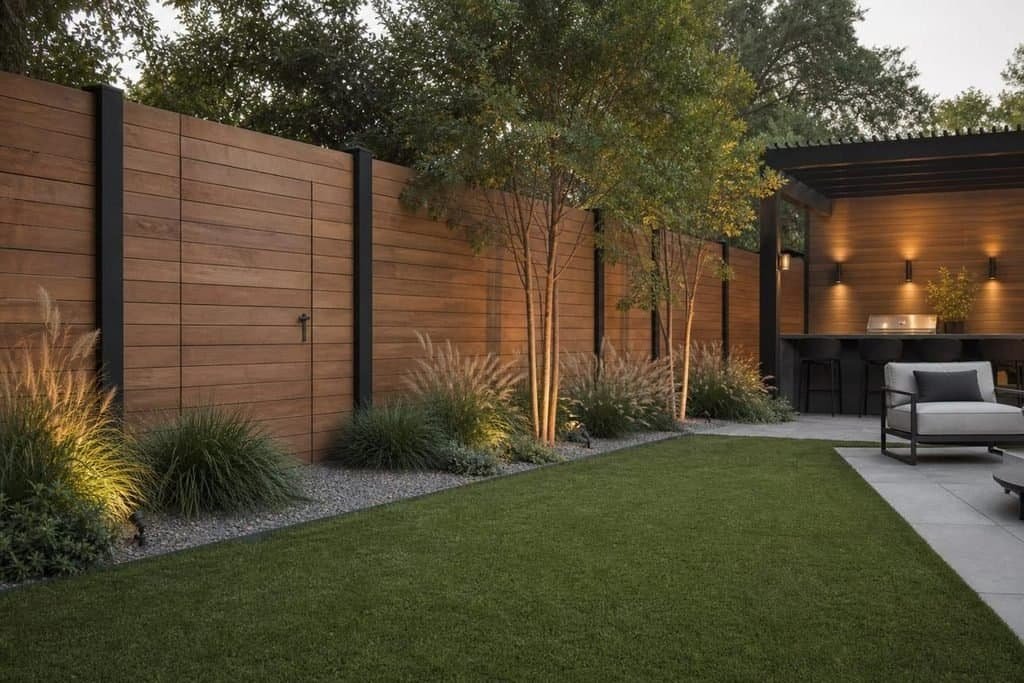
Even the most beautiful fence can look unfinished without thoughtful landscaping. One of the most effective modern fence design trends for 2027 is treating the boundary as part of the garden rather than as a separate structure.
Plants, lighting, paving, and raised beds can soften straight lines, add depth, and make an outdoor space feel more inviting. These details are especially useful when a fence is tall, dark, or made from materials such as concrete and metal that might otherwise dominate the landscape.
The aim is not to hide the fence completely. It is to create a balanced relationship between the boundary, the plants, and the spaces you use every day.
Layered Planting That Softens Straight Fence Lines
Modern fences often feature strong horizontal or vertical lines. Introducing plants with different heights and textures creates a natural contrast without sacrificing the clean appearance of the design.
For example, a horizontal timber fence can look beautiful behind a narrow border of ornamental grasses. A charcoal metal fence can provide a dramatic background for leafy shrubs, while a pale composite fence can complement sculptural plants and simple stone edging.
Consider combining three layers of planting:
- Low-growing plants: Ground covers, compact perennials, and small border plants soften the base of the fence.
- Medium-height plants: Ornamental grasses, flowering perennials, and shrubs add texture and movement.
- Tall accents: Small trees or upright shrubs create focal points and break up long, uninterrupted boundaries.
You do not need all three layers along every section. A simple row of grasses may be enough for a narrow garden, while a larger backyard can accommodate a more varied planting scheme.
Choose plants according to your climate, soil, sunlight, and available space. Avoid placing large shrubs directly against the fence if their mature size could restrict access for cleaning or repairs.
Climbing Plants for a Natural Privacy Effect
Climbing plants can soften a contemporary fence and introduce greenery without requiring a wide planting bed.
They work particularly well with trellis panels, suitable metal supports, and freestanding garden screens. A simple timber boundary can become more visually interesting as foliage gradually spreads across selected sections.
However, not every climbing plant is suitable for every fence. Some vigorous species can become heavy, spread beyond their intended area, or retain moisture against timber.
For a more controlled result, install a separate trellis with enough space for airflow and maintenance. Choose a plant suited to the local climate, and check whether its roots or growth habits could affect nearby paving and structures.
If you want year-round screening, consider evergreen species appropriate for your region. Deciduous climbers can be attractive too, particularly when seasonal changes are part of the garden’s appeal.
Fence Lighting That Creates Atmosphere After Dark
Outdoor lighting can transform the appearance of a fence in the evening. It can highlight textures, make pathways easier to navigate, and create a gentle transition between the house and garden.
The most effective lighting plans are usually restrained. Rather than illuminating every section of the fence, focus on areas where light improves usability or highlights an attractive feature.
Useful options include:
- Low-level path lights: Guide movement along garden paths and beside fence lines.
- Wall-mounted fixtures: Provide practical illumination near gates and entrances.
- Shielded uplights: Highlight selected trees, shrubs, or textured surfaces.
- Integrated fence lighting: Adds a contemporary touch when the fixtures are designed for the specific fence system.
- Motion-activated lights: Provide illumination near entrances or access points when needed.
Warm-white lighting often creates a welcoming atmosphere around timber and natural stone. Neutral-white light may suit some minimalist metal designs, but avoid mixing too many different color temperatures in a small garden.
Always choose outdoor-rated fixtures and have electrical installations completed safely. Position lights carefully to reduce glare into neighboring windows and avoid directing bright beams toward nearby roads.
Raised Beds, Gravel, and Paving for a Finished Look
The ground directly beside a fence can have a surprisingly large effect on the overall appearance.
A narrow gravel strip can provide a neat transition between the fence and the lawn. Raised planters can introduce greenery at a comfortable viewing height, while stone edging helps keep planting areas defined.
For contemporary gardens, choose materials that relate to the rest of the property. Pale paving can complement warm timber, while darker stone can work well with charcoal metal and architectural planting.
Before installing gravel, paving, or raised beds, consider drainage and maintenance access. Avoid building up soil against timber boards or fence components that need to remain clear of persistent moisture.
Design tip: Repeat one material from the fence elsewhere in the garden. A timber fence paired with a matching bench, for example, can make the space feel coordinated without requiring an exact match across every surface.
Modern Fence Design Ideas for Small Gardens, Sloping Lots, and Different Budgets
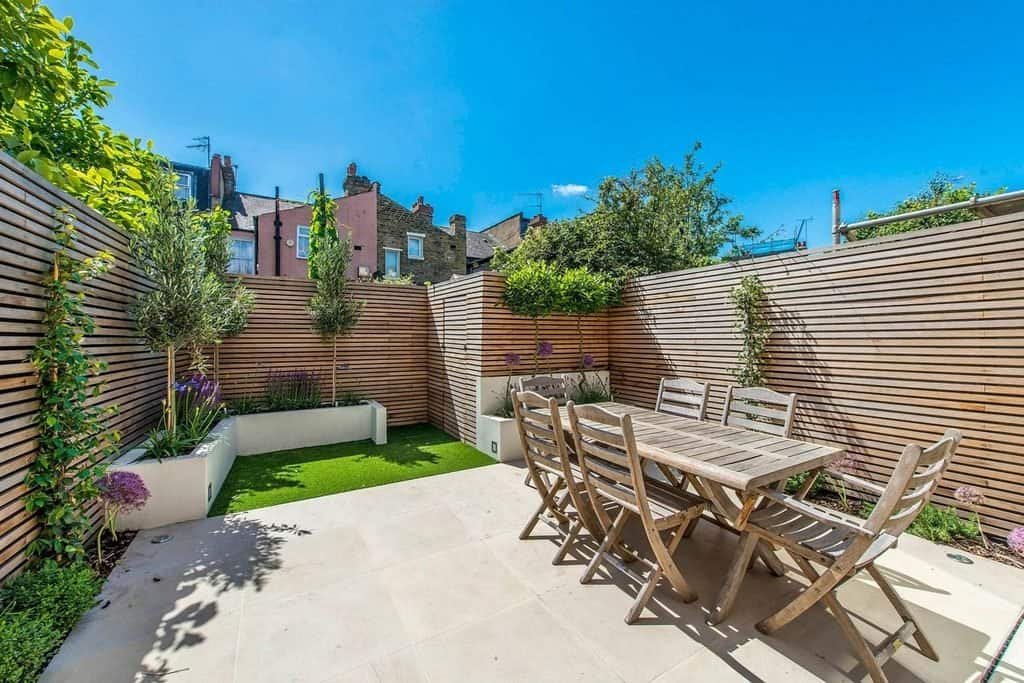
A modern fence does not need to be expensive or custom-built to look attractive. The best design depends on the size and shape of the property, the purpose of the boundary, and how much you want to spend on materials and installation.
Small gardens may benefit from lighter-looking panels, sloping properties require careful planning, and budget-conscious projects can achieve a contemporary appearance by focusing on clean lines and a consistent finish.
Understanding these differences before choosing a design can help you avoid costly changes later.
Modern Fence Ideas for Small Gardens and Narrow Yards
In a compact outdoor space, the fence forms a large part of the visible landscape. Its color, height, and texture can influence whether the garden feels open or enclosed.
A simple design usually works best. Choose a fence with consistent lines and avoid combining too many materials or decorative patterns.
These ideas are worth considering:
Use slim horizontal slats. Their repeated lines create visual rhythm without the bulk of elaborate panels.
Choose a coordinated color palette. A fence that complements the paving and exterior walls helps the garden feel more unified.
Add greenery selectively. A few narrow planting beds or carefully placed containers can soften the boundary without taking up too much floor space.
Consider partially open panels. Where privacy requirements allow, some gaps can preserve light and make the space feel less confined.
Use the fence as a backdrop. A simple boundary behind a small seating area can make furniture and planting feel like part of a deliberate design.
For a narrow courtyard, a warm wood fence with a slim built-in planter can provide both visual interest and a practical planting area. A more urban space might suit charcoal metal framing with a few sculptural plants.
Fence Designs for Sloping Gardens
Sloping ground introduces an additional challenge because the fence must follow the landscape while maintaining a consistent, attractive appearance.
Two common approaches are stepped fencing and raked fencing.
Stepped fencing uses horizontal panels installed at different heights to follow the slope in a series of steps. It can be suitable for modular panels and creates a clearly defined pattern along the boundary.
Raked fencing follows the angle of the ground more closely. The rails or panels slope with the terrain, creating a more continuous line.
The best approach depends on the fence material, the steepness of the slope, the desired appearance, and the manufacturer’s system.
Before installation, consider the gaps that may form beneath stepped panels. Large gaps can affect privacy, pet containment, and the finished appearance.
Posts and foundations also need to account for ground conditions, drainage, and any changes in elevation. Significant slopes may require professional assessment, particularly where retaining walls or unstable ground are involved.
Budget-Friendly Ways to Achieve a Modern Fence Look
A contemporary fence is often defined more by its proportions and finish than by expensive materials. You can create a stylish result by keeping the design simple and investing in the components that matter most.
Start by prioritizing the following:
- Choose a straightforward layout: Simple rectangular panels are generally easier to plan and install than complex custom shapes.
- Use one primary material: A consistent timber or metal finish can look more refined than several inexpensive materials combined.
- Upgrade the entrance: A well-designed gate can make the entire boundary feel more considered.
- Reuse sound existing posts where appropriate: A professional should confirm that the posts, foundations, and fixings are suitable for the proposed fence.
- Refresh rather than replace: Cleaning, repairing, and refinishing a structurally sound fence may be more economical than installing a new one.
- Introduce landscaping gradually: Start with a few well-positioned plants and add more as your budget allows.
Avoid saving money by choosing unsuitable fixings, undersized posts, or inadequate foundations. These components may be less visible than the fence boards, but they have a major influence on durability and safety.
When Is Custom Fencing Worth the Extra Cost?
Custom fencing can be worthwhile when a property has unusual dimensions, significant slopes, complex entrance requirements, or a distinctive architectural style.
A custom design may also be appropriate if you need a particular combination of privacy, airflow, and visibility that standard panels cannot provide.
However, custom fabrication and installation can increase the cost and lead time. Before committing, compare the proposal with a simpler modular alternative and ask the installer to explain which features justify the additional expense.
For many properties, a standard panel system with carefully chosen colors, posts, gates, and landscaping can deliver an equally attractive result.
How to Budget for a Modern Fence Installation
The total cost depends on more than the price of the panels. Height, total length, terrain, access, materials, and local labor rates all affect the final amount.
| Budget factor | What to consider |
| Fence materials | Timber species, metal grade, composite quality, or masonry type |
| Fence height and length | Larger boundaries require more material and labor |
| Posts and foundations | Ground conditions and fence weight affect requirements |
| Gate installation | Gate size, hardware, locks, and automation can add significant cost |
| Site preparation | Removing an old fence, clearing vegetation, or dealing with uneven ground |
| Finishing | Staining, painting, protective coatings, or decorative caps |
| Landscaping | Planting beds, edging, paving, and outdoor lighting |
| Future maintenance | Cleaning, refinishing, repairs, and replacement parts |
Get itemized quotes from qualified installers so you can compare equivalent specifications. Check what is included, whether disposal is covered, and how the contractor handles unexpected ground conditions.
The best budget decision is to spend where it improves the fence’s performance and longevity, then simplify decorative details if necessary.
How to Choose the Right Modern Fence for Your Home
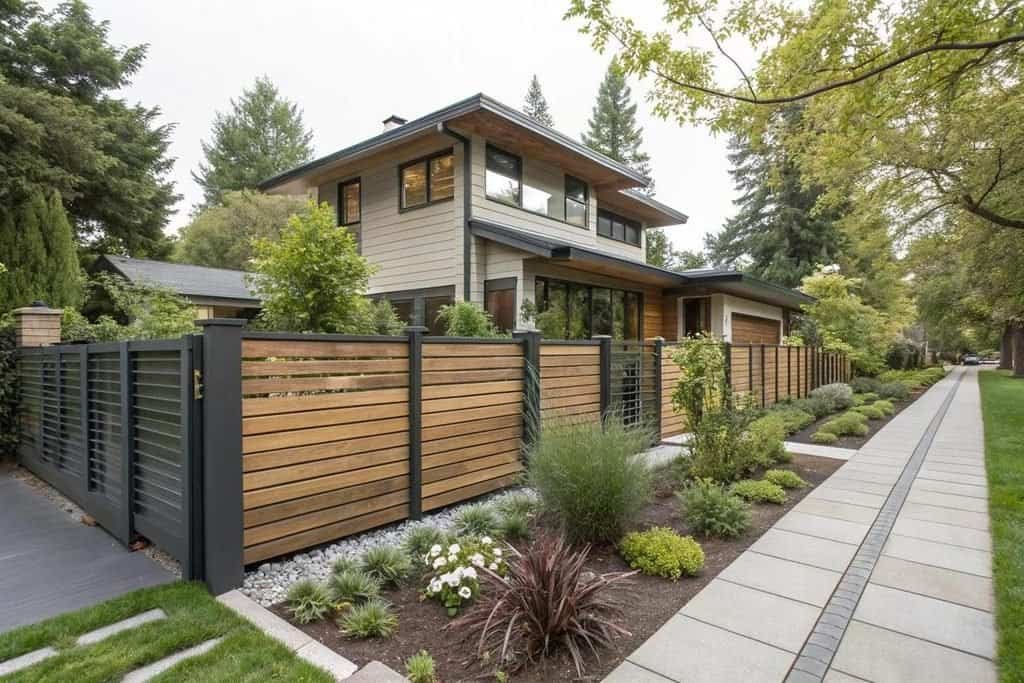
With so many modern fence designs available, it is easy to become focused on appearance before considering how the fence will function. A better approach is to define your priorities first, then narrow the options according to materials, maintenance, and architectural style.
A fence that looks impressive in a photograph may not be the best choice for your property if it blocks too much light, requires more upkeep than you want, or is unsuitable for the local climate.
Start With the Main Purpose of the Fence
Before comparing styles, decide what you need the fence to accomplish.
- Privacy: Consider solid panels, closely spaced slats, or targeted screens around patios.
- Security: Look at suitable heights, strong posts, reliable gate hardware, and visibility requirements.
- Pet containment: Check the spacing between boards, the height of the fence, and gaps at ground level.
- Curb appeal: Focus on materials, colors, and proportions that complement the house.
- Garden separation: Open metal fencing or partial screens may be sufficient.
- Wind protection: Consider the site’s exposure and whether a more open or engineered design is appropriate.
Some properties need a combination of these functions. A front fence might prioritize appearance and visibility, while the backyard boundary needs stronger privacy.
Planning for each area separately can be more effective than choosing one design for the entire property.
Match the Fence to Your Home’s Architecture
The fence should feel like a natural extension of the house rather than an unrelated feature.
For a minimalist home, simple horizontal or vertical lines usually work well. Contemporary farmhouses may benefit from natural timber with restrained metal accents, while larger modern homes can accommodate a more substantial combination of stone, wood, and metal.
Look at the existing exterior finishes before choosing the fence material.
If the home has black window frames, a charcoal fence frame can create a subtle connection. If the exterior features warm stone and timber, a fence with earthy colors may feel more cohesive than a bright, contrasting finish.
The goal is not to match every feature exactly. Repeating a small number of materials and colors is often enough to establish visual consistency.
Choose Materials Based on Climate and Maintenance
A fence that performs well in one location may need more care in another.
In humid or rainy climates, moisture management and timber protection are particularly important. In coastal environments, corrosion resistance should be a priority for metal components. In areas with strong sun, consider fading, heat buildup, and the durability of surface finishes.
Ask yourself how much maintenance you are comfortable performing.
If you enjoy caring for natural materials, timber may be an appealing option. If you prefer a more consistent finish with less routine refinishing, composite or appropriately coated metal may be worth considering.
Review the manufacturer’s maintenance instructions and warranty before purchasing any material. Claims about durability should be supported by specifications relevant to your conditions.
Check Local Fence Rules Before Installation
Fence regulations can affect the height, placement, and design of your project. Requirements vary by location and may be different for front boundaries, rear gardens, corner properties, or fences near public roads.
Before ordering materials, check:
- Permitted fence heights and any restrictions on solid panels.
- Property boundaries and responsibility for shared fences.
- Visibility requirements near driveways and road junctions.
- Planning or building approval requirements, where applicable.
- Rules affecting heritage properties or managed residential communities.
- Drainage and easement restrictions.
Do not assume that replacing an existing fence with a taller version is automatically permitted. Confirm the applicable requirements before construction begins.
Compare Materials Before Making the Final Decision
The following overview can help narrow your options.
| Fence material | Appearance | Maintenance | Typical cost level |
| Natural timber | Warm, textured, versatile | Moderate to high, depending on finish | Low to high, depending on species |
| Composite | Consistent, often wood-inspired | Generally low to moderate | Moderate to high |
| Aluminum | Sleek, lightweight, contemporary | Generally low | Moderate to high |
| Steel | Strong, structured, architectural | Depends on protective finish | Moderate to high |
| Brick or stone | Substantial, permanent, textured | Generally low to moderate | Often high |
These comparisons are broad guidelines. Product quality, installation requirements, and local conditions can change both maintenance needs and overall costs.
Plan the Gate, Drainage, and Landscaping Together
A modern fence should work as a complete system. The gate needs adequate clearance, the posts need suitable support, and the surrounding ground must drain properly.
Consider the landscape before finalizing the fence height and position. Planting beds may need space to grow, pathways should remain accessible, and lighting should not create glare for neighbors or passing traffic.
Planning these elements together can prevent costly changes and make the finished boundary look more intentional.
The right modern fence is the one that balances appearance, privacy, durability, and cost for your particular home. Take time to compare materials, measure the site, and establish your priorities before choosing a final design.
Related Exterior Design Ideas to Complete the Look
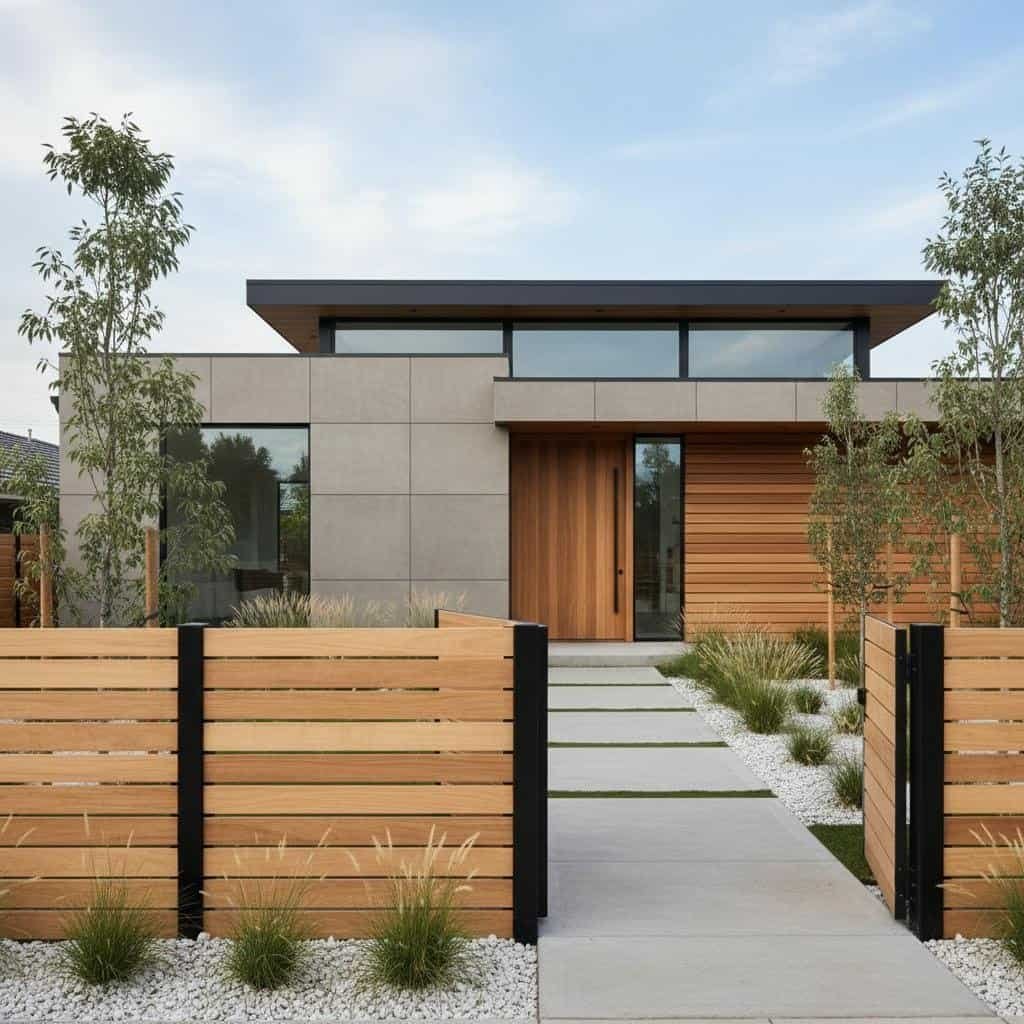
A fence has the greatest visual impact when it works with the rest of the exterior. Once you have chosen the material, color, and layout, look for opportunities to connect the fence with other elements of your home and garden.
These connections do not need to be complicated. Repeating a finish, coordinating colors, or using similar lines across different features can make the property feel more cohesive.
Coordinate Fence Colors With Exterior Paint
Exterior paint colors influence how a fence looks against the house. A warm wooden fence can complement cream or beige walls, while charcoal metal can create contrast against a pale facade.
For a coordinated appearance, consider the relationship between the fence, front door, window frames, roof, and garage door.
If the exterior already has several strong colors, a neutral fence may help bring everything together. If the house is relatively simple, the fence can introduce a warmer material or a deeper accent color.
For more inspiration, explore modern exterior house paint color trends for 2027 and consider how those palettes might work with your chosen fence material.
Connect the Fence With Modern Landscaping
Landscaping can soften a boundary and help the garden feel more complete.
Use plants suited to your climate and available space, and consider how their mature size will affect the fence. A narrow garden may need compact shrubs or ornamental grasses, while a larger yard can accommodate layered planting and small trees.
Repeat materials where possible. Timber edging beside a wooden fence, for example, can create continuity, while stone paving may connect a masonry boundary to the entrance.
For additional inspiration, explore modern landscaping ideas and garden design trends for 2027 when planning the wider outdoor space.
Create a Consistent Exterior Design
The most successful contemporary exteriors usually have a clear visual direction. Rather than treating the fence, gate, lighting, and garden as separate projects, choose a small group of materials and colors that can work together.
A simple combination might include warm timber, charcoal metal, and green planting. Another might use pale stone, warm gray fencing, and muted greenery.
Repeat those elements selectively across the property. The result should feel connected without making every surface identical.
Frequently Asked Questions About Modern Fence Design Trends 2027
What are the biggest modern fence design trends for 2027?
Modern fence design trends for 2027 include horizontal timber slats, minimalist metal panels, mixed wood-and-metal designs, natural finishes, contemporary privacy screens, and lower-maintenance materials. Warm neutral colors and landscaping that softens fence lines are also worth considering.
What is the most popular modern fence style for contemporary homes?
Horizontal slat fencing is a versatile choice for contemporary homes because its clean lines complement modern architecture. Natural wood with black metal framing is another appealing option, particularly when the house already features dark window frames or minimalist exterior details.
What fence color is best for a modern house in 2027?
Charcoal, black, warm gray, greige, natural timber, and muted earthy shades can all work well with modern homes. The best color depends on the exterior walls, window frames, landscaping, and amount of sunlight the fence receives.
Are horizontal or vertical fence panels more modern?
Both can look contemporary. Horizontal slats emphasize width and create a streamlined appearance, while vertical battens add height and a more structured rhythm. Choose the orientation that complements the house and provides the privacy you need.
What is the best low-maintenance fence material?
Properly specified aluminum and many composite fencing systems are good options for homeowners seeking reduced routine maintenance. However, performance varies by product and climate. Check the finish, warranty, cleaning requirements, and availability of replacement parts before purchasing.
Are modern wood fences still a good choice in 2027?
Yes. Wood remains a versatile option because it adds natural warmth and can complement a wide range of exterior styles. Choosing suitable timber, providing proper drainage, and maintaining the finish when needed can help extend its service life.
How can I make a privacy fence look more attractive?
Combine a simple fence design with coordinated colors, layered planting, and discreet lighting. Horizontal timber slats, mixed-material panels, and carefully positioned greenery can make a privacy fence feel like an intentional part of the garden.
What is the best modern fence for a small backyard?
A slim horizontal slat fence, a simple vertical-batten screen, or a carefully positioned partial privacy panel can work well in a small backyard. Lighter finishes and selective planting can help prevent the space from feeling enclosed.
Is composite fencing better than wood?
Composite fencing can require less routine refinishing than many timber fences, while natural wood offers distinctive grain, repairability, and the option to change its finish. The better choice depends on your budget, preferred appearance, local climate, and maintenance expectations.
How much does a modern fence cost?
The cost depends on fence length, height, materials, site conditions, gates, and installation labor. Simple timber systems may be more affordable upfront, while custom metal, composite, or masonry designs can cost more. Obtain itemized local quotes to compare the complete installation rather than material prices alone.
Do I need permission to install a modern privacy fence?
Possibly. Fence height, location, property boundaries, and local planning requirements can affect whether approval is needed. Check the regulations that apply to your property before installing a new fence or changing the height of an existing one.
Give Your Home a Fresh Look With the Right Modern Fence
Modern fence design trends for 2027 offer plenty of ways to improve curb appeal, create privacy, and make outdoor spaces more functional. From warm timber slats and sleek metal panels to mixed-material boundaries and landscaped privacy screens, the most successful designs combine visual simplicity with practical performance.
Start by deciding what matters most for your property. You might need a more private backyard, a welcoming front entrance, a low-maintenance boundary, or a fence that complements a recently updated exterior.
Choose materials suited to your climate, coordinate the colors with your home’s architecture, and plan the gate and landscaping as part of the complete design. A well-chosen fence should look good from the street, feel comfortable from inside the garden, and continue to serve your needs for years.
Ready to update your outdoor space? Choose your favorite fence style, compare suitable materials, and begin planning a design that makes your home feel more polished, private, and inviting.
