
Japanese interior design trends 2027 are redefining how homes feel, not just how they look. This year isn’t about stark minimalism or empty spaces—it’s about creating calm, functional environments that support real life while still feeling refined and intentional.
If you’re planning to refresh your home, redesign a room, or simply stay ahead of interior trends, this guide breaks down what’s changing, what’s worth adopting, and how to apply these ideas practically—without overspending or overcomplicating your space.
In This Article
Why Japanese Interior Design Is Shaping Global Homes in 2027
Japanese interiors have moved far beyond niche design circles. In 2027, they’re influencing homes worldwide—and for good reason.
A response to modern lifestyle overload
Busy routines, digital fatigue, and cluttered living have pushed homeowners to seek spaces that feel calm and restorative. Japanese design offers exactly that through:
- Clean layouts
- Intentional furniture choices
- A focus on what truly matters
Perfect for smaller, smarter living
Urban homes are getting more compact. Japanese interiors naturally adapt to this with:
- Multi-functional spaces
- Flexible layouts
- Smart storage solutions
This makes the style especially appealing for apartments and modern houses.
Wellness and sustainability at the core
Japanese design isn’t just aesthetic—it’s philosophical. Concepts like:
- Wabi-sabi (finding beauty in imperfection)
- Ma (embracing negative space)
…align closely with today’s focus on mental well-being and sustainable living.
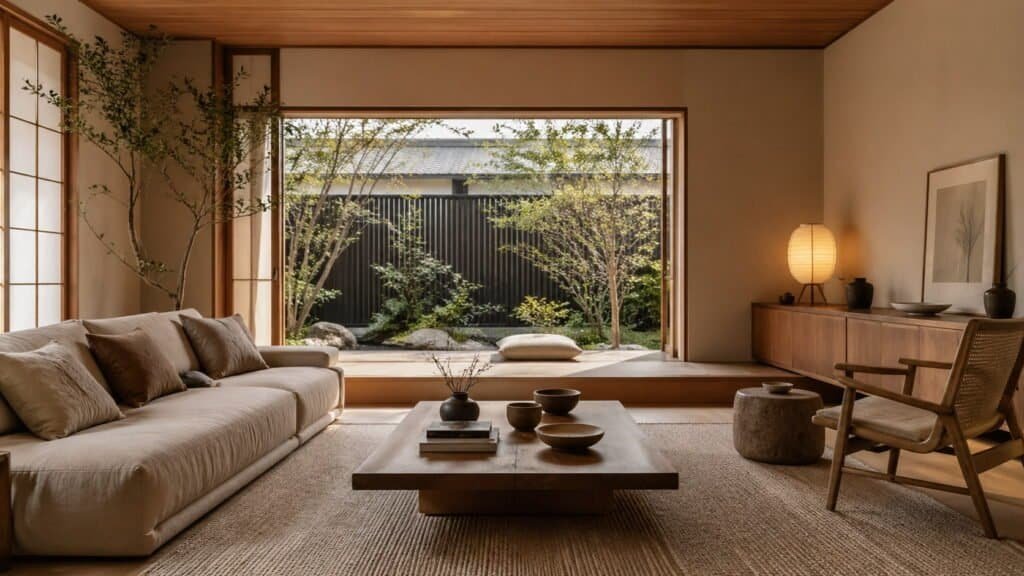
Japanese Interior Design Trends 2027: What’s Changing This Year?
Japanese interior design trends 2027 are evolving in subtle but meaningful ways. The core philosophy remains, but the execution feels warmer, more livable, and more adaptable.
From strict minimalism to “warm minimalism”
Cold, empty spaces are fading out. Instead, interiors now embrace:
- Soft textures like linen, cotton, and wool
- Natural imperfections in wood and stone
- A slightly more layered, lived-in feel
The goal is no longer perfection—it’s comfort with intention.
Technology that disappears into the design
Smart homes are growing, but visible tech isn’t. The trend leans toward:
- Hidden lighting systems
- Seamless smart controls
- Built-in appliances that blend into surfaces
Functionality improves, while the visual calm remains untouched.
Blending tradition with modern comfort
Designers are reinterpreting classic Japanese elements rather than copying them directly:
- Tatami-inspired flooring in modern materials
- Shoji-style partitions with updated frames
- Low-profile furniture adapted for contemporary lifestyles
This fusion keeps spaces authentic without feeling outdated.
The Evolution of Minimalism: From Zen to Soft, Lived-In Spaces
Minimalism still plays a central role, but in 2027, it feels more human.
Moving beyond emptiness
Older minimalist trends often focused on removing everything. Today’s approach asks a better question:
“Does this item add value to my daily life?”
That shift allows for:
- Personal decor pieces
- Meaningful objects
- Subtle layering without clutter
The rise of texture over quantity
Instead of filling a room with items, Japanese interiors use texture to create depth:
- Raw wood grains
- Handmade ceramics
- Soft woven fabrics
A simple room can feel rich without being busy.
Wabi-sabi in everyday living
Imperfection is no longer hidden—it’s celebrated. Small details make a big difference:
- Slightly uneven pottery
- Aged wood surfaces
- Natural wear that tells a story
This approach creates spaces that feel authentic, relaxed, and deeply personal.
Nature Takes Center Stage: Biophilic Japanese Interiors
Bringing the outdoors in isn’t new—but in Japanese interior design trends 2027, it becomes more intentional and immersive. The goal is to create a seamless connection between your living space and nature, even in dense urban settings.
Designing with natural elements, not just decor
Biophilic design goes beyond adding a plant in the corner. It’s about shaping the entire environment:
- Large windows to maximize daylight
- Natural ventilation whenever possible
- Organic materials that age gracefully
Rooms feel calmer because they mimic the rhythm of the outdoors.
Indoor greenery with purpose
Plants are chosen carefully, not randomly. Popular choices include:
- Bonsai for sculptural elegance
- Moss arrangements for softness
- Minimal indoor trees for vertical interest
Placement matters more than quantity—each plant should feel intentional.
Seasonal awareness in everyday spaces
Japanese interiors often reflect the changing seasons:
- Light fabrics and airy layouts for warmer months
- Warmer textures and deeper tones in cooler seasons
This subtle shift keeps your home feeling alive and responsive, rather than static.
Japanese Interior Design Trends 2027 in Small Spaces
Limited square footage is no longer a constraint—it’s a design advantage when approached the Japanese way. Japanese interior design trends 2027 offer smart, flexible solutions that make small homes feel bigger and more functional.
Multi-functional furniture that adapts to your life
Every piece earns its place. Look for:
- Foldable tables that disappear when not in use
- Storage beds and hidden compartments
- Modular seating that can be rearranged easily
This flexibility allows one room to serve multiple purposes throughout the day.
Sliding partitions for fluid layouts
Traditional elements like fusuma and shoji-inspired panels are making a strong comeback:
- They divide space without closing it off completely
- They allow light to flow through the home
- They create privacy only when needed
This approach keeps interiors open yet adaptable.
Visual tricks that expand space
Small Japanese-inspired interiors rely heavily on perception:
- Low furniture to create a sense of height
- Neutral color palettes to avoid visual clutter
- Clean lines that guide the eye smoothly across the room
The result is a home that feels calm, open, and surprisingly spacious.
The Return of Traditional Elements—With a Modern Twist
Japanese interior design trends 2027 don’t abandon tradition—they reinterpret it. Classic elements are being refreshed to suit modern lifestyles without losing their cultural essence.
Tatami rooms, reimagined
Tatami is no longer limited to traditional homes. Modern adaptations include:
- Partial tatami areas within living rooms
- Hybrid flooring that combines tatami textures with durable materials
- Flexible spaces that double as relaxation or guest areas
This keeps the spirit of tradition while improving practicality.
Shoji screens as design features
Shoji-style panels are evolving into versatile design tools:
- Used as sliding doors, room dividers, or even wall accents
- Paired with modern frames (metal, dark wood) for contrast
- Integrated with glass or acrylic for durability
They soften light beautifully while adding architectural interest.
Low furniture meets contemporary comfort
Low-profile living remains a key feature, but with upgrades:
- Cushioned seating for better ergonomics
- Sleek, modern silhouettes
- Blended materials that feel both traditional and current
This balance creates interiors that are grounded, comfortable, and visually harmonious.
Color Palettes That Define Japanese Interior Design Trends 2027
Color plays a quiet but powerful role in shaping the mood of a Japanese-inspired space. In 2027, palettes move away from stark contrasts and lean into soft, grounded tones that feel calming and natural.
Earth tones lead the way
Nature-inspired colors dominate interiors:
- Warm beige, sand, and clay
- Muted greens like moss and olive
- Charcoal and soft browns
These tones create a stable, relaxing foundation that works across different rooms.
Softer neutrals replace pure white
Bright white walls are being toned down in favor of:
- Creamy off-whites
- Warm greige (gray + beige)
- Subtle taupe shades
This shift makes spaces feel more inviting and less clinical.
Strategic contrast with black accents
Black isn’t overused—it’s applied with precision:
- Window frames
- Light fixtures
- Furniture legs or trims
Used sparingly, black adds depth and visual balance without overwhelming the calm aesthetic.
Japandi 2.0: The Ongoing Fusion of Japanese and Scandinavian Design
The Japandi style continues to evolve in 2027, becoming more refined and intentional. This hybrid approach blends Japanese minimalism with Scandinavian comfort, resulting in spaces that feel both clean and cozy.
Cleaner lines, softer finishes
The new wave of Japandi focuses on:
- Streamlined furniture with subtle curves
- Matte finishes instead of glossy surfaces
- Neutral palettes layered with texture
The look is polished but never cold.
Function meets emotional comfort
Every design choice serves a purpose—but also a feeling:
- Seating that invites relaxation
- Lighting that creates warmth
- Layouts that support daily routines
This balance is what keeps Japandi relevant across different lifestyles.
Why Japandi still dominates global interiors
Its popularity isn’t fading because it solves real problems:
- Reduces visual clutter
- Enhances comfort without excess
- Works in both small apartments and larger homes
For many homeowners, Japandi offers a practical middle ground between minimalism and coziness.
Smart Homes, Quietly Integrated
Technology is becoming more advanced—but in Japanese interior design trends 2027, it’s designed to be almost invisible. The focus is on functionality without visual distraction.
Hidden tech that preserves visual calm
Modern interiors integrate technology seamlessly:
- Built-in lighting systems concealed in ceilings or walls
- Appliances hidden behind cabinetry
- Wireless charging surfaces embedded in furniture
Nothing interrupts the clean, cohesive look.
Automation that simplifies daily life
Smart features are chosen for convenience, not novelty:
- Automated lighting that adjusts to time of day
- Climate control that maintains comfort efficiently
- Voice or app-based controls that reduce physical clutter
The experience feels intuitive rather than overwhelming.
Future-forward living with a minimalist mindset
Japanese interiors prove that technology and simplicity can coexist:
- Fewer visible devices, more integrated systems
- Less manual effort, more thoughtful automation
- A home that feels शांत (calm), even when it’s highly advanced
This approach ensures that innovation enhances your lifestyle—without taking over your space.
Lighting as Atmosphere: The Art of Soft Illumination
Lighting in Japanese interior design trends 2027 isn’t just functional—it’s emotional. The goal is to shape how a space feels, not just how well it’s lit.
Diffused light over harsh brightness
Soft, filtered lighting creates a calm environment:
- Paper lantern-style fixtures
- Fabric or frosted glass shades
- Indirect lighting that bounces off walls
This reduces glare and makes rooms feel instantly more relaxing.
Layering light for depth and flexibility
A single ceiling light won’t cut it. Instead, combine:
- Ambient lighting (overall glow)
- Task lighting (focused areas like desks or kitchens)
- Accent lighting (highlighting textures or decor)
Layering gives you control over mood throughout the day.
Warm tones that mimic natural light
Cool white lighting is being replaced with:
- Warm white or soft amber tones
- Lighting that shifts with time (day to evening)
This subtle change supports comfort, focus, and better relaxation at night.
Decluttering as Design: The Philosophy Behind the Look
Decluttering isn’t a trend in Japanese interiors—it’s a foundation. In 2027, it’s treated as an essential part of the design process itself.
“Ma” and the power of empty space
“Ma” refers to the space between objects—and it’s just as important as the objects themselves.
Instead of filling every corner:
- Leave intentional gaps
- Allow furniture to “breathe”
- Create visual pauses
This makes rooms feel balanced and peaceful.
Designing with intention, not excess
Every item should serve a purpose—either practical or emotional:
- Functional furniture
- Meaningful decor
- Items that enhance daily life
This mindset reduces clutter before it even begins.
A quick decluttering framework you can use
- Remove items you don’t use regularly
- Keep only pieces that add value or joy
- Store essentials out of sight when possible
Consistency matters more than perfection.
Materials That Tell a Story: Authenticity Over Perfection
Japanese interior design trends 2027 lean heavily into materials that feel real, tactile, and enduring. Mass-produced perfection is giving way to authenticity and craftsmanship.
Natural materials with character
Homes are filled with surfaces that age beautifully:
- Solid wood with visible grain
- Stone with subtle variations
- Clay and ceramic finishes
These materials bring warmth and depth without needing decoration.
Handcrafted over factory-perfect
There’s growing appreciation for:
- Handmade furniture
- Artisan ceramics
- Unique, slightly imperfect pieces
Imperfections make a space feel human, not staged.
Sustainability through longevity
Rather than replacing items frequently, the focus shifts to:
- Durable materials
- Timeless designs
- Pieces that improve with age
This approach is both environmentally and aesthetically sustainable.
How to Bring Japanese Interior Design Trends 2027 Into Your Home
You don’t need a full renovation to adopt this style. Small, intentional changes can transform your space.
Easy upgrades that make a big impact
- Swap bright lighting for warm, diffused options
- Introduce natural textiles like linen curtains or cotton throws
- Replace bulky furniture with lower, simpler pieces
These changes instantly shift the atmosphere.
Budget-friendly vs. full redesign
| Approach | What to Do | Impact |
| Budget-friendly | Declutter, adjust lighting, add plants | Quick transformation |
| Mid-range | Upgrade furniture, add sliding partitions | Noticeable style shift |
| Full redesign | Change layout, materials, flooring | Complete aesthetic overhaul |
Common mistakes to avoid
- Over-minimalizing until the space feels empty
- Ignoring comfort in favor of aesthetics
- Mixing too many styles without cohesion
Balance is key—simplicity should still feel livable.
Related Trend Spotlight: Japanese-Inspired Outdoor Living Spaces
The influence of Japanese design extends beyond interiors. Outdoor areas are becoming intentional extensions of the home.
Creating a Zen-like outdoor retreat
- Minimalist garden layouts
- Gravel, stone paths, and simple greenery
- Clean, uncluttered patio setups
The goal is relaxation, not decoration.
Blurring indoor and outdoor boundaries
- Sliding doors that open fully
- Consistent materials between inside and outside
- Seamless transitions in flooring and color palette
This creates a continuous, harmonious living experience.
Visual Inspiration: Real-Life Japanese Interior Concepts for 2027
Seeing these ideas in action helps bring everything together. Here are a few practical concepts you can draw from:
Urban apartment calm
- Neutral palette with soft lighting
- Multi-functional furniture
- Minimal decor with one or two standout pieces
Modern traditional home
- Tatami-inspired zones
- Shoji-style dividers
- Natural wood and textured finishes
Japandi-style living room
- Clean lines with cozy textiles
- Balanced mix of Japanese and Scandinavian elements
- Warm, inviting lighting
Each approach proves that Japanese design is adaptable, not one-size-fits-all.
The Future of Japanese Interiors: Where Design Meets Mindfulness
Looking ahead, Japanese interior design trends 2027 are less about aesthetics alone and more about how spaces support your well-being.
A deeper focus on emotional comfort
Homes are being designed to:
- Reduce stress
- Improve focus
- Encourage relaxation
Design becomes part of daily self-care.
Sustainability as a standard, not a feature
Eco-conscious choices are no longer optional:
- Long-lasting materials
- Energy-efficient systems
- Thoughtful consumption habits
This aligns perfectly with Japanese design philosophy.
For deeper insight into how space influences well-being, you can explore this research-backed guide from Harvard Health:
https://www.health.harvard.edu/mind-and-mood/how-your-physical-environment-affects-your-mental-health
FAQ: Japanese Interior Design Trends 2027
What defines Japanese interior design trends 2027?
They focus on warm minimalism, natural materials, soft lighting, and a balance between tradition and modern living.
Is Japanese interior design suitable for small homes?
Yes, it’s ideal. The style emphasizes space-saving solutions, multi-functional furniture, and clean layouts that make small areas feel larger.
How can I start without a full renovation?
Begin with decluttering, switching to warm lighting, and adding natural textures like wood and linen.
What colors are trending in Japanese interiors 2027?
Earth tones, soft neutrals, and subtle contrasts like black accents are leading the trend.
What is Japandi and why is it popular?
Japandi blends Japanese minimalism with Scandinavian comfort, creating spaces that are both functional and cozy.
Creating a home inspired by Japanese interior design trends 2027 isn’t about copying a look—it’s about rethinking how your space supports your life. Start small, stay intentional, and let each change bring more calm and clarity into your home.
If you’re planning your next home update, use these ideas as your foundation—and build a space that truly feels like a retreat.
