
Home organization trends for 2027–2028 are no longer just about decluttering—they’re about designing a home that works with your lifestyle, not against it. The way we store, arrange, and interact with our spaces is evolving fast, driven by smarter technology, smaller living areas, and a growing desire for calm, functional environments.
This guide breaks down exactly what’s changing, why it matters, and how you can apply these 2027-2028 home organization trends in practical, realistic ways. Expect actionable ideas, real-life examples, and insights you can use whether you’re upgrading one room or rethinking your entire home.
In This Article
Why Home Organization Trends Are Shifting in 2027–2028
Home organization used to revolve around one idea: own less. While minimalism still influences design, the shift now leans toward intentional living—keeping what matters and organizing it better.
Several lifestyle changes are driving this evolution:
- Hybrid work setups demand flexible, multi-use spaces
- Urban living means maximizing every square meter
- Digital lifestyles create new types of clutter (cables, devices, accessories)
- Mental wellness awareness highlights the impact of visual clutter
The result is a new mindset: organization is no longer just functional—it’s emotional and visual.
From Minimalism to Meaningful Organization
Minimalism stripped homes down. The 2027–2028 approach builds them back up—intentionally. Instead of empty spaces, people want:
- Items that serve a clear purpose
- Storage that feels effortless to maintain
- Spaces that support daily routines without friction
A well-organized home today feels lived-in, not sterile.
The Rise of “Organized Aesthetics”
Organization is becoming part of interior design. Storage solutions are expected to look good, not just work well.
Think:
- Matching containers on open shelves
- Neutral-toned storage systems
- Seamless cabinetry that blends into walls
The goal is simple: a home that feels calm at a glance, even when fully functional.
Smart Storage 2.0: When Organization Meets Technology
Technology is redefining how we organize our homes. In 2027–2028, storage systems aren’t just passive—they actively help you manage your belongings.
AI-Assisted Storage Systems
Smart storage now tracks what you own and where it’s stored. This is especially useful for:
- Pantry inventory management
- Wardrobe rotation tracking
- Household supply monitoring
Imagine opening an app and instantly knowing what’s running low or misplaced. That’s becoming standard.
App-Connected Closets and Pantries
Closets and kitchens are turning into digitally integrated systems. Features include:
- Barcode or RFID tracking for items
- Automatic shopping list generation
- Alerts for expired products
These systems reduce waste and eliminate the “I forgot I had this” problem.
Motion-Sensor Lighting and Automation
Lighting plays a bigger role than most people expect in organization.
- Drawers that light up when opened
- Closets that adjust brightness based on time of day
- Cabinets with motion-triggered illumination
These features improve visibility, making it easier to keep spaces organized consistently.
Why Smart Storage Actually Works
Technology only matters if it simplifies your life. The best systems follow three principles:
- Low effort: minimal input required
- High visibility: everything is easy to locate
- Seamless integration: blends into your routine
When done right, smart storage removes friction instead of adding complexity.
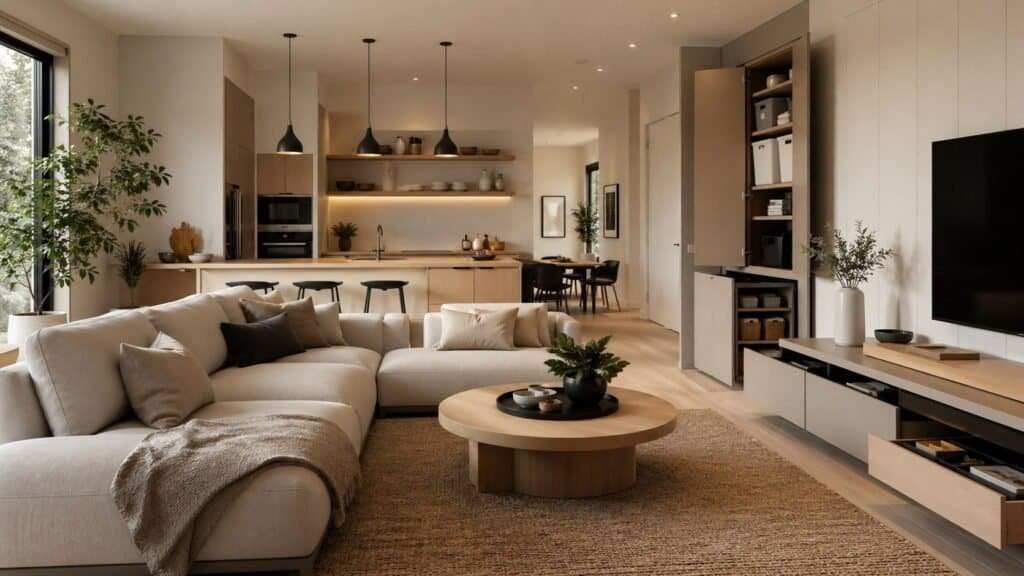
Invisible Organization: Hidden Storage Is the New Luxury
Visible clutter is one of the biggest stress triggers in a home. That’s why one of the biggest home organization trends for 2027–2028 is making storage disappear entirely.
Flush Cabinetry and Concealed Compartments
Modern homes are embracing hidden storage solutions that blend into architecture:
- Cabinets without visible handles
- Hidden doors that look like wall panels
- Under-floor compartments for seasonal items
This approach creates a clean, uninterrupted visual flow.
Multi-Functional Furniture That Works Harder
Furniture is no longer single-purpose. Pieces are designed to store as much as they support.
Examples include:
- Beds with built-in drawers
- Coffee tables with lift-up storage
- Sofas with hidden compartments
These solutions are especially valuable in smaller homes.
Why Visual Calm Matters More Than Ever
A clutter-free look does more than improve aesthetics—it affects how you feel.
Benefits of hidden storage:
- Reduces mental overload
- Makes spaces feel larger
- Creates a more relaxing environment
Quick Comparison: Visible vs Invisible Organization
| Feature | Visible Storage | Hidden Storage |
| Accessibility | Easy to grab | Slightly less immediate |
| Aesthetic Impact | Can look cluttered | Clean, minimalist appearance |
| Maintenance | Requires frequent tidying | Easier to maintain visually |
| Best For | Daily-use items | Bulk, seasonal, or visual clutter |
The most effective homes combine both—keeping essentials accessible while hiding everything else.
The Rise of Zoning: Micro-Spaces Within Rooms
Open-concept living isn’t disappearing—but it’s evolving. One of the most practical 2027–2028 home organization trends is the shift toward zoned spaces within a single room.
Instead of one large, undefined area, homes are being divided into purpose-driven micro-spaces that make daily life smoother.
What “Zoning” Actually Looks Like in Real Homes
Zoning doesn’t require walls. It’s about subtle separation using layout and design.
Examples include:
- A compact work pod in the corner of a living room
- A reading nook defined by a chair, lamp, and small shelf
- A mini hobby station with dedicated storage for supplies
Each zone has a clear function, reducing overlap and clutter.
Why Zoning Improves Organization Instantly
When every activity has a “home,” clutter has fewer chances to spread.
Key benefits:
- Better focus: no more mixing work, relaxation, and storage
- Faster clean-up: items return to their designated zone
- Improved flow: your home supports your routine naturally
A room that serves multiple purposes feels more organized when those purposes are clearly defined.
Simple Ways to Create Zones Without Renovating
You don’t need construction to apply this trend. Small changes can create strong visual and functional boundaries:
- Use rugs to define separate areas
- Add open shelving as a divider
- Position furniture to create natural “edges”
- Use lighting to highlight specific zones
Even a small apartment can feel structured and intentional with smart zoning.
Sustainable Organization Trends (2027–2028 Focus)
Sustainability is no longer a bonus—it’s shaping how homes are organized at every level. The latest home organization trends focus on reducing waste while improving long-term usability.
Eco-Friendly Storage Materials Taking Over
Plastic bins are slowly being replaced with more sustainable alternatives that also look better.
Popular materials include:
- Bamboo: durable, renewable, and lightweight
- Recycled plastics: giving waste a second life
- Cork: flexible, natural, and biodegradable
- Fabric storage made from organic or recycled fibers
These materials combine function with environmental responsibility.
Decluttering Through the Circular Economy
Decluttering is evolving beyond “throw it away.” The 2027–2028 mindset prioritizes keeping items in use.
Common approaches:
- Selling unused items through resale platforms
- Donating to local communities
- Repurposing objects for new functions
This reduces landfill waste while making organization more meaningful.
Why Durable Storage Beats Cheap Solutions
Short-term storage solutions often lead to long-term clutter. Investing in high-quality organizers pays off because they:
- Last longer
- Maintain their structure and appearance
- Reduce the need for constant replacement
Sustainable organization is as much about buying less, but better as it is about eco-friendly materials.
Aesthetic Storage: When Organization Becomes Decor
Storage is no longer something you hide—it’s something you design around. One of the most visually impactful home organization trends for 2027–2028 is turning everyday organization into part of your decor.
Open Shelving That Feels Curated, Not Cluttered
Open storage works when it’s intentional. The difference between stylish and messy often comes down to curation.
Tips for success:
- Stick to a limited color palette
- Group similar items together
- Leave negative space to avoid overcrowding
The goal is to make shelves feel like a display, not a dumping ground.
Color-Coordinated Storage Systems
Color is becoming a powerful organizing tool. Matching tones across containers, baskets, and boxes creates a cohesive look.
Popular approaches:
- Neutral palettes (beige, white, soft gray) for calm spaces
- Monochrome schemes for modern interiors
- Subtle contrast for visual interest without chaos
This method blends organization seamlessly into interior design.
Display-Worthy Containers and Labels
Basic plastic bins are being replaced with design-forward storage:
- Glass jars for pantry items
- Woven baskets for living areas
- Minimalist labeled containers for consistency
Labels are also evolving—clean typography, subtle finishes, and cohesive placement.
Blending Organization with Interior Style
Aesthetic storage works best when it aligns with your home’s overall style.
- Modern homes lean toward sleek, hidden, and neutral
- Rustic spaces embrace natural textures and visible storage
- Minimal interiors favor uniformity and simplicity
When done right, organization doesn’t stand out—it enhances everything around it.
Closet Evolution: Personalized, Boutique-Style Systems
Closets are no longer just storage—they’re becoming personalized spaces that feel like a boutique experience. One of the standout 2027–2028 home organization trends is designing closets around lifestyle, not just capacity.
Custom Modular Closets for Real Life
Modern closet systems are built to adapt. Instead of fixed layouts, homeowners are choosing modular components that can be reconfigured as needs change.
Common features include:
- Adjustable shelving and hanging rods
- Dedicated compartments for accessories
- Pull-out drawers for better visibility
This flexibility ensures your closet evolves with your wardrobe.
Lighting and Display Matter More Than Ever
Lighting transforms how a closet functions. A well-lit space makes it easier to maintain organization and enjoy the process of getting dressed.
Popular upgrades:
- Integrated LED strips inside shelves
- Backlit hanging sections
- Spotlighting for statement pieces
The result feels closer to a retail display than a traditional closet.
Seasonal Rotation Systems Are Going Mainstream
Instead of cramming everything into one space, more homes are adopting seasonal wardrobe rotation.
Benefits include:
- Less clutter in daily-use areas
- Easier outfit selection
- Better preservation of clothing
Simple storage bins or secondary closets can hold off-season items, keeping your main closet streamlined.
Kitchen Organization Trends That Go Beyond Decluttering
Kitchens are the most used—and often the most chaotic—spaces in a home. The latest home organization trends for 2027–2028 focus on making kitchens more intuitive, efficient, and visually clean.
Smart Pantry Layouts That Save Time
Pantries are shifting from random shelving to highly categorized systems.
Effective pantry organization includes:
- Grouping items by use (snacks, cooking, baking)
- Using clear containers for visibility
- Keeping frequently used items at eye level
This setup reduces decision fatigue and speeds up meal prep.
Drawer-Based Kitchens Replacing Upper Cabinets
Upper cabinets are slowly being replaced by deep, organized drawers.
Why this works:
- Easier access—no more reaching into dark corners
- Better visibility of all items at once
- More efficient use of space
Drawers with dividers can store everything from dishes to spices in a structured way.
Transparent Storage for Efficiency
Visibility plays a huge role in staying organized. Transparent containers help you:
- Quickly identify contents
- Avoid overbuying duplicates
- Track expiration dates more easily
This approach pairs well with labeling systems for maximum clarity.
Quick Comparison: Traditional vs Modern Kitchen Organization
| Feature | Traditional Kitchens | 2027–2028 Organized Kitchens |
| Storage Style | Closed cabinets | Drawer-focused + visible systems |
| Accessibility | Limited, often stacked | Easy, front-facing access |
| Visibility | Low | High (transparent containers) |
| Efficiency | Slower workflow | Streamlined and intuitive |
Digital Decluttering Meets Physical Organization
Clutter isn’t just physical anymore. Devices, cables, and digital overload are shaping how homes are organized. One of the most relevant home organization trends today is managing both digital and physical spaces together.
The Shift Toward Paperless Living
Homes are reducing paper clutter by digitizing important documents.
Common transitions:
- Scanning receipts, bills, and records
- Using cloud storage for easy access
- Minimizing filing cabinets and paper piles
This reduces physical storage needs while improving accessibility.
Charging Stations and Cable Management Solutions
Tech-heavy households need smarter organization for devices.
Effective solutions include:
- Dedicated charging drawers or hubs
- Cable organizers and clips to prevent tangling
- Hidden outlets integrated into furniture
These systems keep surfaces clean and functional.
Managing Everyday Tech Without Visual Chaos
Modern homes often include multiple devices per person. Without structure, this quickly becomes clutter.
Best practices:
- Assign a specific spot for each device
- Store unused gadgets out of sight
- Limit visible tech in relaxation areas
The goal is balance—keeping technology accessible without letting it dominate your space.
The “Drop Zone” Revolution at Home Entrances
The entryway sets the tone for your entire home. One of the most practical 2027–2028 home organization trends is the rise of the “drop zone”—a dedicated area designed to catch everyday clutter before it spreads.
What Makes an Effective Drop Zone
A well-designed drop zone handles daily essentials effortlessly.
Key elements include:
- Hooks for bags, jackets, and keys
- Small trays or bowls for loose items
- Shoe storage to keep floors clear
- A surface for mail and deliveries
Everything has a place the moment you walk in.
Designing for Real-Life Habits
The best systems reflect how you actually live—not how you wish you lived.
Ask yourself:
- What do you always carry when leaving or entering?
- Where does clutter usually pile up?
- What items do you need quick access to?
Design your drop zone around those answers.
Why Entryway Organization Changes Everything
A functional entrance creates a ripple effect throughout your home.
Benefits include:
- Less clutter spreading into living areas
- Faster morning routines
- A cleaner, more welcoming first impression
It’s one of the smallest upgrades with the biggest impact.
Kid-Friendly & Family-Centered Organization Systems
Homes with families require a different level of flexibility. One of the most practical 2027–2028 home organization trends focuses on systems that adapt as children grow—without constant reorganization.
Flexible Storage That Evolves Over Time
Children’s needs change quickly, so rigid systems often fail. Modern organization prioritizes adjustable and multi-use storage.
Smart solutions include:
- Stackable bins that can be rearranged
- Adjustable shelving at different heights
- Multi-purpose furniture that grows with the child
This approach reduces the need for frequent redesigns.
Teaching Organization Through Design
Well-designed spaces naturally encourage better habits.
Simple strategies:
- Use labeled bins with icons for younger kids
- Keep storage within easy reach
- Limit categories to avoid overwhelm
When systems are intuitive, children are more likely to maintain them.
Shared Spaces Without the Chaos
Family homes often struggle with shared areas like living rooms or play zones.
To keep things organized:
- Assign clear zones for each activity
- Use closed storage for toys and clutter-prone items
- Rotate toys and supplies to reduce overload
A balanced system keeps shared spaces functional without feeling restrictive.
Luxury Minimalism: Fewer Items, Better Systems
Minimalism is evolving into something more refined. In 2027–2028 home organization trends, the focus shifts toward quality over quantity, creating spaces that feel both simple and elevated.
Investing in High-Quality Organizers
Instead of buying multiple cheap solutions, homeowners are choosing fewer, better pieces.
Benefits include:
- Longer lifespan
- Better durability and structure
- More cohesive visual appeal
A well-made storage system often replaces several lower-quality alternatives.
Streamlined Living Without Sacrificing Comfort
Luxury minimalism doesn’t mean removing everything—it means keeping what adds value.
Key principles:
- Prioritize frequently used, meaningful items
- Eliminate duplicates and rarely used objects
- Maintain a balance between function and comfort
The result is a home that feels intentional, not empty.
The Psychology Behind Owning Less
A simplified environment reduces decision fatigue and mental clutter.
People are increasingly drawn to:
- Calm, visually quiet spaces
- Easier maintenance routines
- A stronger connection to the items they keep
Organization becomes less about storage—and more about clarity.
Visual Inspiration: What 2027–2028 Organized Homes Look Like
Trends aren’t just functional—they’re visual. The latest home organization trends are shaping how spaces feel at a glance.
Key Design Themes Emerging Now
Organized homes in 2027–2028 share a few consistent elements:
- Warm neutral palettes (beige, cream, soft gray)
- Soft textures like linen, wood, and woven materials
- Seamless storage that blends into walls and furniture
These choices create a calming, cohesive atmosphere.
Blending Simplicity with Subtle Technology
Technology is present—but rarely visible.
Examples include:
- Hidden charging stations
- Integrated lighting within storage
- Smart systems that don’t disrupt aesthetics
The goal is invisible functionality.
Real-Life Style Directions to Try
You don’t need a full redesign to capture this look. Start with:
- Matching storage containers across one area
- Replacing bulky bins with textured baskets
- Decluttering visible surfaces for a cleaner visual flow
Small upgrades can dramatically shift how a space feels.
How to Apply 2027–2028 Home Organization Trends Without a Full Renovation
Adopting these home organization trends for 2027–2028 doesn’t require a full remodel. Strategic changes can deliver noticeable results quickly.
Small Upgrades with Big Impact
Focus on high-return improvements:
- Add drawer dividers to messy spaces
- Introduce labeled containers for frequently used items
- Upgrade lighting in closets or cabinets
These changes improve both function and appearance.
Budget-Friendly Transformation Ideas
You can stay on trend without overspending:
- Repurpose existing containers instead of buying new ones
- Use DIY labels for a cohesive look
- Rearrange furniture to create functional zones
Smart organization is more about planning than spending.
Prioritize High-Traffic Areas First
Start where clutter builds up fastest:
- Kitchen
- Entryway
- Closet
Improving these areas creates immediate, noticeable impact.
What These Home Organization Trends Mean for the Future of Living
Looking ahead, 2027–2028 home organization trends reveal a bigger shift in how we think about our homes.
Organization as a Lifestyle, Not a Chore
Organization is becoming part of daily living—not something you fix occasionally.
Homes are being designed to:
- Support routines effortlessly
- Reduce friction in everyday tasks
- Maintain order with minimal effort
Spaces Built for Flexibility and Efficiency
Future homes prioritize adaptability.
Expect to see:
- Multi-functional rooms
- Modular storage systems
- Layouts that evolve with changing needs
This flexibility makes homes more resilient over time.
Where Design, Technology, and Life Intersect
The most successful homes blend:
- Thoughtful design
- Smart technology
- Practical organization systems
Together, they create environments that feel intuitive, calm, and efficient.
Frequently Asked Questions About 2027–2028 Home Organization Trends
What are the biggest home organization trends for 2027–2028?
The biggest trends include smart storage systems, hidden (invisible) organization, zoning spaces within rooms, sustainable materials, and aesthetic storage that doubles as decor.
How can I update my home organization without spending a lot?
Focus on small changes like decluttering, adding labels, using drawer dividers, and rearranging spaces into functional zones. Prioritize high-traffic areas for the best results.
Is minimalism still popular in 2027–2028?
Yes, but it has evolved into “intentional living” or luxury minimalism—keeping fewer, higher-quality items rather than removing everything.
What is a drop zone and why is it important?
A drop zone is a dedicated entryway space for everyday items like keys, bags, and shoes. It prevents clutter from spreading throughout the home and improves daily routines.
Are smart storage systems worth it?
They can be highly effective if they simplify your routine. The best systems require minimal effort and help you track, access, and maintain your belongings easily.
For additional insights on how organized environments impact well-being and productivity, you can explore this resource from the American Psychological Association: https://www.apa.org/topics/behavioral-health/cleaning-mental-health
Ready to transform your space? Start with one room, apply a few of these 2027–2028 home organization trends, and build momentum from there. Small, intentional changes often lead to the most lasting results.
