
Choosing the right shower tiles can completely change the appearance of a bathroom. The best shower tile ideas 2027 combine beautiful textures, natural colors, modern patterns, and practical materials that make everyday showering more enjoyable. From luxurious marble-inspired surfaces to warm earthy tones and eye-catching geometric designs, the latest styles offer plenty of inspiration for bathrooms of every size.
Bathroom design in 2027 is moving toward a more comfortable and personalized look. Homeowners are increasingly embracing natural finishes, subtle patterns, spa-inspired details, and materials that balance sophistication with easy maintenance. Large-format porcelain, textured surfaces, handcrafted-look tiles, and creative tile combinations are becoming especially appealing choices.
Whether you’re planning a complete bathroom renovation or simply updating an outdated shower, the right tile selection can make a noticeable difference. This guide covers the most attractive shower tile trends for 2027, popular color combinations, modern wall and floor designs, and practical advice for choosing tiles that look beautiful for years.
In This Article
Shower Tile Ideas 2027: The Bathroom Trends Set to Transform Modern Showers
Shower tile designs in 2027 are moving beyond simple white squares and predictable layouts. Modern bathrooms are becoming more expressive, with homeowners using tile materials, colors, and patterns to create spaces that feel relaxing, elegant, and connected to nature.
The biggest shift is toward natural-looking materials, warmer color palettes, and interesting surface textures. Rather than relying entirely on decorative patterns, many contemporary designs create visual interest through subtle details such as stone veining, handmade finishes, dimensional surfaces, and carefully selected grout colors.
Natural Materials Are Influencing Modern Shower Designs
Natural stone-inspired finishes are among the most appealing directions for 2027. Travertine, limestone, marble, and sandstone appearances bring warmth and organic character into shower spaces without necessarily requiring the expense or maintenance of genuine natural stone.
Porcelain tiles that imitate these materials are particularly useful because they offer a wide range of designs with relatively straightforward maintenance.
Popular natural-inspired appearances include:
- Travertine-look tiles: Soft beige variations, subtle pores, and organic patterns.
- Marble-look porcelain: Elegant veining that creates a luxurious atmosphere.
- Limestone-inspired finishes: Muted cream and gray shades with understated texture.
- Sandstone-look tiles: Warm, earthy surfaces that complement natural bathroom materials.
These finishes work especially well with wood-look cabinetry, brushed brass fixtures, natural stone countertops, and warm lighting.
Warmer Colors Are Replacing Cold, Clinical Bathroom Palettes
Cool gray bathrooms have been popular for years, but warmer shades are becoming increasingly attractive. Cream, beige, taupe, soft brown, and muted green create a more welcoming atmosphere.
Warm neutral tiles also provide flexibility when selecting bathroom accessories. They work beautifully with black shower fixtures for a contemporary appearance or brushed gold finishes for a softer, more luxurious look.
One particularly attractive combination is beige stone-look shower walls with cream flooring and brushed brass hardware. The result feels sophisticated without looking overly decorated.
Texture Is Becoming Just as Important as Color
Smooth tiles remain a timeless option, but textured surfaces offer another way to introduce personality into a shower.
Three-dimensional tiles, lightly ribbed ceramics, and handcrafted-look finishes create interesting shadows as natural or artificial light moves across the surface.
Textured tiles are especially effective on a single feature wall or inside a shower niche. Using them selectively prevents the bathroom from feeling visually crowded.
For easier cleaning, consider placing heavily textured tiles on walls rather than shower floors, where soap residue and mineral deposits can collect in deeper grooves.
What Makes Shower Tile Trends in 2027 Different?
Several design directions stand out when comparing current contemporary shower styles.
| Design direction | Visual effect | Best application |
| Large-format porcelain | Clean and spacious | Shower walls |
| Natural stone looks | Warm and luxurious | Walls and floors |
| Handmade-look ceramics | Artistic and distinctive | Accent walls |
| Textured tiles | Depth and dimension | Feature walls |
| Warm neutral colors | Calm and timeless | Complete shower areas |
| Geometric patterns | Bold and contemporary | Decorative sections |
The most successful designs combine attractive materials with practical decisions. A beautiful shower should also have appropriate slip resistance, reliable waterproofing, suitable grout, and surfaces that are manageable to maintain.
7 Shower Tile Ideas 2027 That Make Any Bathroom Look More Expensive
The right shower tile can make even a relatively simple bathroom feel thoughtfully designed. Expensive-looking interiors are not necessarily about choosing the most costly materials. Proportion, color coordination, tile placement, and finish selection often have a greater visual impact.
These seven shower tile ideas 2027 offer different ways to create a stylish bathroom, whether you prefer minimalist interiors, natural materials, or more decorative designs.
Large-Format Porcelain Tiles for a Seamless, Modern Appearance
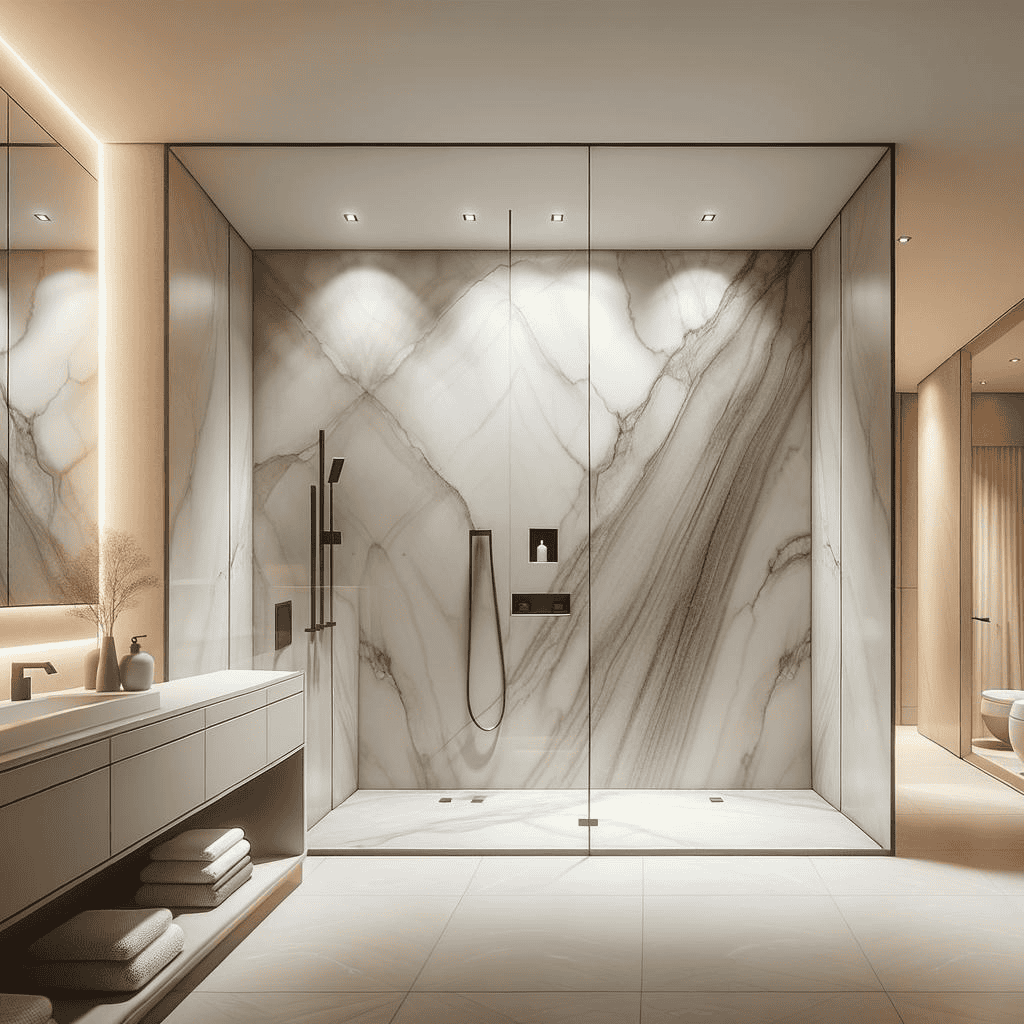
Large-format porcelain tiles are an excellent choice for homeowners who prefer clean lines and an uncluttered shower design.
Their larger dimensions mean fewer grout joints across the wall, creating a more continuous appearance. This can make a shower enclosure feel more spacious, particularly when the same tile extends across multiple walls.
Popular options include:
- Oversized marble-look porcelain slabs.
- Beige limestone-effect tiles.
- Soft gray concrete-inspired porcelain.
- Warm ivory tiles with subtle natural variations.
Styling tip: Choose grout that closely matches the tile color to create a seamless appearance. Pair the finished walls with frameless glass, a minimalist showerhead, and simple fixtures.
Large-format tiles require careful installation and a sufficiently flat substrate. Their weight, handling requirements, and cutting needs should also be considered before purchasing.
Natural Stone-Look Tiles for a Relaxing Spa Atmosphere
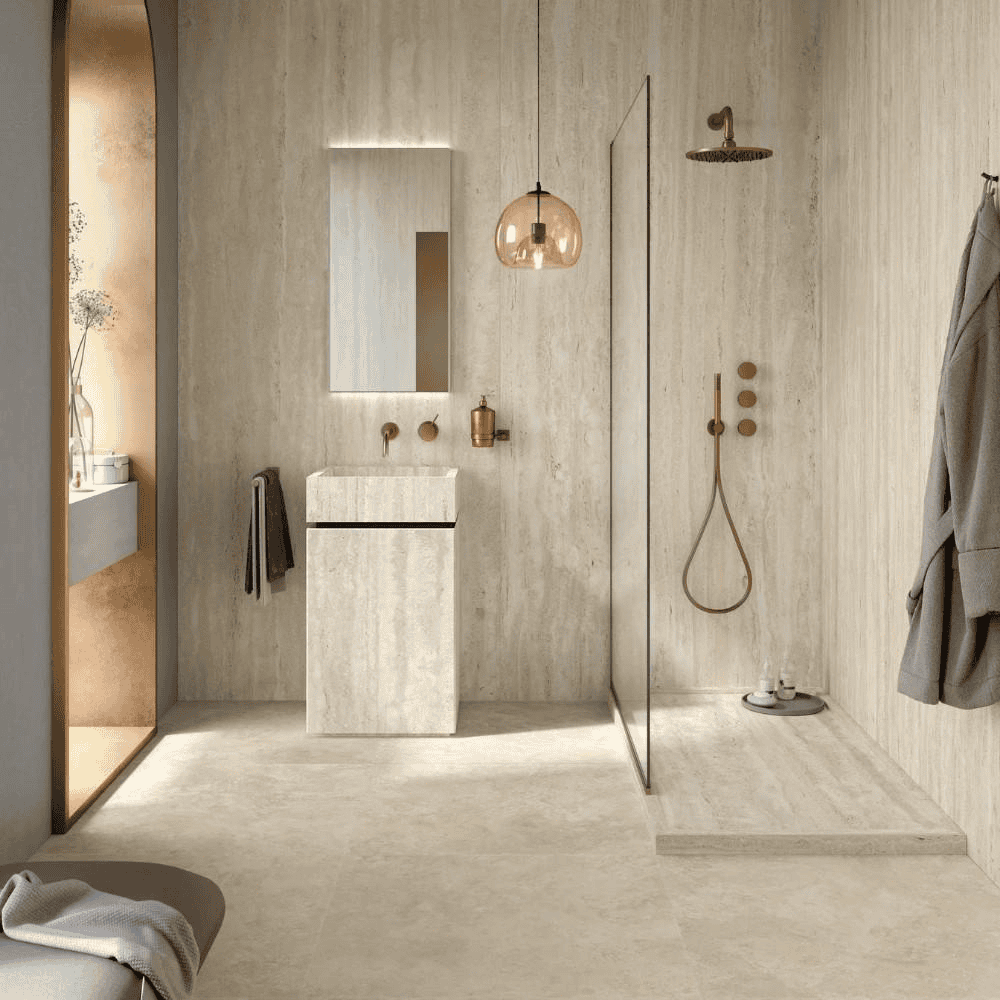
Natural stone-inspired shower tiles are ideal for creating a peaceful bathroom that feels connected to nature.
Travertine and limestone appearances are particularly attractive because their subtle variations add depth without introducing overwhelming patterns. These materials complement organic bathroom accessories, wooden vanities, and soft neutral towels.
Consider these combinations:
- Beige travertine-look walls with cream shower flooring.
- Limestone-look tiles with dark bronze fixtures.
- Light sandstone-inspired walls with natural wood cabinetry.
- Marble-look surfaces with warm brushed brass details.
Porcelain alternatives can provide the appearance of natural stone with less demanding maintenance. Genuine stone can also be beautiful, but it may require sealing and specialized cleaning depending on the material.
Textured and Three-Dimensional Tiles for Architectural Interest
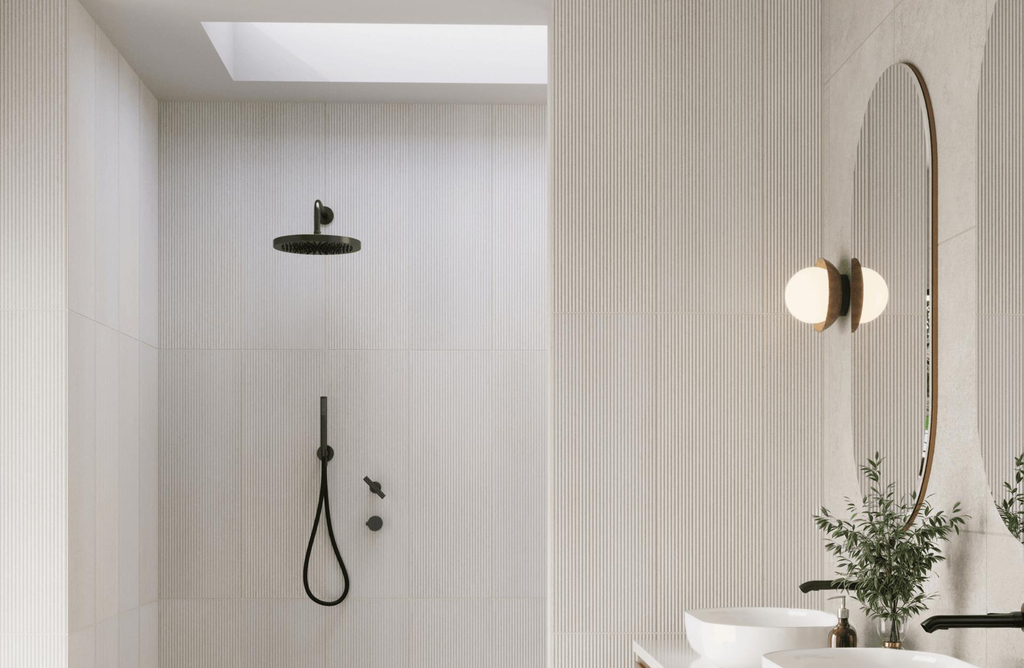
Textured shower tiles are a great option when a bathroom needs a distinctive focal point without relying on dramatic colors.
Ribbed surfaces, sculptural patterns, and dimensional ceramic designs introduce movement and visual depth. They can make an otherwise simple shower enclosure feel more carefully designed.
Some attractive options include:
- Vertical fluted tiles for a sophisticated architectural appearance.
- Wave-pattern tiles for a soft, flowing effect.
- Raised geometric surfaces for contemporary interiors.
- Subtle handcrafted textures for a relaxed, organic style.
A textured accent wall behind the shower fixtures can create an impressive focal point. Keep the remaining surfaces relatively simple so the feature does not compete with other bathroom elements.
Warm Neutral Shower Tiles for Timeless Elegance
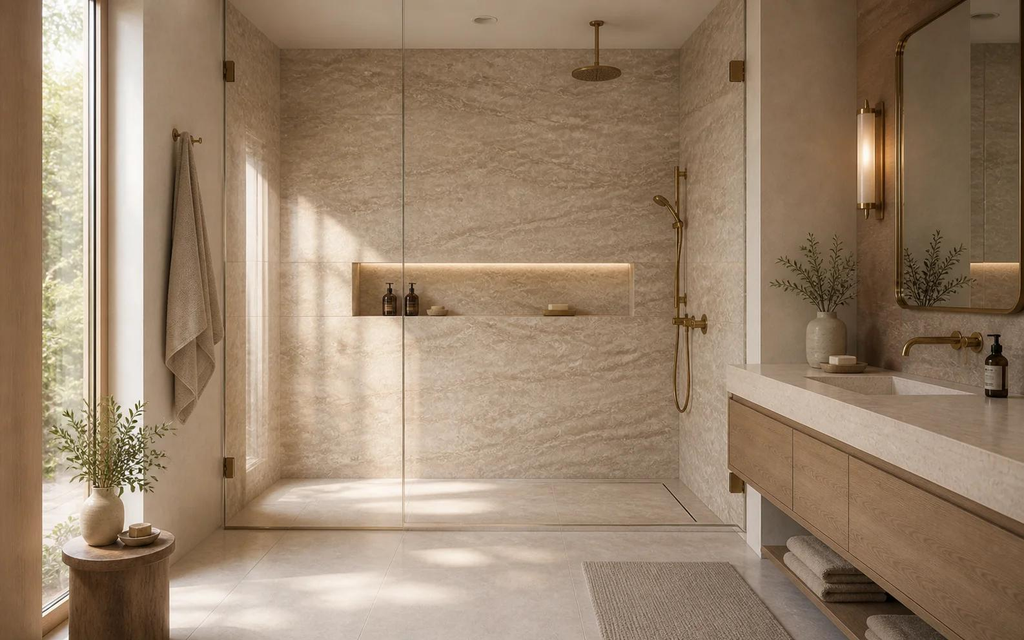
Warm neutral shower tiles are among the easiest choices to incorporate into different bathroom styles. Cream, beige, taupe, and soft sand shades create an inviting environment that feels comfortable rather than overly formal.
Unlike highly distinctive patterns, neutral surfaces are less likely to look dated when decorating preferences change.
Try these combinations:
- Cream shower walls with sandy beige flooring.
- Light taupe tiles with dark bronze fixtures.
- Ivory marble-look porcelain with brushed gold hardware.
- Warm beige tiles with natural oak bathroom furniture.
Styling tip: Avoid choosing every surface in exactly the same shade. Combining two or three complementary tones creates depth and makes the bathroom feel more layered.
Bold Geometric Tiles for a Modern Statement
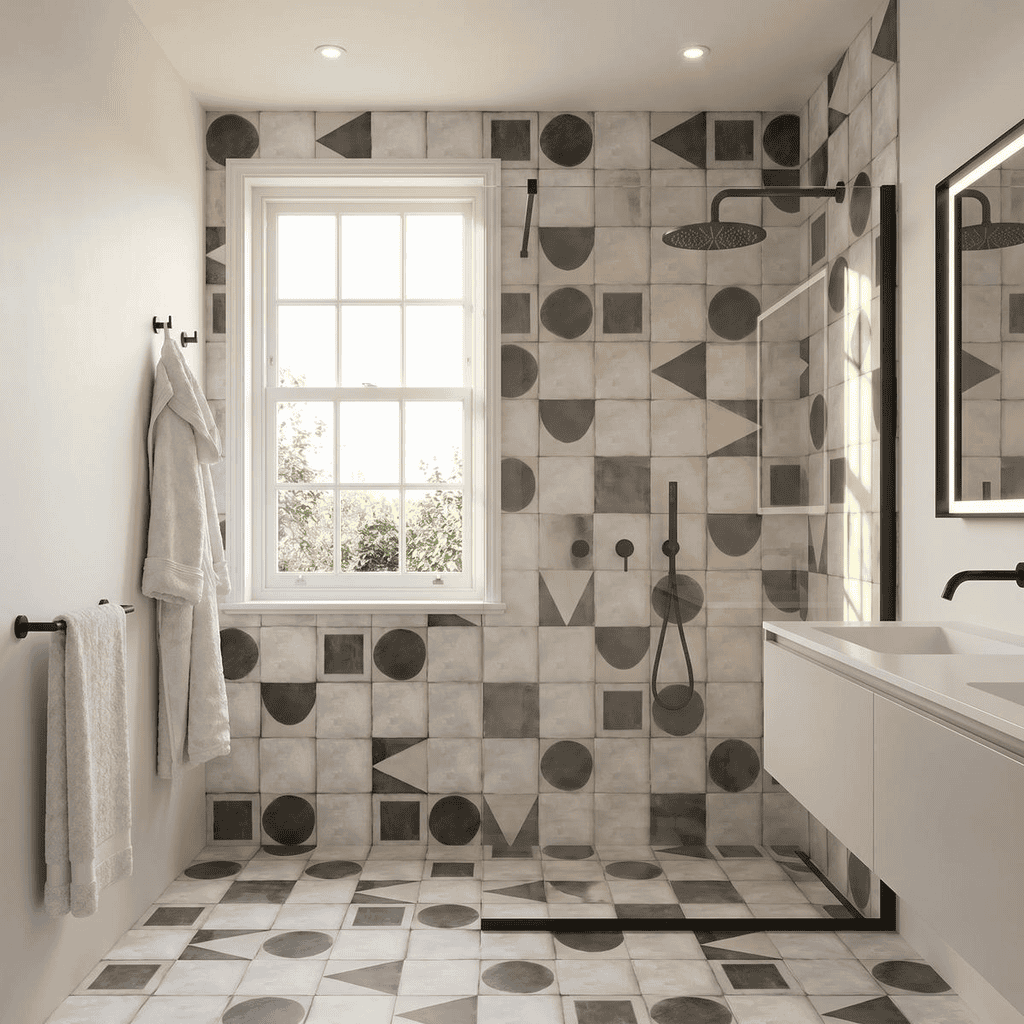
Geometric shower tiles provide a more expressive alternative to traditional rectangular designs. Hexagons, diamonds, chevrons, and angular patterns can transform an ordinary shower into a striking design feature.
This approach works particularly well in contemporary bathrooms where the surrounding materials are relatively simple.
Some combinations worth considering include:
- Black-and-white geometric tiles with white shower walls.
- Muted beige hexagons with cream porcelain surfaces.
- Terracotta geometric patterns with warm neutral finishes.
- Soft gray chevrons with minimalist black fixtures.
For a balanced appearance, use bold patterns selectively. A patterned shower floor or a single decorative wall is often more effective than covering every surface with competing designs.
Vertical Stacked Tiles to Make Shower Walls Look Taller
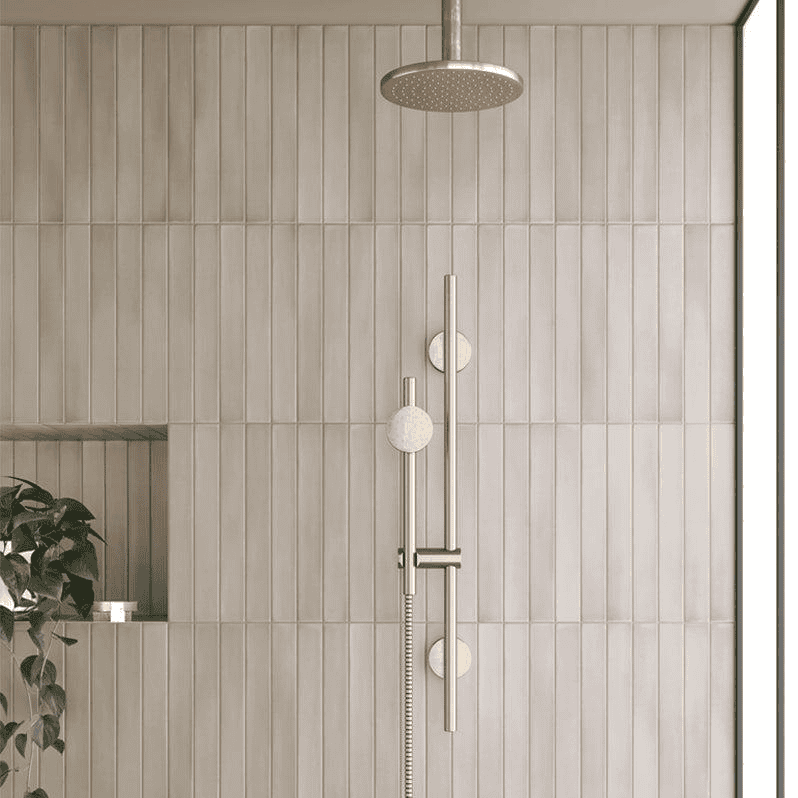
Vertical tile arrangements are an attractive option for bathrooms that need a greater sense of height.
Traditional horizontal layouts emphasize width, while vertically installed rectangular tiles draw the eye upward. This can make shower walls appear taller and give compact bathrooms a more elegant architectural appearance.
Popular choices include:
- Slim vertical ceramic tiles.
- Elongated rectangular porcelain.
- Vertical stacked subway tiles.
- Narrow handcrafted-look glazed tiles.
A soft white or warm beige vertical arrangement can create a sophisticated backdrop for modern shower fixtures.
For additional contrast, consider a darker grout color. However, matching grout generally creates a calmer and more continuous appearance.
Glossy Handcrafted-Look Tiles for Character and Soft Reflections
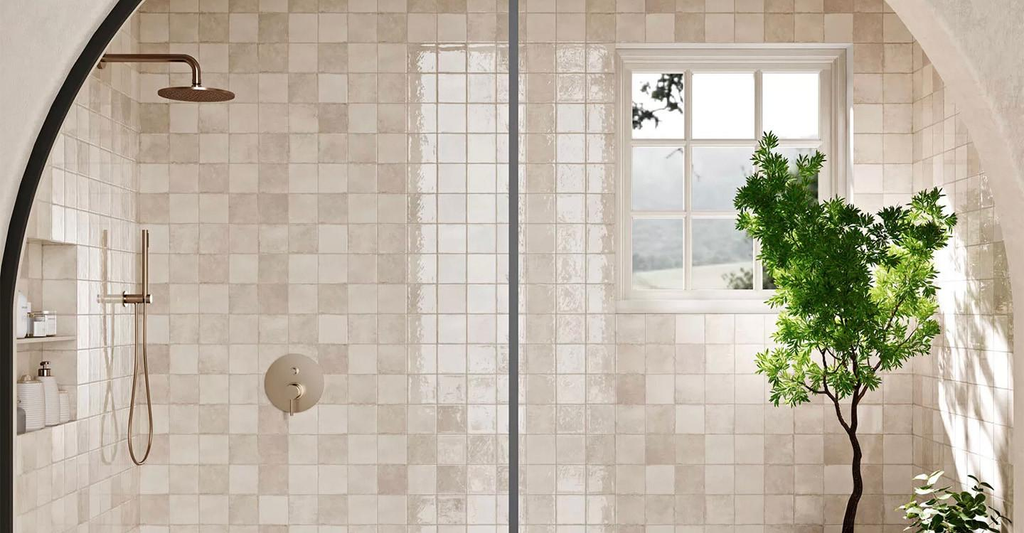
Handcrafted-look shower tiles bring personality into bathrooms through subtle variations in color, shape, and surface reflection.
Zellige-inspired ceramics are especially attractive because their slightly irregular surfaces create a beautiful interplay of light and shadow. Even a simple cream or white tile can look distinctive when the glaze has natural-looking variations.
Popular colors include:
- Glossy ivory.
- Soft sage green.
- Muted dusty blue.
- Warm cream.
- Deep olive.
- Earthy terracotta.
These tiles are particularly effective behind shower fixtures, around built-in niches, or across an entire feature wall.
Their irregular surfaces may create more grout and cleaning considerations than smooth porcelain. Choose a suitable installation system and grout specification for wet-area use.
Which Shower Tile Colors Will Be Trending in 2027?
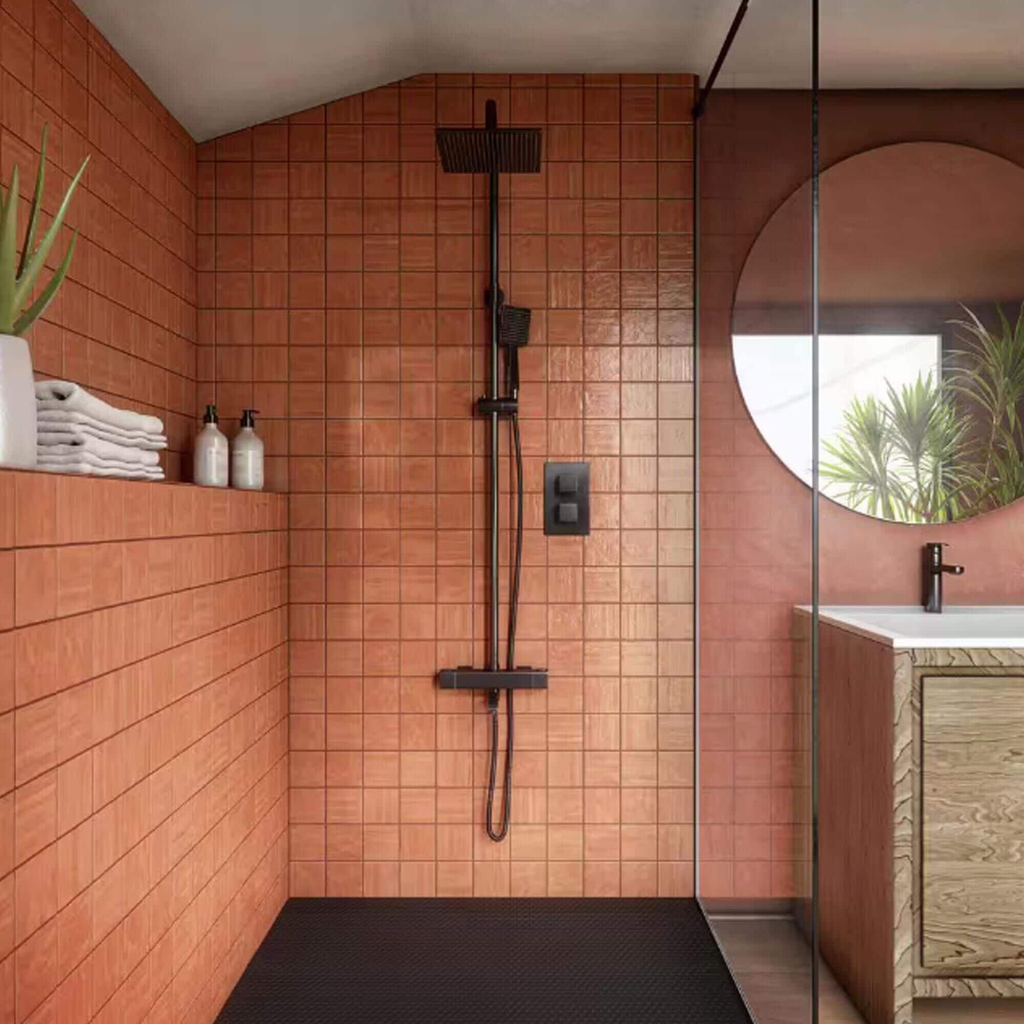
Color has a major influence on how a shower looks and feels. The right shade can make a small enclosure appear brighter, emphasize natural materials, or create a dramatic luxury atmosphere.
The most appealing shower tile color directions for 2027 focus on warm neutrals, earthy greens, natural browns, and carefully selected darker tones. These palettes offer a welcome balance between modern sophistication and everyday comfort.
Warm White and Cream for a Bright, Timeless Shower
White shower tiles remain a dependable choice, but warmer variations are becoming particularly appealing.
Instead of stark, cool white, consider ivory, vanilla, soft cream, and off-white finishes. These shades create a softer appearance while maintaining the brightness associated with traditional white bathrooms.
Warm white tiles work especially well with:
- Brushed brass shower fixtures.
- Light oak bathroom vanities.
- Beige stone-look flooring.
- Clear glass shower enclosures.
- Natural linen and cotton accessories.
For a sophisticated result, combine glossy cream wall tiles with matte porcelain flooring in a slightly darker shade.
Earthy Beige, Taupe, and Sand for Natural Warmth
Beige and sand-colored tiles are excellent choices for creating a relaxed, natural bathroom.
Their understated appearance makes them suitable for both minimalist and traditional interiors. They also coordinate easily with different materials, including wood, brushed metal, and natural stone.
Taupe is particularly useful when you want something warmer than gray but more understated than traditional beige.
A beautiful combination is sand-colored shower walls, taupe flooring, and dark bronze fixtures. This creates contrast without making the space feel too dark.
Sage Green and Muted Olive for a Spa-Inspired Bathroom
Green shower tiles bring a refreshing natural quality into bathroom interiors. Sage and muted olive are particularly attractive because they feel calm and sophisticated rather than overly bright.
These shades work beautifully with natural materials and soft lighting.
Consider using sage green on a shower feature wall while keeping the remaining surfaces cream or light beige. This approach introduces color without overwhelming the room.
For a more dramatic appearance, deeper olive tiles can be combined with warm brass fixtures and dark wood accents.
Terracotta and Clay for Warm, Characterful Interiors
Terracotta and clay-inspired tiles are ideal for homeowners who want a bathroom with more personality.
Their warm reddish-brown undertones create an inviting atmosphere and work particularly well in Mediterranean, rustic-modern, and organic contemporary interiors.
These shades can be introduced through:
- Handmade-look terracotta wall tiles.
- Muted clay-colored shower accents.
- Earthy geometric patterns.
- Warm brown and beige tile combinations.
Balance stronger terracotta shades with cream surfaces and natural materials. Too much red or orange can make a compact shower feel visually heavy.
Charcoal and Deep Brown for a Dramatic Luxury Look
Dark shower tiles create a sophisticated appearance that works especially well in spacious bathrooms and contemporary interiors.
Charcoal, deep brown, graphite, and near-black surfaces can make a shower enclosure feel intimate and dramatic. Matte finishes are particularly attractive when paired with subtle stone textures.
For a balanced design, consider:
- Charcoal shower walls with lighter gray flooring.
- Dark brown porcelain with brushed bronze fixtures.
- Black stone-look tiles with warm wood accents.
- Deep graphite tiles with cream bathroom walls.
Dark surfaces can show soap residue, water spots, and mineral deposits more noticeably, depending on the finish and local water conditions. Good ventilation and regular cleaning help preserve their appearance.
How to Combine Shower Tile Colors Without Overwhelming the Space
Choosing attractive colors is only part of the design process. The way those colors work together determines whether the finished shower feels coordinated or visually busy.
A simple approach is to choose one dominant color, one complementary shade, and one smaller accent.
| Main shower tile | Complementary color | Fixture finish | Overall appearance |
| Warm ivory | Beige | Brushed brass | Soft luxury |
| Sage green | Cream | Brushed nickel | Natural and relaxing |
| Taupe | Sand | Bronze | Warm contemporary |
| Charcoal | Light gray | Matte black | Modern and dramatic |
| Terracotta | Warm white | Aged brass | Earthy and characterful |
| Marble white | Soft beige | Chrome | Bright and elegant |
Consider the bathroom’s natural lighting before making a final decision. A color that looks warm and inviting in a bright showroom may appear considerably darker in a bathroom with limited daylight.
Request physical tile samples whenever possible. View them under the bathroom’s actual lighting and alongside your planned flooring, vanity, and shower fixtures.
The best shower tile color is one that complements the entire bathroom rather than competing with its other features. A carefully coordinated palette will generally create a more timeless result than combining several unrelated trends.
Creative Shower Wall and Floor Tile Combinations Worth Trying
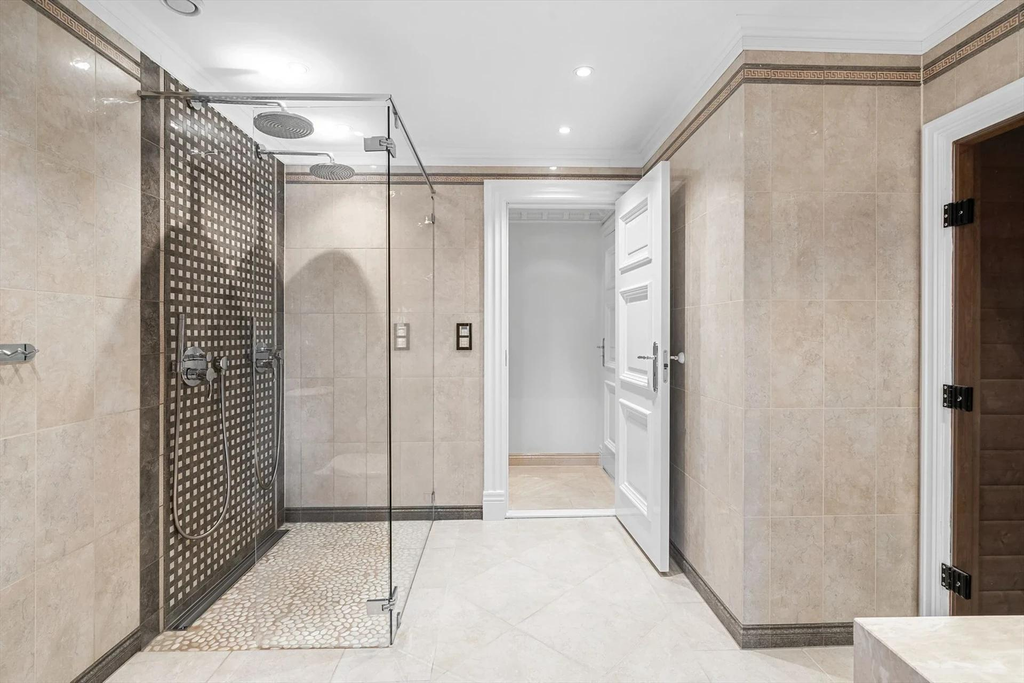
Choosing attractive shower tiles is important, but combining different materials and layouts can make the finished bathroom even more interesting. The most successful designs create a natural connection between the shower walls, flooring, fixtures, and surrounding bathroom surfaces.
Shower tile combinations in 2027 are moving toward subtle contrasts, organic textures, and coordinated colors. Rather than matching every surface perfectly, homeowners can create a more sophisticated appearance by mixing complementary finishes and tile sizes.
Marble-Look Shower Walls With Subtle Stone-Look Flooring
Marble-inspired walls paired with understated stone-look flooring create an elegant combination that works in both contemporary and traditional bathrooms.
Large-format marble-look porcelain provides a luxurious backdrop, while smaller stone-look floor tiles introduce texture and help define the shower area.
Consider these combinations:
- White marble-look walls with beige limestone-look flooring.
- Cream marble porcelain with warm taupe mosaic tiles.
- Soft gray veined walls with light charcoal shower flooring.
- Beige marble-look slabs with travertine-inspired floor tiles.
Design tip: Choose a floor tile with a similar undertone to the wall tile. The patterns do not need to match exactly, but the colors should feel connected.
Large Wall Tiles With Small Mosaic Shower Floors
Combining large wall tiles with smaller floor mosaics is both attractive and practical.
Large tiles create a clean appearance across vertical surfaces, while smaller individual pieces allow installers to create the necessary slopes toward the shower drain.
Popular combinations include:
- Large cream porcelain walls with beige hexagon mosaics.
- Marble-look walls with small white and gray stone-effect mosaics.
- Warm taupe walls with matching small-format porcelain flooring.
- Light limestone walls with darker neutral shower floor mosaics.
Smaller tiles also provide more grout joints, which can help improve traction when the tile and grout system are appropriately selected. However, the actual slip resistance of the finished floor still depends on the tile surface and product specifications.
Vertical Wall Tiles With Contrasting Floor Patterns
Vertical wall layouts create height and elegance, especially when combined with a contrasting floor pattern.
For example, slim ivory wall tiles can be paired with dark gray hexagonal flooring. The difference in shape and color creates visual interest without requiring an elaborate decorative feature.
Other combinations worth considering include:
- Vertical sage green tiles with cream mosaic flooring.
- White stacked tiles with charcoal geometric floors.
- Beige elongated tiles with subtle stone-pattern mosaics.
- Warm gray walls with small patterned porcelain floors.
Keep the number of patterns under control. When the floor already has a noticeable design, simpler wall tiles usually create the most balanced result.
Natural Textures Mixed With Smooth, Minimalist Surfaces
Mixing textured and smooth tiles is an effective way to create depth without relying on strong colors.
A textured stone-inspired feature wall can become the main visual element, while smooth porcelain on the remaining walls keeps the space feeling clean and uncluttered.
This combination works particularly well with minimalist bathrooms, where subtle material differences create more interest than decorative accessories.
Try pairing:
- Ribbed ceramic walls with smooth ivory porcelain.
- Textured beige stone-look tiles with polished marble-look surfaces.
- Handmade-look accent tiles with matte neutral walls.
- Natural limestone-inspired finishes with simple porcelain flooring.
Pay attention to maintenance when selecting textures. Deep grooves and irregular surfaces can collect soap residue, so use highly textured finishes selectively.
Coordinating Shower Niches, Benches, and Accent Walls
Built-in shower niches and benches offer opportunities to introduce additional tile details.
Instead of treating these features as separate elements, coordinate their finishes with the surrounding shower walls.
For example, a beige porcelain shower can include a darker stone-look niche backing. A small decorative tile inside the niche adds personality without requiring an entire accent wall.
Useful design approaches include:
- Matching niche interiors with the shower floor.
- Using a contrasting tile inside a recessed storage niche.
- Extending wall tile across a built-in shower bench.
- Adding a vertical accent strip behind the shower fixtures.
- Coordinating the niche trim with the shower hardware.
Make sure benches and niches are properly waterproofed and constructed with suitable slopes where required. Attractive tile finishes cannot compensate for poor waterproofing or incorrect installation.
Choosing Grout Colors for a Seamless or Decorative Finish
Grout may seem like a minor detail, but it can significantly change the appearance of shower tiles.
Matching grout creates a continuous surface, while contrasting grout emphasizes individual tile shapes and installation patterns.
| Tile style | Recommended grout color | Visual effect |
| White subway tiles | Light gray | Subtle definition |
| Beige porcelain | Warm beige | Seamless appearance |
| Sage green ceramics | Soft gray or matching green | Natural coordination |
| Black geometric tiles | Charcoal | Dramatic and modern |
| Marble-look tiles | Light ivory | Elegant and understated |
| Terracotta tiles | Warm brown | Earthy character |
Choose grout specifically rated for the intended wet-area application. Epoxy and cement-based grouts have different installation and maintenance characteristics, so discuss the most appropriate option with your installer.
Small Bathroom and Walk-In Shower Tile Ideas That Maximize Space
Small bathrooms require thoughtful tile selection because the wrong combination of colors, patterns, and materials can make an already limited space feel crowded.
Fortunately, modern shower tile ideas 2027 offer plenty of ways to make compact bathrooms feel brighter, more open, and more comfortable.
The key is to create visual continuity while using tile patterns and finishes that complement the room’s proportions.
Large-Format Tiles That Reduce Visual Interruptions
Large-format tiles can make a small shower appear more spacious because they create fewer visible grout lines.
Instead of dividing the wall into many small sections, larger surfaces provide a cleaner and more continuous appearance.
Consider:
- Large ivory porcelain tiles.
- Light beige stone-look slabs.
- Soft gray marble-inspired porcelain.
- Cream limestone-effect wall panels.
A matching grout color helps strengthen the seamless effect.
However, tile size should suit the actual shower dimensions. Oversized tiles may require extensive cutting in very small enclosures, which can create unnecessary waste and installation challenges.
Light-Colored Tiles That Make Compact Bathrooms Feel Brighter
Light colors are particularly useful in bathrooms with limited natural light.
Cream, ivory, pale beige, and soft gray reflect more light than darker surfaces, helping a compact shower feel less enclosed.
A simple combination of warm white shower walls, light beige flooring, and clear glass can create an open appearance without complicated decoration.
Glossy wall tiles can also reflect light, although they may show water marks more noticeably. Matte finishes offer a softer appearance and are often easier to coordinate with natural materials.
Vertical Tile Layouts That Create the Illusion of Greater Height
Vertical tile installation is another effective technique for small shower spaces.
Elongated rectangular tiles installed vertically draw attention upward, making the walls appear taller. This is particularly useful in bathrooms with relatively low ceilings.
For a balanced result, consider using:
- Vertical white ceramic tiles with light gray grout.
- Slim beige porcelain tiles with matching grout.
- Soft sage vertical tiles with cream flooring.
- Elongated stone-look tiles in warm neutral shades.
Extending the tile installation from the shower floor to the ceiling can also create a more finished, cohesive appearance.
Continuous Floor Tile Designs for Walk-In Showers
Curbless walk-in showers are popular because they create a more open connection between the shower and the rest of the bathroom.
Using coordinated flooring inside and outside the shower can make the entire room feel larger.
For example, light limestone-look porcelain across the bathroom floor can continue into the shower, with smaller matching mosaics used where necessary to accommodate the shower slope.
Keep in mind that a continuous appearance requires proper drainage, waterproofing, and floor construction. The shower floor must still have an appropriate slope toward the drain to prevent standing water.
Smart Mosaic Patterns for Shower Floors and Drainage Areas
Small mosaics are useful when working with sloped shower floors, curved surfaces, and certain drainage configurations.
Hexagonal, square, and pebble-inspired designs can introduce texture while following the contours of the shower floor.
Popular choices include:
- Small beige hexagon mosaics.
- Light gray square porcelain mosaics.
- Neutral stone-look mosaics.
- Small geometric patterns in complementary colors.
Choose floor tiles specifically suitable for wet areas. A decorative appearance alone does not guarantee safe footing, so check the manufacturer’s slip-resistance information and intended application.
Frameless Glass and Coordinated Tile Finishes for an Open Appearance
Frameless glass shower enclosures allow tile designs to remain visible from the rest of the bathroom.
Unlike heavy visual barriers, clear glass helps preserve sightlines and makes compact spaces feel less divided.
To achieve a cohesive look:
- Choose shower tiles that complement the main bathroom flooring.
- Keep wall colors relatively light.
- Use minimal shower hardware.
- Coordinate metal finishes throughout the room.
- Avoid excessive decorative patterns.
- Maintain clean lines around niches and glass panels.
A simple frameless enclosure paired with warm neutral tiles can make even a modest bathroom feel thoughtfully designed.
How to Choose Shower Tiles That Look Beautiful and Last for Years
A beautiful shower should remain attractive after years of daily use. Material selection, slip resistance, water absorption, grout quality, and installation methods all influence the long-term performance of the finished space.
Before purchasing tiles, consider how frequently the shower will be used, who will use it, how much maintenance you are comfortable with, and the overall renovation budget.
Porcelain vs. Ceramic vs. Natural Stone: Which Is Better?
These three materials are common choices for shower installations, but they have different characteristics.
| Material | Main advantages | Things to consider | Best application |
| Porcelain | Low water absorption, durable, versatile designs | Harder to cut and install | Shower walls and suitable floors |
| Ceramic | Wide color selection, decorative finishes, often affordable | Product suitability varies | Primarily shower walls |
| Natural stone | Unique appearance and organic variation | May require sealing and specialized maintenance | Walls and suitable floors |
Porcelain tiles are often an excellent all-around choice for modern showers. They are available in marble, wood, concrete, limestone, and other natural-inspired designs.
Ceramic tiles offer excellent decorative flexibility. Their colors, glazes, and shapes make them particularly useful for accent walls and handcrafted-look installations.
Natural stone provides an authentic appearance that manufactured alternatives cannot reproduce exactly. However, different stones have different porosity and maintenance requirements. Some need regular sealing and careful cleaning.
Always verify that the specific tile product is approved for the intended shower application.
Best Tile Finishes for Shower Walls and Wet-Area Flooring
Wall and floor tiles have different performance requirements.
Shower walls can accommodate a broader selection of finishes, including glossy, polished, and decorative surfaces. Shower floors require greater attention to traction and water drainage.
For shower walls:
- Glossy ceramic for light reflection.
- Matte porcelain for a subtle contemporary appearance.
- Polished marble-look surfaces for luxury-inspired interiors.
- Textured decorative tiles for accent walls.
For shower floors:
- Smaller-format porcelain mosaics.
- Textured matte porcelain.
- Suitable stone-look tiles with verified slip resistance.
- Products specifically designed for wet-area flooring.
Do not assume that every matte tile is automatically slip-resistant or that every small mosaic is safe. Ask the supplier for product-specific wet-area performance information.
Slip Resistance, Water Absorption, and Surface Texture
Safety and water performance should influence every shower tile decision.
A shower floor is exposed to water, soap, shampoo, and cleaning products. These conditions can make an unsuitable surface slippery.
Check the following before purchasing:
- Slip resistance: Review the manufacturer’s test data and suitability for wet barefoot areas.
- Water absorption: Choose a tile with appropriate absorption characteristics for the intended application.
- Surface texture: Consider whether the finish provides suitable traction without becoming difficult to clean.
- Tile dimensions: Make sure the tile can accommodate the shower floor slope and drainage design.
- Installation compatibility: Confirm that the tile works with the selected waterproofing and setting materials.
Porcelain is generally a strong choice because of its low water absorption, but the finished installation still depends on correct preparation and waterproofing.
Choosing Grout Colors and Materials That Are Easier to Maintain
Grout has a significant effect on shower maintenance.
Light-colored grout can create a fresh, clean appearance, but it may show discoloration more readily in heavily used showers. Dark grout can conceal some staining, although soap residue and mineral deposits may still be visible.
Two commonly used grout options are:
Cement-based grout
- Widely available in different colors.
- Generally more economical.
- Requires appropriate sealing when specified by the manufacturer.
- Needs regular cleaning and maintenance.
Epoxy grout
- Offers strong resistance to stains and many chemicals.
- Does not require the same type of penetrating sealer as cement-based grout.
- Can be more difficult to install.
- Usually costs more than standard cement-based options.
The best choice depends on the tile material, joint width, installation conditions, and manufacturer’s recommendations.
Common Shower Tile Installation Mistakes Homeowners Should Avoid
Even high-quality tiles can produce disappointing results when installation is poorly planned.
Some mistakes are particularly expensive because they may require removing finished tiles to correct the underlying problem.
Watch out for these issues:
- Ignoring waterproofing: Tile and grout are not substitutes for a properly installed waterproofing system.
- Choosing unsuitable floor tiles: Decorative tiles without appropriate wet-area performance can create safety concerns.
- Using too many patterns: Competing textures and colors can make the shower look cluttered.
- Selecting grout without considering maintenance: The wrong color or product can become difficult to keep clean.
- Ignoring drainage slopes: Poor floor grading can lead to standing water.
- Failing to plan tile layouts: Narrow cuts around niches, corners, and fixtures can weaken the finished appearance.
- Using incompatible cleaning products: Harsh chemicals can damage certain tiles, grout, and natural stone.
Hiring an experienced tile installer is particularly important for showers because waterproofing and drainage are critical to long-term performance.
Balancing Tile Costs, Maintenance, and Long-Term Durability
Shower renovation budgets vary significantly depending on the materials, bathroom dimensions, labor rates, and complexity of the installation.
The cheapest tile is not always the most economical option over time. A slightly more expensive porcelain product may offer better durability and simpler maintenance than a material requiring specialized care.
When comparing costs, account for more than the tile price.
| Budget consideration | What to include |
| Tile materials | Wall tiles, floor tiles, and decorative accents |
| Installation | Labor, cutting, and layout complexity |
| Preparation | Substrate repairs and surface leveling |
| Waterproofing | Membrane, sealing components, and related materials |
| Setting materials | Adhesive, grout, spacers, and profiles |
| Finishing | Shower niches, trims, and drainage details |
| Maintenance | Cleaning products, sealing, and future repairs |
Request itemized estimates from installers so you can compare the actual scope of work.
A well-planned shower renovation should prioritize waterproofing, proper drainage, and suitable materials before spending extra money on decorative details.
Final Thoughts: Choosing the Right Shower Tile Ideas for 2027
The best shower tile ideas 2027 combine modern style with practical performance. From large-format porcelain and natural stone-inspired surfaces to textured ceramics, warm neutrals, and geometric patterns, there are plenty of ways to create a bathroom that feels both contemporary and comfortable.
Warm beige, cream, sage green, and earthy brown offer timeless color options, while marble-look surfaces and handcrafted-inspired finishes provide opportunities to introduce more personality.
The right choice ultimately depends on your bathroom’s size, lighting, budget, and preferred decorating style. Small bathrooms often benefit from light-colored tiles and simple layouts, while larger spaces can accommodate dramatic patterns, darker finishes, and distinctive feature walls.
Remember that beautiful tiles are only one part of a successful shower renovation. Proper waterproofing, suitable floor traction, reliable drainage, and professional installation are equally important.
For additional guidance on wet-area construction and bathroom safety, the National Kitchen & Bath Association (NKBA) is a useful professional industry resource.
Ready to update your bathroom for 2027? Start by choosing a tile style and color palette that suit your space, collect a few physical samples, and compare how they look under your bathroom lighting. A thoughtful combination of materials and finishes can turn an ordinary shower into a beautiful, relaxing space you’ll enjoy every day.
Frequently Asked Questions About Shower Tile Ideas 2027
What are the biggest shower tile trends for 2027?
Some of the most appealing shower tile directions for 2027 include large-format porcelain, natural stone-look finishes, textured ceramics, warm neutral colors, vertical tile layouts, geometric patterns, and handcrafted-look surfaces.
What is the best color for shower tiles in 2027?
Warm beige, cream, ivory, sage green, taupe, and earthy brown are attractive choices. These shades create a relaxing atmosphere and coordinate easily with modern bathroom fixtures and natural materials.
Are large-format shower tiles better for small bathrooms?
Large-format tiles can make small showers appear more spacious because they create fewer visible grout lines. However, the tile dimensions should suit the shower layout to avoid excessive cutting and installation difficulties.
What type of tile is best for shower walls?
Porcelain and ceramic are both popular options. Porcelain offers low water absorption and excellent design versatility, while ceramic provides a wide selection of decorative colors, shapes, and finishes.
What is the best tile for a shower floor?
Textured porcelain and suitable small-format porcelain mosaics are popular choices. Always check the manufacturer’s slip-resistance information and confirm that the tile is appropriate for wet barefoot areas.
Are beige shower tiles still in style in 2027?
Yes. Beige remains an attractive choice because it creates warmth, complements natural materials, and works with many bathroom styles. Travertine-inspired, sand-colored, and warm taupe finishes are particularly versatile.
Should shower wall tiles match the shower floor tiles?
They do not need to match exactly. Combining complementary colors and finishes often creates a more interesting design. For example, large beige wall tiles can look beautiful with smaller cream or taupe floor mosaics.
Are glossy or matte tiles better for showers?
Glossy tiles can reflect light and make shower walls appear brighter, while matte finishes provide a softer contemporary appearance. For shower floors, prioritize suitable slip resistance rather than choosing a finish based on appearance alone.
How do I make a shower look more luxurious without spending too much?
Choose coordinated neutral tiles, matching grout, simple shower fixtures, and a clean layout. Using a decorative tile on one feature wall or inside a shower niche can create an expensive-looking result without covering the entire shower in premium materials.
What shower tiles are easiest to maintain?
Smooth porcelain tiles are generally practical because they have low water absorption and are available in many easy-to-clean finishes. Larger tiles can also reduce the number of grout joints, although the overall maintenance depends on the grout, water quality, and cleaning routine.
