
Energy efficient home appliances 2027 are redefining how modern homes consume power, cut costs, and reduce environmental impact. If you’re planning to upgrade your home or simply want to lower your electricity bill, this guide breaks down exactly what matters—from cutting-edge technologies to practical buying decisions.
Expect clear explanations, real-world examples, and smart recommendations to help you choose appliances that actually deliver long-term savings—not just marketing promises.
In This Article
The Shift Toward Smarter, Leaner Homes in 2027
Energy efficiency has moved from a “nice-to-have” feature to a core requirement in modern homes. Rising electricity prices, climate concerns, and smarter technology are pushing homeowners to rethink every appliance they use.
Today’s appliances are no longer passive machines. They actively optimize energy usage in real time, adjusting based on your habits, home conditions, and even energy tariffs.
Why homeowners are upgrading faster than ever
- Electricity costs continue to rise globally
- Smart home ecosystems are becoming more accessible
- Governments and manufacturers are pushing efficiency standards
- Consumers are prioritizing long-term savings over upfront cost
A refrigerator in 2027, for example, doesn’t just keep food cold—it tracks usage patterns, reduces cooling when not needed, and syncs with your home’s energy system.
How 2027 appliances differ from older models
Older appliances were built for function. New ones are built for efficiency + intelligence.
Key differences include:
- AI-driven energy optimization instead of fixed power usage
- Sensors that adjust performance automatically
- Connectivity with apps and home systems
- Lower standby power consumption
The result is a home that feels more responsive, efficient, and cost-effective without requiring constant manual adjustments.
What Makes an Appliance “Energy Efficient” in 2027? (It’s Not Just the Label)
A high energy rating sticker used to be enough. In 2027, true efficiency goes far beyond labels.
The evolution of energy ratings
Modern certifications now consider:
- Real-time energy consumption, not just lab tests
- Smart usage adaptability
- Integration with renewable energy systems
That means two appliances with the same rating can perform very differently depending on how they use data and automation.
AI-powered efficiency vs traditional efficiency
Traditional appliances operate at fixed levels. Smart appliances adjust dynamically.
Examples of AI-driven efficiency:
- Washing machines that detect fabric weight and adjust water + spin cycles
- Air conditioners that learn your schedule and reduce cooling when you’re away
- Dishwashers that optimize cycle length based on load dirtiness
This shift results in less wasted energy without sacrificing performance.
Real-time tracking changes everything
Many energy efficient home appliances 2027 now include apps that show:
- Daily energy consumption
- Cost estimates
- Usage patterns and suggestions
This transparency helps homeowners make smarter decisions, such as running appliances during off-peak hours.
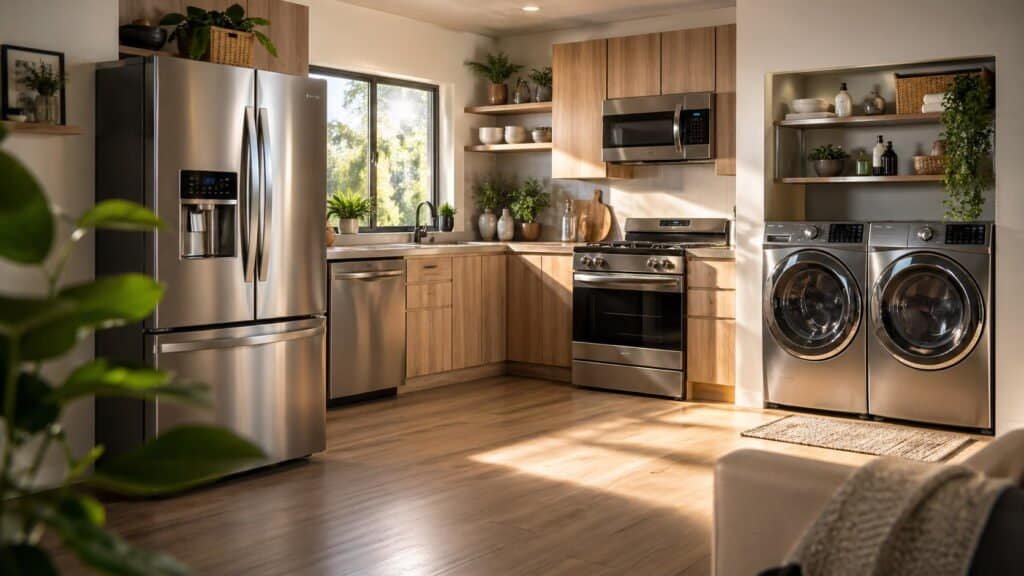
Top Energy Efficient Home Appliances 2027 You Should Know
Choosing the right appliances can dramatically reduce your energy usage. Some categories deliver far more savings than others.
Smart refrigerators with adaptive cooling
Modern refrigerators use sensors and AI to:
- Adjust cooling based on door usage
- Optimize internal temperature zones
- Reduce energy during low activity periods
These upgrades can cut energy use by up to 20–30% compared to older models.
AI washing machines that minimize waste
Next-gen washing machines:
- Detect load size and fabric type
- Adjust water, detergent, and energy automatically
- Offer eco-modes that significantly reduce consumption
They also shorten unnecessary cycles, saving both time and electricity.
Ultra-efficient induction cooktops
Induction cooking has become a standout in energy efficient home appliances 2027.
Benefits include:
- Faster heating with less wasted energy
- Precise temperature control
- Safer and cooler cooking surfaces
Compared to gas or traditional electric stoves, induction can be significantly more efficient.
Next-generation inverter air conditioners
Cooling systems are one of the biggest energy consumers in any home.
Inverter ACs:
- Adjust compressor speed instead of turning on/off
- Maintain consistent temperatures with less power
- Reduce electricity consumption over time
Perfect for warm climates where cooling is essential year-round.
Heat pump dryers replacing traditional dryers
Heat pump technology is becoming the new standard.
Advantages:
- Uses lower temperatures to dry clothes
- Recycles heat instead of releasing it
- Consumes up to 50% less energy than conventional dryers
Although the upfront cost is higher, the long-term savings are substantial.
Smart Technology Is the Real Game-Changer
Energy efficiency in 2027 isn’t just about better hardware—it’s powered by smart technology that actively reduces waste behind the scenes. Appliances now think, adapt, and communicate in ways that significantly cut unnecessary energy use.
How IoT minimizes everyday energy waste
Connected appliances (IoT-enabled) can:
- Sync with your daily routines
- Power down automatically when not in use
- Coordinate with other devices to avoid peak energy spikes
A dishwasher, for example, can delay its cycle until off-peak hours when electricity is cheaper and demand is lower.
Appliances that “learn” your habits
Modern appliances analyze usage patterns over time. That means:
- Your AC cools less when you’re typically away
- Your washing machine suggests optimal cycles based on past loads
- Your refrigerator adjusts cooling intensity based on door activity
This kind of automation leads to consistent savings without extra effort.
Integration with solar and home energy systems
One of the biggest upgrades in energy efficient home appliances 2027 is their ability to integrate with:
- Solar panels
- Home battery storage
- Smart energy grids
This allows appliances to:
- Run when solar energy is available
- Store energy for later use
- Reduce dependence on expensive grid electricity
Homes are no longer just consuming energy—they’re managing it intelligently.
Hidden Energy Wasters: Appliances That Still Drain Power
Even with advanced technology, some appliances quietly consume more energy than expected. Identifying these hidden drains can lead to immediate savings.
The problem with standby power (“phantom load”)
Many devices continue drawing power even when turned off.
Common culprits include:
- TVs and entertainment systems
- Microwaves with digital displays
- Chargers left plugged in
- Older kitchen appliances
This “invisible” usage can account for 5–10% of your electricity bill.
Outdated appliances cost more than you think
Older appliances often lack modern efficiency features. Over time, they:
- Use more electricity per cycle
- Run longer to achieve the same results
- Lack smart optimization features
Replacing just one outdated appliance—like a refrigerator or AC—can noticeably reduce monthly bills.
How to audit your home for inefficiencies
A simple home energy check can reveal where you’re losing money.
Start with:
- Reviewing your electricity bill for usage spikes
- Using smart plugs to track device consumption
- Checking appliance age (10+ years = likely inefficient)
- Monitoring standby devices overnight
Small adjustments here can deliver quick wins without major upgrades.
How to Choose the Best Energy Efficient Home Appliances in 2027
Not all “efficient” appliances perform equally. Choosing the right one requires looking beyond branding and focusing on features that actually impact performance and savings.
Key features that truly matter
When comparing energy efficient home appliances 2027, prioritize:
- Inverter technology for variable power usage
- Smart sensors that adapt to real-time conditions
- AI-driven eco modes for automated optimization
- Low standby consumption
These features ensure the appliance adjusts instead of wasting energy.
Size and capacity vs real usage
Bigger isn’t always better.
Choosing the right size helps:
- Avoid unnecessary energy consumption
- Improve efficiency per use cycle
- Reduce wear and tear
Examples:
- A half-empty large washing machine wastes more energy than a properly sized unit
- Oversized refrigerators consume more power even when not fully used
Comparing upfront cost vs long-term savings
| Appliance Type | Higher Initial Cost | Long-Term Savings Potential |
| Inverter AC | Medium–High | High |
| Heat Pump Dryer | High | Very High |
| Smart Refrigerator | Medium–High | Moderate–High |
| Induction Cooktop | Medium | Moderate |
A slightly higher upfront investment often leads to significant savings over 3–5 years.
A practical buying approach
To make a smart decision:
- Replace high-usage appliances first (AC, fridge, washer)
- Look for verified efficiency certifications
- Compare yearly energy consumption—not just price
- Read real user feedback on performance and durability
A well-chosen appliance doesn’t just save energy—it improves your daily comfort while quietly lowering your bills.
Cost vs Savings: Are Energy Efficient Appliances Really Worth It?
Upgrading to energy efficient home appliances 2027 often comes with a higher price tag. The real question isn’t the upfront cost—it’s how quickly that investment pays you back.
Breaking down real ROI (return on investment)
Efficient appliances reduce energy usage every single day, which compounds into noticeable savings.
Typical payback timelines:
- Inverter air conditioners: 2–4 years
- Heat pump dryers: 3–5 years
- Smart refrigerators: 4–6 years
Savings depend on usage, but high-frequency appliances deliver faster returns.
What monthly savings can look like
A household upgrading key appliances might see:
- 15–30% reduction in electricity bills
- Lower peak-hour consumption costs
- Reduced maintenance expenses over time
In warm climates, switching to an efficient AC alone can make a significant difference month to month.
Incentives, rebates, and hidden value
Many regions offer incentives for choosing efficient appliances, including:
- Cashback programs
- Tax reductions
- Utility discounts
Even without incentives, the hidden value includes:
- Increased home resale appeal
- Lower environmental footprint
- Reduced strain on home electrical systems
Kitchen Upgrades That Deliver the Biggest Energy Savings
The kitchen is often the most energy-intensive area in any home. Strategic upgrades here can yield immediate and long-term savings.
Why the kitchen consumes so much energy
Daily appliance usage adds up quickly:
- Refrigerators run 24/7
- Dishwashers use both electricity and heated water
- Cooking appliances generate high heat loads
Focusing on this space delivers the highest efficiency gains.
High-impact appliance upgrades
Start with the biggest energy users:
Refrigerators
- Upgrade to models with adaptive cooling
- Look for multi-zone temperature control
- Ensure proper sizing to avoid excess consumption
Dishwashers
- Choose eco-cycle optimized models
- Prioritize load-sensing technology
- Use air-dry settings instead of heat drying
Cooktops
- Switch to induction for faster, efficient heating
- Reduce wasted heat compared to gas or electric coils
Quick wins without full replacement
Not ready to upgrade everything? Try:
- Running dishwashers only when full
- Lowering refrigerator temperature slightly (but safely)
- Using lids while cooking to retain heat
- Cleaning appliance filters regularly
Small adjustments can still lead to noticeable savings.
Energy Efficient Home Appliances 2027 for Small Spaces & Apartments
Compact living doesn’t mean compromising on efficiency. In fact, smaller homes can benefit even more from the latest energy-saving innovations.
Compact appliances with high efficiency
Modern designs focus on maximum performance in minimal space:
- Slim refrigerators with optimized airflow
- Compact washing machines with AI load detection
- Portable induction cooktops
These appliances are designed to deliver full functionality while using less power.
Multi-functional devices that save energy and space
Multi-use appliances are gaining popularity because they:
- Reduce the number of devices needed
- Optimize energy use across functions
- Save both space and electricity
Popular examples:
- Washer-dryer combo units
- Microwave + convection oven hybrids
- All-in-one air purification + cooling systems
Ideal setups for urban living
For apartments or small homes:
- Prioritize appliances with low standby power
- Choose stackable or built-in options
- Look for quiet, efficient operation (important in close quarters)
Efficiency in small spaces comes from smart selection, not just size.
Eco-Friendly Features That Go Beyond Energy Efficiency
Energy savings are only one part of the story. Many energy efficient home appliances 2027 now focus on broader sustainability.
Water-saving innovations
Appliances are increasingly designed to reduce water waste:
- Washing machines that adjust water levels precisely
- Dishwashers with targeted spray systems
- Dual-function appliances that reuse water where possible
This is especially valuable in areas where water conservation matters.
Sustainable materials and manufacturing
Manufacturers are shifting toward:
- Recycled and recyclable components
- Reduced plastic usage
- Lower-emission production processes
This means your appliance choice impacts not just your home—but the entire supply chain.
Designed for longevity and circular use
A major trend is longer-lasting appliances:
- Modular parts for easy repair
- Software updates instead of full replacements
- Recycling programs for old units
The goal is simple: reduce waste while maximizing value over time.
Common Mistakes That Cancel Out Energy Savings
Even the most advanced energy efficient home appliances 2027 won’t deliver results if they’re used incorrectly. Small habits can quietly erase the benefits you paid for.
Incorrect settings that waste energy
Many users stick to default settings without realizing they’re not always optimal.
Watch out for:
- Using high-temperature wash cycles unnecessarily
- Running AC units at extreme temperatures instead of moderate, efficient ranges
- Skipping eco modes that are designed to save power
Switching to smarter settings often reduces energy use without affecting performance.
Overloading—or underutilizing—appliances
Both extremes lead to inefficiency:
- Overloaded washing machines consume more energy and may require re-washing
- Half-full dishwashers waste water and electricity per cycle
Consistency matters more than capacity. Aim for balanced loads whenever possible.
Ignoring maintenance (a silent energy killer)
Dirty or worn components force appliances to work harder.
Simple maintenance tasks:
- Clean AC filters regularly
- Defrost refrigerators when needed
- Check seals on doors to prevent energy leaks
- Remove lint buildup in dryers
A well-maintained appliance runs faster, smoother, and more efficiently.
Future Trends: What’s Next After Energy Efficient Appliances in 2027?
Technology isn’t slowing down. The next phase goes beyond efficiency into full automation and energy independence.
Fully autonomous home systems
Appliances are evolving toward complete automation:
- Systems that decide when to run based on energy cost
- Devices that communicate with each other seamlessly
- Homes that optimize energy without manual input
The result is a home that manages itself.
Grid-connected smart appliances
Future appliances will interact directly with power grids:
- Automatically reducing usage during peak demand
- Running when renewable energy supply is high
- Supporting energy stability at a larger scale
This creates a smarter, more resilient energy ecosystem.
Predictive energy consumption
Advanced AI will anticipate your needs:
- Pre-cooling rooms before you arrive
- Scheduling laundry during low-cost hours
- Suggesting usage changes to reduce bills
Efficiency becomes proactive, not reactive.
Quick Checklist: Upgrading to Energy Efficient Home Appliances
Feeling overwhelmed? A simple checklist makes the process easier and more strategic.
What to replace first
Focus on high-impact appliances:
- Air conditioners
- Refrigerators
- Washing machines
- Water heaters
These consume the most energy and offer the fastest returns.
What to keep and optimize
Not everything needs replacing right away.
Keep if:
- The appliance is under 5–7 years old
- It already includes inverter or smart features
- It performs efficiently with proper maintenance
Optimize usage before upgrading.
Budget-friendly upgrade path
Spread costs without sacrificing efficiency:
- Upgrade one major appliance at a time
- Prioritize based on energy consumption
- Combine purchases with seasonal discounts or rebates
A phased approach keeps your budget intact while still improving efficiency.
Final Thoughts: Building a Future-Proof, Energy-Smart Home
Creating an efficient home in 2027 isn’t about replacing everything overnight. Smart decisions, thoughtful upgrades, and better habits work together to deliver real results.
Energy efficient home appliances 2027 offer more than just lower bills—they provide comfort, convenience, and long-term sustainability. The key is choosing wisely and using them correctly.
Even small changes—like upgrading one appliance or adjusting usage habits—can create meaningful impact over time.
Frequently Asked Questions (FAQ)
What are the most energy efficient home appliances in 2027?
Appliances with inverter technology, AI optimization, and smart sensors—such as inverter ACs, heat pump dryers, and smart refrigerators—are among the most efficient.
Do energy efficient appliances really save money?
Yes, especially for high-use appliances. Savings typically range from 15–30% on electricity bills over time, depending on usage.
Is it worth replacing old appliances immediately?
Not always. Focus on replacing the most energy-hungry appliances first, like air conditioners or refrigerators, for the fastest return.
How do I know if an appliance is truly energy efficient?
Look beyond labels—check for smart features, real-time energy tracking, and verified annual energy consumption data.
Are smart appliances necessary for energy savings?
They’re not required, but they significantly improve efficiency by automating energy-saving decisions.
Learn More About Energy Efficiency
For deeper insights into global energy efficiency standards and recommendations, visit:
https://www.iea.org/topics/energy-efficiency
Taking control of your home’s energy use starts with one smart decision. Whether you’re upgrading a single appliance or planning a full home refresh, choose efficiency that works for your lifestyle—and your long-term savings.
